SparkWise Electric provides residential electrical wiring services throughout Northern Virginia. We handle larger-scope wiring projects including new construction, home additions, remodels, rewiring, and panel-to-outlet runs.
If you’re building, expanding, or updating your home’s electrical system, our licensed electricians complete wiring work safely, cleanly, and to current code.
New Circuit & Dedicated Circuit Installation
Adding a circuit is one of the most common wiring requests we handle. A dedicated circuit keeps a single high-draw appliance or device on its own breaker — preventing tripped breakers, overloaded wiring, and code violations. Common reasons homeowners add circuits:
EV charger installation — Level 2 chargers require a dedicated 240V circuit. We assess panel capacity, run the circuit, and prepare for charger installation in the same visit.
Kitchen appliances — Refrigerators, dishwashers, microwaves, and ranges each benefit from — or require — their own circuit.
Home offices and workshops — Computers, printers, tools, and other higher-load equipment often perform better and more safely on dedicated circuits.
Basement finishes and home additions — New living space almost always needs additional circuits for lighting, outlets, and any dedicated equipment.
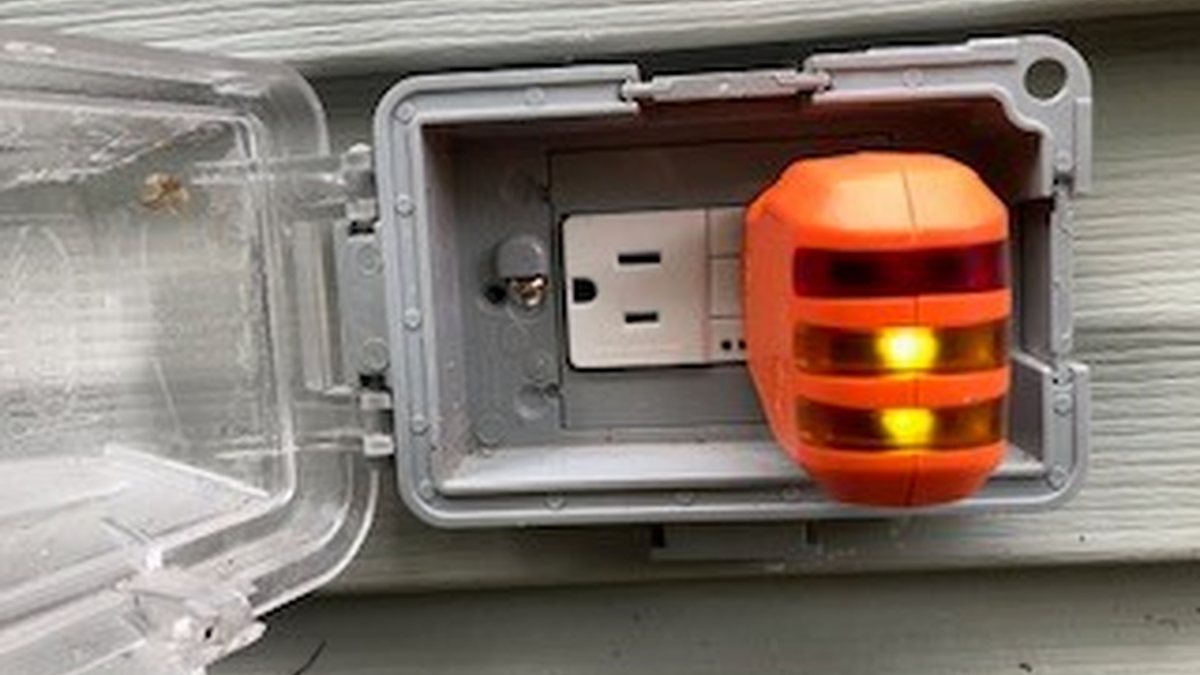
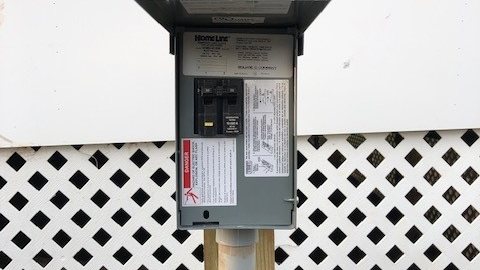
Hot tubs and spas — Require a dedicated 240V circuit, GFCI protection, and a weatherproof disconnect. We handle all permit and inspection requirements.
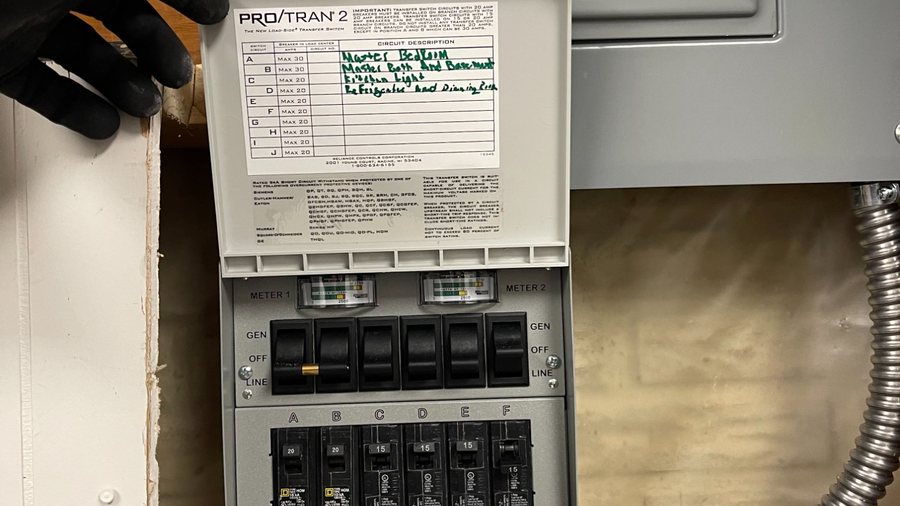
Generator transfer switches — Proper transfer switch installation requires dedicated wiring and careful load planning.
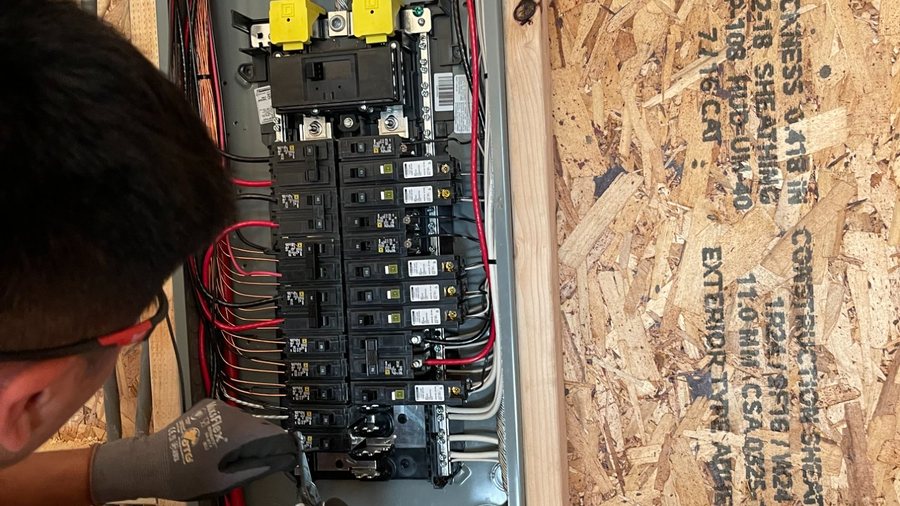
If your panel doesn’t have capacity for new circuits, we handle panel upgrades as part of the same project.
Trustindex verifies that the original source of the review is Google.
George and Christian did an amazing job
Posted on Google
John Bukoski
Trustindex verifies that the original source of the review is Google.
We've had a number of jobs done by SparkWise: installing a new sub panel, installing an EV charger, installing a disconnect switch and installing ceiling fans. All their electrians are professional, do a first class job and leave a clean work site.
Posted on Google
G M
Trustindex verifies that the original source of the review is Google.
Quick, prompt and excellent service! Fair price for the work done! Highly recommend!
Posted on Google
Quyen Chu
Trustindex verifies that the original source of the review is Google.
George was great!! Honest
George worked hard and we were very inpressed with his work on a diffucult project
Posted on Google
Jim Grove
Trustindex verifies that the original source of the review is Google.
The EV Home Charger install was exceptional. The original estimate included running the conduit around the house from the breaker panel at the back. However, once onsite, the technician figured a way to run the necessary wiring through the ceiling joists of our finished basement without cutting any drywall. The install was much cleaner visually, with less exposed conduit hidden behind the landscaping. Although this was not an easier solution that took longer than expected and an extra trip for new materials, SparkWise honored the original estimate.
Posted on Google
Ali Karim
Trustindex verifies that the original source of the review is Google.
SparkWise installed my EV charger and facilitated obtaining the county permit. They were very professional and provided the service at a very competitive price. I highly recommend their service.
Posted on Google
John-Michael Nida
Trustindex verifies that the original source of the review is Google.
George and his assistant Jorge were very kind and respectful while working at my house. And Max has been incredibly helpful throughout the process as well. Highly recommend SparkWise Electric!
      EXCELLENT     Based on 94 reviews                    Posted on Google        Heinrich Pelser     Trustindex verifies that the original source of the review is Google. George and Christian did an amazing job         Posted on Google        John Bukoski     Trustindex verifies that the original source of the review is Google. We've had a number of jobs done by SparkWise: installing a new sub panel, installing an EV charger, installing a disconnect switch and installing ceiling fans.  All their electrians are professional, do a first class job and leave a clean work site.         Posted on Google        G M     Trustindex verifies that the original source of the review is Google. Quick, prompt and excellent service! Fair price for the work done! Highly recommend!         Posted on Google        Quyen Chu     Trustindex verifies that the original source of the review is Google. George was great!! Honest
George worked hard and we were very inpressed with his work on a diffucult project         Posted on Google        Jim Grove     Trustindex verifies that the original source of the review is Google. The EV Home Charger install was exceptional. The original estimate included running the conduit around the house from the breaker panel at the back. However, once onsite, the technician figured a way to run the necessary wiring through the ceiling joists of our finished basement without cutting any drywall. The install was much cleaner visually, with less exposed conduit hidden behind the landscaping. Although this was not an easier solution that took longer than expected and an extra trip for new materials, SparkWise honored the original estimate.         Posted on Google        Ali Karim     Trustindex verifies that the original source of the review is Google. SparkWise installed my EV charger and facilitated obtaining the county permit. They were very professional and provided the service at a very competitive price. I highly recommend their service.         Posted on Google        John-Michael Nida     Trustindex verifies that the original source of the review is Google. George and his assistant Jorge were very kind and respectful while working at my house.  And Max has been incredibly helpful throughout the process as well.  Highly recommend SparkWise Electric!
Photo Gallery
Adding a circuit for a specific high-draw appliance? Our dedicated circuit installation service covers proper circuit sizing, permits, and inspection for EV chargers, hot tubs, and major appliances.
Running a circuit out to a detached building is a different job from wiring inside the house. It needs an underground feed, a disconnecting means at the structure, grounding at the building, and a permit. See running power to a shed or detached building.
Wiring is our second-largest category after lighting — more than 260 completed jobs. New branch circuits, MC and NM cable runs, additions and remodels, aging wiring in older homes, and the circuit work that sits underneath almost every other job we do.
Northern Virginia's housing stock is the reason. A lot of it was built between the 1950s and 1980s, wired for a household that had a fraction of today's load and none of today's expectations. Most of what we run into is not a defect — it is a house doing exactly what it was designed to do, forty years later.
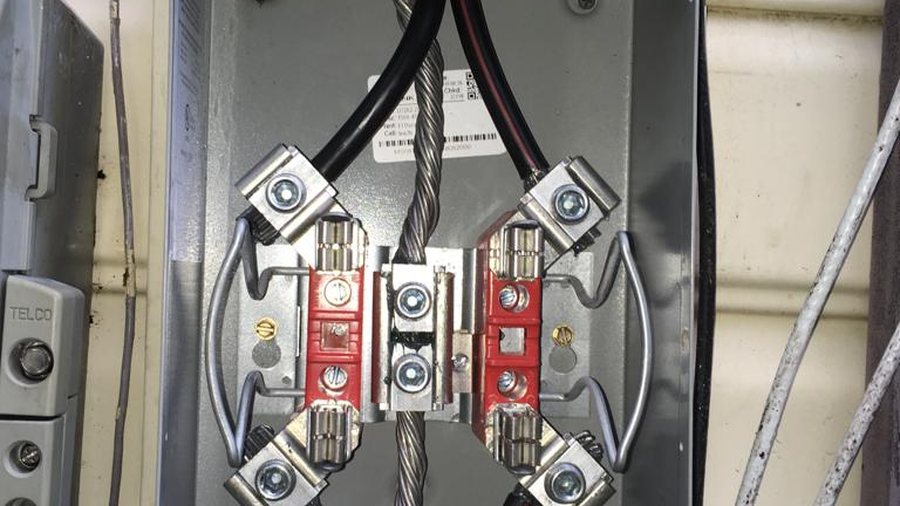
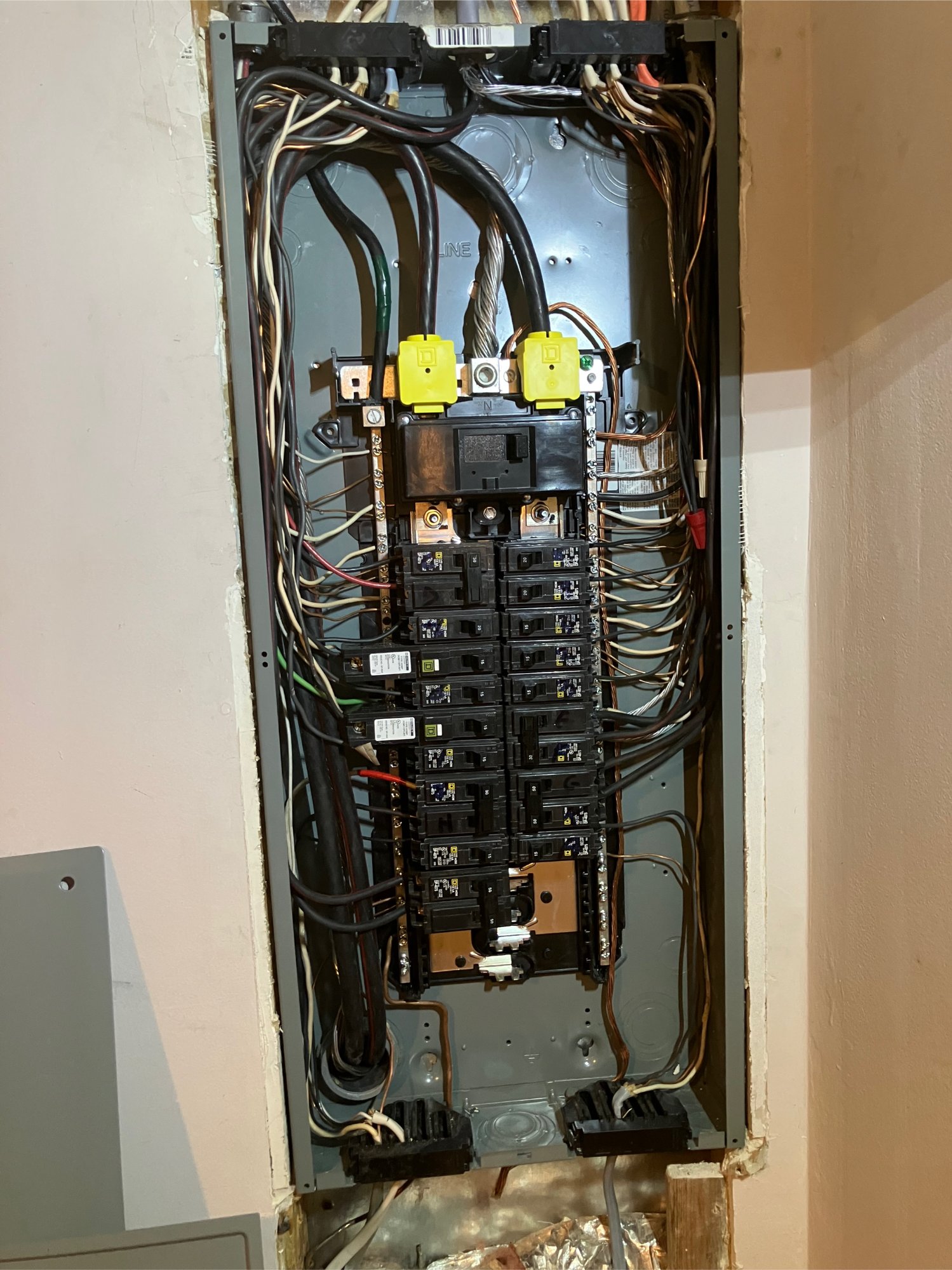
Service-entrance conductors landed and dressed during a wiring job.
New Circuits and Branch Wiring
The most common wiring request: get power to somewhere that does not have it, or does not have enough of it. Outlets in a finished basement, a new 240V circuit for a range or dryer, a workshop, a home office, an addition.
Two questions decide the job. Does the panel have room — physically and on the load calculation. And what is the path — fishing through a finished wall, running through an attic or crawl, or surface conduit where nothing else works. We walk the route before quoting, because the route is most of the labour.
If the load is significant or the equipment is fussy about sharing, that is a dedicated circuit, not a spur off an existing one.
What We Find in Older Homes
Anonymized, from our own job records — the recurring conditions.
No neutral in the switch box. Older switch loops carried only the hot. The moment you want a smart switch or dimmer, that missing neutral becomes the whole job.
No equipment ground. Two-wire circuits with ungrounded receptacles. There are code-compliant ways to handle this and there is the wrong way, which is putting a three-prong receptacle on a two-wire circuit and calling it done.
Circuits doing too much. A single 15A circuit feeding half a floor. It works until it does not — usually when a space heater or a window unit shows up.
Brittle or damaged insulation. Cloth-insulated conductors and heat-damaged wiring near old fixtures. One Leesburg job came to us specifically to repair burned wiring on a two-pole breaker.
Undocumented junctions. Splices in inaccessible spots, buried boxes, work done without a permit by someone who is no longer reachable.
We do not condemn a house on sight. Most of these are fixable in the area you are already working on, and we will tell you what genuinely needs attention now versus what can wait.
Rewiring: Partial vs. Whole-House
Whole-house rewiring is a real job and it is disruptive — open walls, multiple days, permits and inspections at rough and final. It is the right answer for knob-and-tube, for widespread deteriorated insulation, or during a gut renovation when the walls are open anyway.
It is the wrong answer far more often than it gets recommended. Partial rewiring — the kitchen, the basement, one problem circuit — solves most of what people call us about, for a fraction of the cost and disruption. If someone quotes a whole-house rewire without a load calculation and a walk of the actual conditions, get a second opinion.
Aluminum Branch Wiring
Homes built roughly 1965–1973 sometimes have aluminum branch-circuit wiring. The concern is the connections, not the wire itself — aluminum expands, contracts and oxidizes differently than copper, and terminations loosen over time. The accepted remediations are specific approved connectors at every device, or replacement. It is not a panel problem and swapping the panel does not address it. If you have it, we will tell you what your options actually are.
Remodels and Additions
On a remodel the electrical is rarely the constraint — the sequence is. Rough-in has to happen after framing and before drywall, and inspection has to happen before anything gets covered. Miss that window and you are opening walls back up. We plan around the other trades and we tell you the dates we need, not the dates we would prefer.
New circuits, rewiring and most remodel electrical require a permit and an inspection. Replacing a device in an existing box generally does not. We pull permits under our own license and meet the inspector.
We file in Fairfax County through the PLUS portal, Loudoun County through LandMARC, Prince William County through the ePortal, and directly with Arlington County and the independent cities of Alexandria, Falls Church, Manassas and Manassas Park, plus Stafford, Fredericksburg and King George. Requirements vary by jurisdiction and do change, so we confirm the current rule with the authority having jurisdiction rather than assuming.
Wiring FAQ
Can you add an outlet without opening the wall? Often yes — we fish where the framing allows. Sometimes a small, patchable opening is unavoidable, and we will tell you before we start rather than after.
Do I need to rewire my whole house? Usually not. Partial rewiring handles most problems. Whole-house is for knob-and-tube, widespread deterioration, or a gut renovation.
My outlets have no ground. Is that dangerous? It is a real limitation, particularly for electronics and anything with a metal case. There are compliant ways to address it short of rewiring, and we will walk you through them.
Why does my breaker trip only sometimes? Intermittent tripping is usually load-related or a deteriorating connection. It is worth diagnosing rather than resetting — see electrical troubleshooting.
Can I do some of it myself to save money? Whether a homeowner may perform their own electrical work, and under what conditions, is decided by your local authority having jurisdiction — check with them before you start. What is not optional either way is the permit and the inspection. Hidden work that was never inspected becomes a problem at resale, and we would rather quote you honestly than have you find that out later.
Get a Wiring Quote
Tell us what you are trying to power and where. We will walk the route and tell you what the job actually involves.