Under-cabinet lighting is one of the highest-impact electrical upgrades you can make to a kitchen. It puts light on the counter where you actually work instead of behind you, it kills the shadow your body casts from a ceiling fixture, and — done well — it makes a kitchen look finished in a way overhead cans never quite do.
The catch is that the plug-in strips sold at big-box stores rarely look like the photos. Visible cords, uneven brightness, mismatched color temperature between runs, and a dimmer that makes the tape flicker or buzz are all common. A hardwired installation with a properly sized driver and matched dimmer solves all four.
Under-Cabinet vs. Over-Cabinet: Two Different Effects
These get lumped together, but they do opposite things and people often want both:
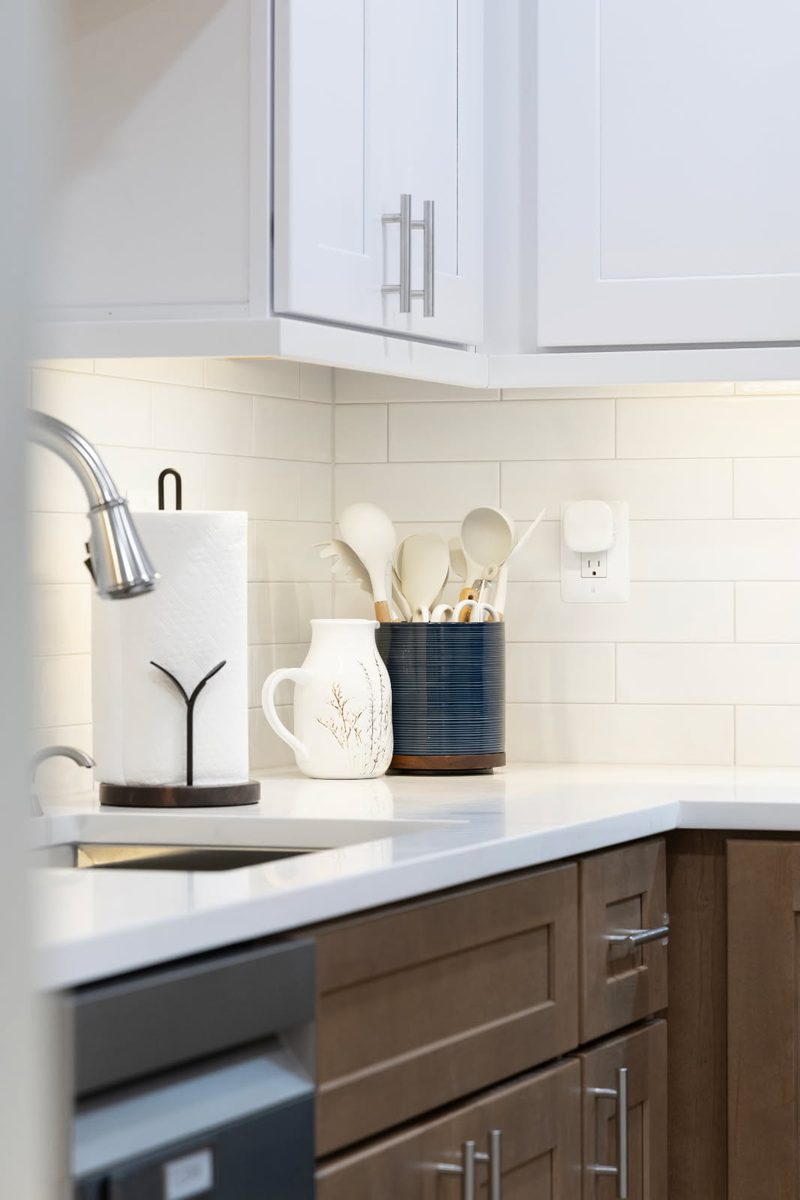
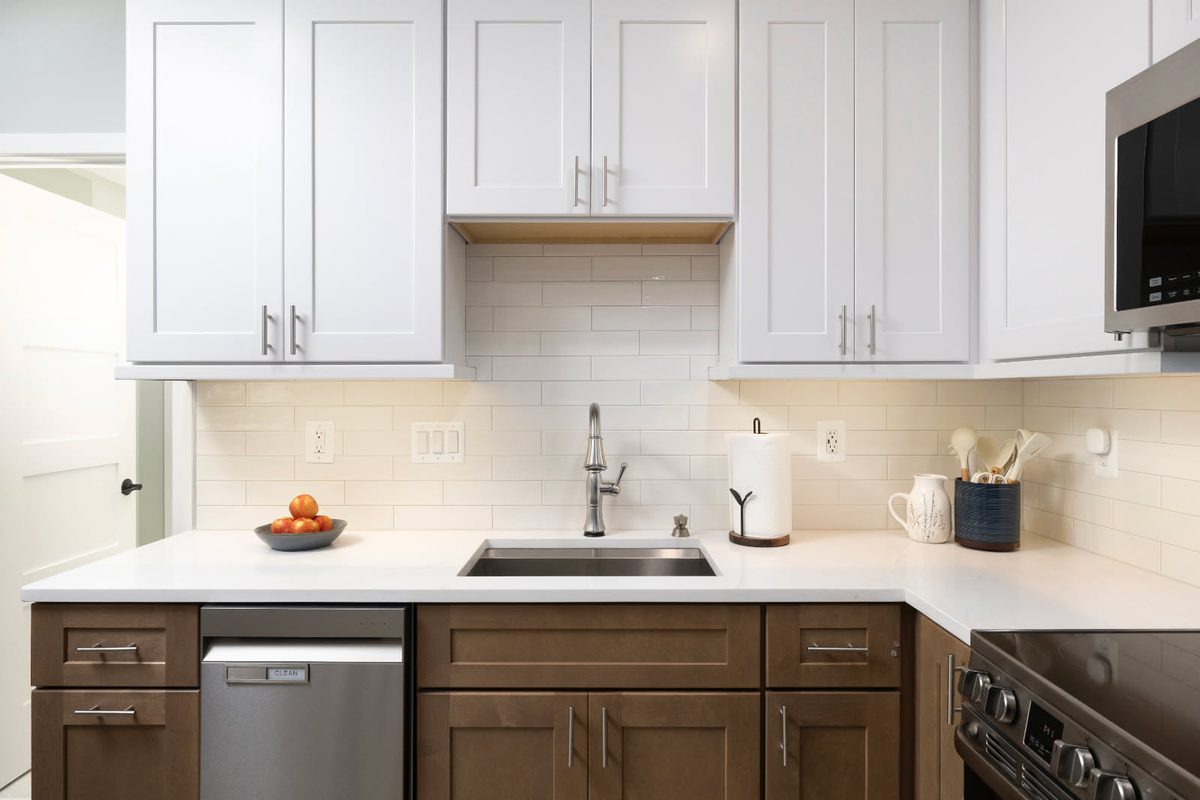
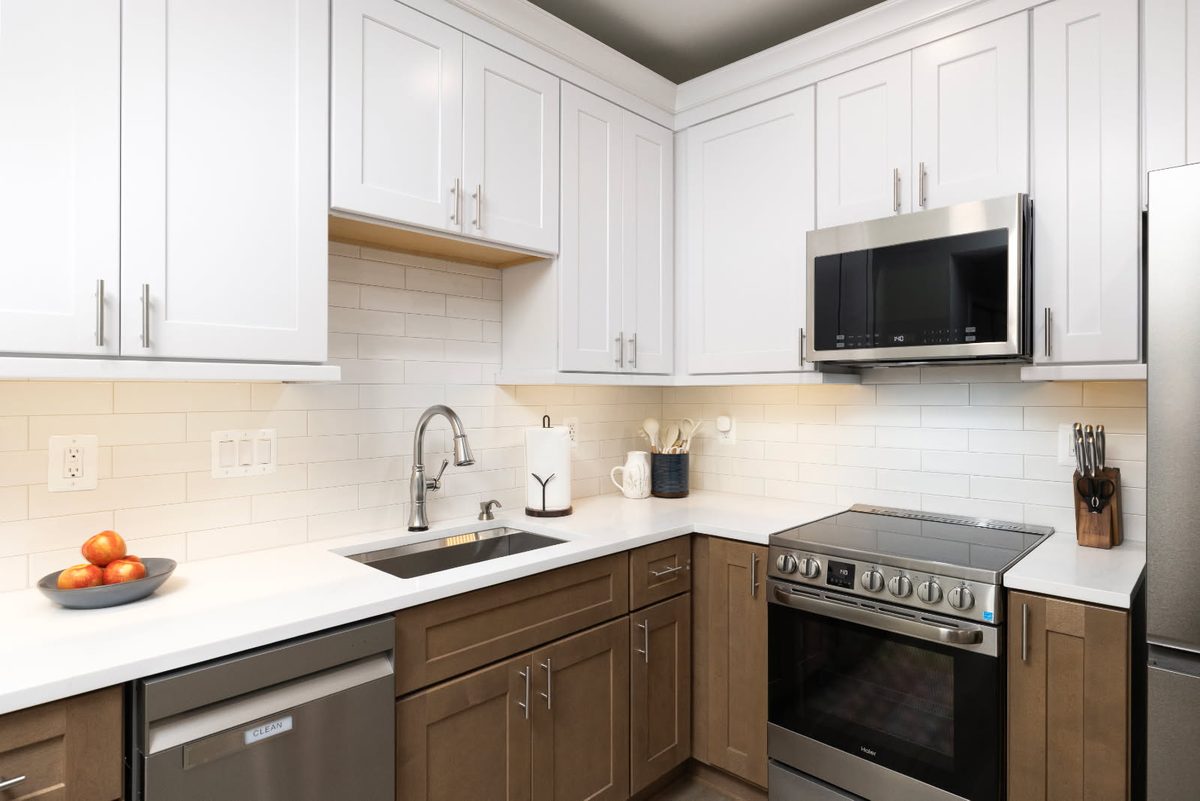
- Under-cabinet lighting (UCL) is task lighting. The tape runs along the front underside edge of the upper cabinets so the light washes down the backsplash and across the countertop. Mounted too far back, it glares off the backsplash; mounted at the front edge, it lights the work surface evenly.
- Over-cabinet lighting (OCL) is ambient. The tape sits on top of the uppers and throws light up at the ceiling, creating a soft indirect glow. It does almost nothing for task lighting, but it changes how the whole room feels at night — and it is often the light people leave on after dinner.
Running both on separate switches gives you a bright work kitchen and a low, warm evening kitchen from the same installation.
What a Proper Installation Involves
Most LED tape is low-voltage — commonly 24V DC — which means the installation is really two systems working together:
- A line-voltage side. A switched circuit feeding a junction box, usually placed inside an upper cabinet where it stays accessible but out of sight.
- A driver (power supply) sized to the total load of the tape it feeds, with headroom rather than run right at its limit.
- A dimmer matched to the driver. This is where most DIY installs go wrong — a standard incandescent dimmer paired with an LED driver is what produces flicker, buzz, and a dead zone at the bottom of the dial.
- The tape itself, cut only at the marked cut points, mounted in channel or tight to a clean edge so you see the light and not the diodes.
- Consistent color temperature. Mixing tape from different production runs — or different brands — gives you visibly different whites on adjacent runs. It is very obvious once installed and very annoying to fix afterward.
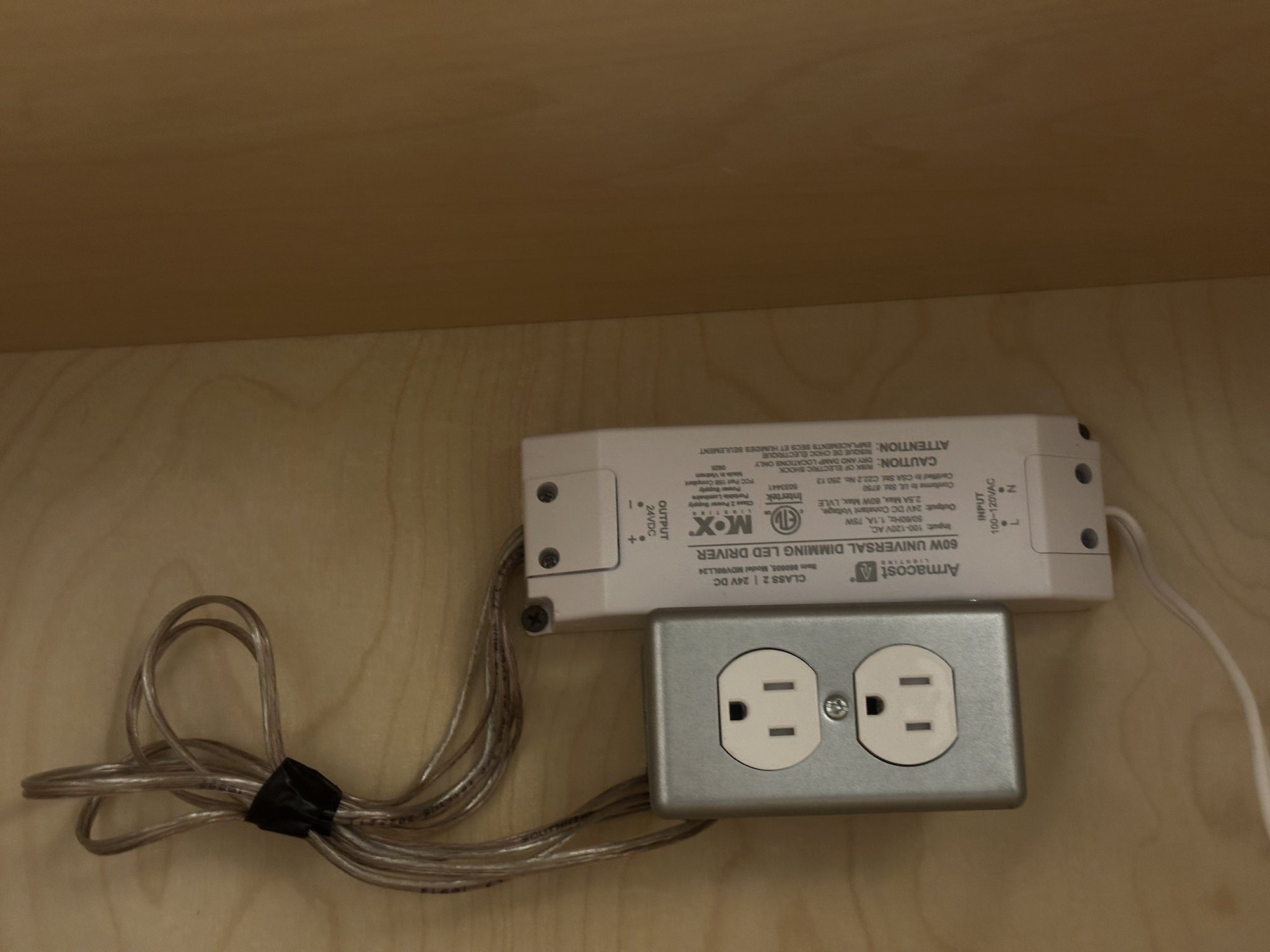
That last point matters more than people expect. Drivers do eventually fail, and one buried behind drywall or sealed above a soffit turns a fifteen-minute swap into a repair. We put them somewhere a person can reach.
A Real Job: Bar Area Cabinet Lighting in King George County
A homeowner building out a bar area wanted both effects — a warm glow at the ceiling line and clean task light on the counter below.
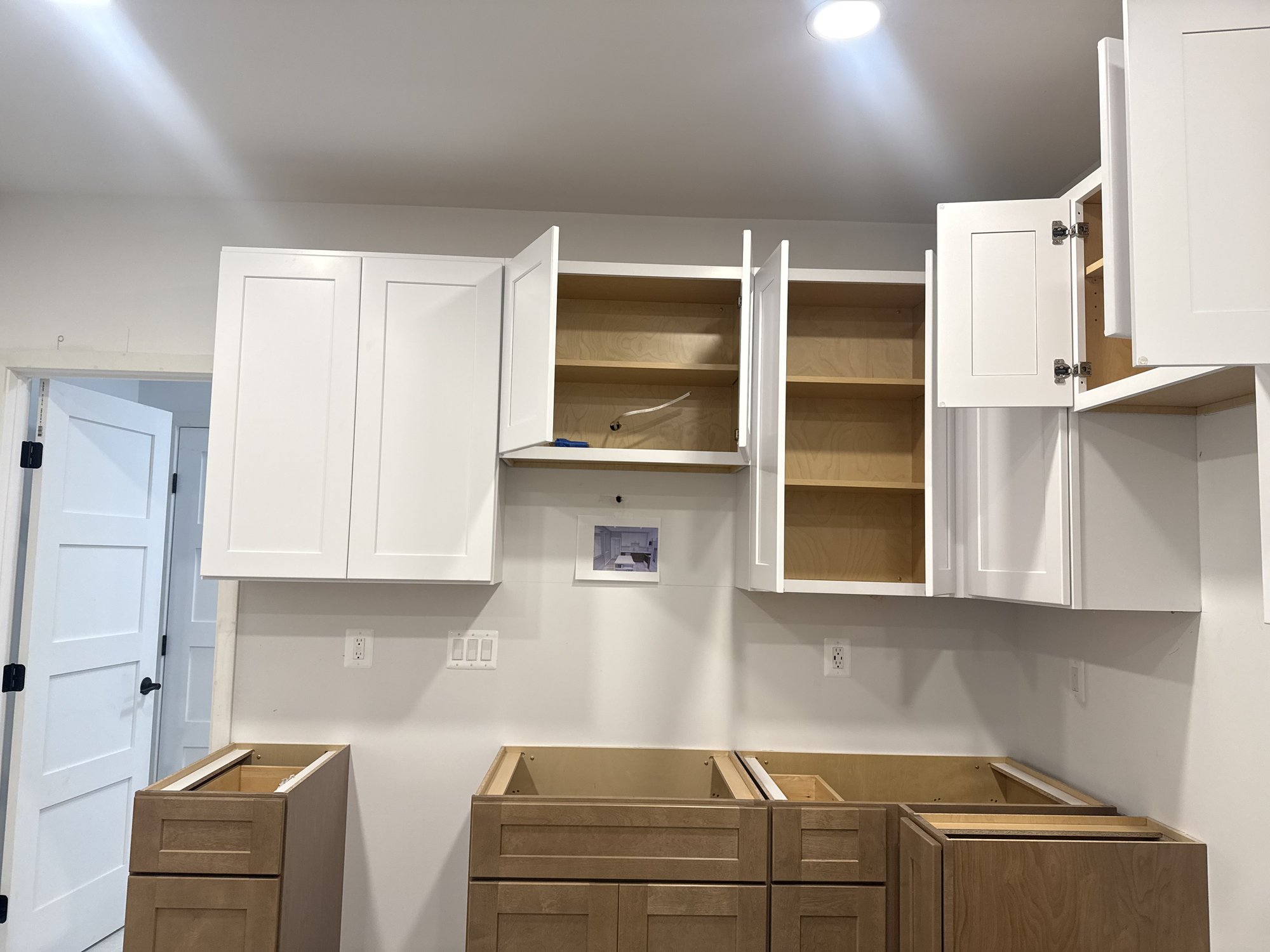
We drew the routing before anything was ordered: two over-cabinet runs following the top edge of the uppers, and two under-cabinet runs along the bottom edge, split at the range opening. The plan specified the tape (2700K soft white, 60 LEDs per meter), called for junction boxes inside two of the upper cabinets for the hardwire connections, and flagged the crown clearance and the run stops to verify in the field once the cabinetry was actually hung.
That last part is the reason for drawing it at all. Cabinet dimensions on paper and cabinet dimensions on the wall are rarely identical, and tape lighting is unforgiving about it — a run that comes up eight inches short is not something you patch neatly.
Why Plug-In Kits Disappoint
Retail under-cabinet kits are not dangerous when used as intended, and for a rental or a temporary fix they are perfectly reasonable. But there are predictable reasons they look like a kit:
- Visible cords. Every run needs to reach an outlet, and those cords end up taped along the backsplash or dangling behind the counter.
- You cannot switch them from the wall. Most rely on an inline switch or a remote, so nobody uses them the way you would use a real light.
- The dimming is whatever came in the box. No matching to your existing dimmers, and often no dimming at all.
- Uneven light. Puck-style kits produce scalloped hot spots on the counter rather than an even wash.
- They occupy your counter outlets. Kitchen receptacles are there for appliances, not to be permanently tied up by lighting.
If you are already opening up a kitchen for a remodel, running the lighting properly costs far less than doing it later — the walls are the expensive part, and they are already open.
Common Questions
Can under-cabinet lighting be added without tearing up the backsplash?
Often, yes. How invasive it gets depends on where the nearest switched circuit is, what is inside the wall, and whether the cabinets have a light rail or a finished underside to hide the tape. We look at the specific kitchen before promising a clean route — anyone who promises “no drywall work” sight-unseen is guessing.
What color temperature should I choose?
2700K reads warm and residential, similar to a traditional bulb. 3000K is slightly crisper. 4000K and above starts to feel commercial in a kitchen. The important thing is matching whatever your other kitchen lighting already is — mismatched whites in one room are more noticeable than any single choice.
Does it need a permit?
It depends on the scope and the jurisdiction. Adding a new circuit generally requires a permit; extending existing switched lighting may not. Requirements vary across Northern Virginia and the surrounding counties, and your local Authority Having Jurisdiction makes the final call — we confirm before we start rather than assuming.
Will the tape lights dim with my existing dimmer?
Only if the dimmer and the driver are compatible. Mismatched pairs are the single most common cause of flicker, buzzing, and lights that cut out at low levels. We select the dimmer and driver together as a pair rather than hoping an existing dimmer cooperates.
How long does LED tape last?
Quality tape is rated for tens of thousands of hours, and in practice the driver or the dimmer usually gives out before the diodes do. That is exactly why we mount the driver somewhere accessible.
Related Services
- Lighting installation
- Recessed lighting installation
- Dedicated circuit installation
- Electrical wiring and rewiring
- Electrical panel upgrades
Licensed and insured. Virginia Master Electrician #2710064102 | Virginia Class A Contractor #2705160838 | Maryland Master Electrician #16613. Permit, inspection, and code requirements vary by jurisdiction; your local Authority Having Jurisdiction has final say on what a given installation requires.
Lighting the outside of the house too? See landscape and outdoor lighting.
Cabinet lighting is often one part of a wider lighting project. If the same room needs air movement as well as light, see our ceiling fan installation service — fans and cabinet lighting are frequently wired on the same visit.
Related reading: best lighting for your home.
Pendants over the island? Our chandelier and pendant installation page covers boxes, dimmers and hanging height.