
Installing a hot tub or spa requires a dedicated 240V electrical circuit — and in most cases, a new sub-panel, GFCI-protected disconnect, and a permit from your local jurisdiction. SparkWise Electric handles the complete hot tub electrical installation for homeowners throughout Northern Virginia, from panel work to final hookup.
We work directly with your hot tub installer or manufacturer to make sure the electrical is done right, inspected, and ready to go before your tub goes in the water.
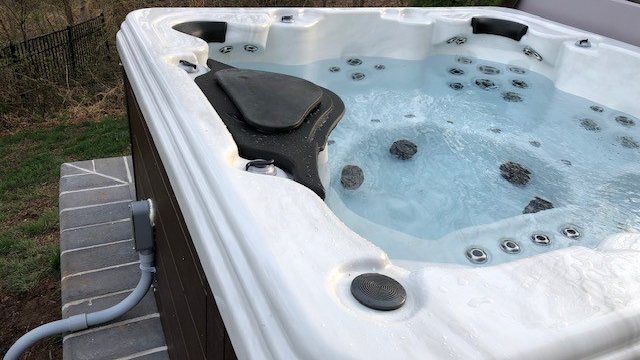
What’s Included in a Hot Tub Electrical Installation
A complete hot tub electrical installation typically includes:
- Dedicated 240V circuit — most hot tubs require a 50A or 60A, 240V circuit run from your main panel or a new sub-panel
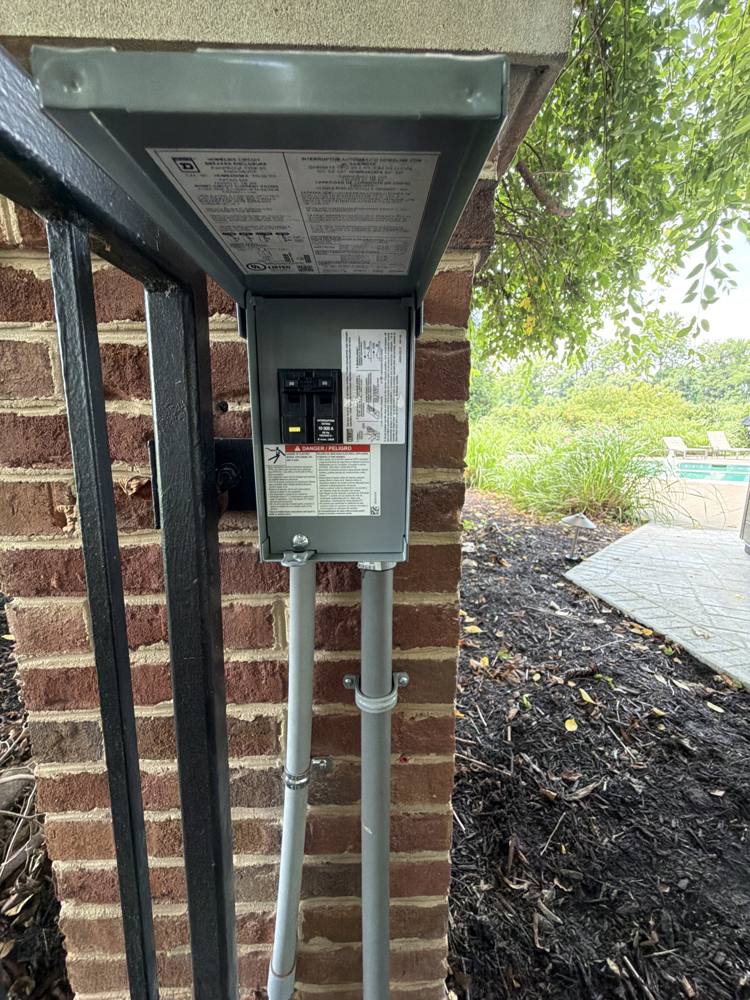
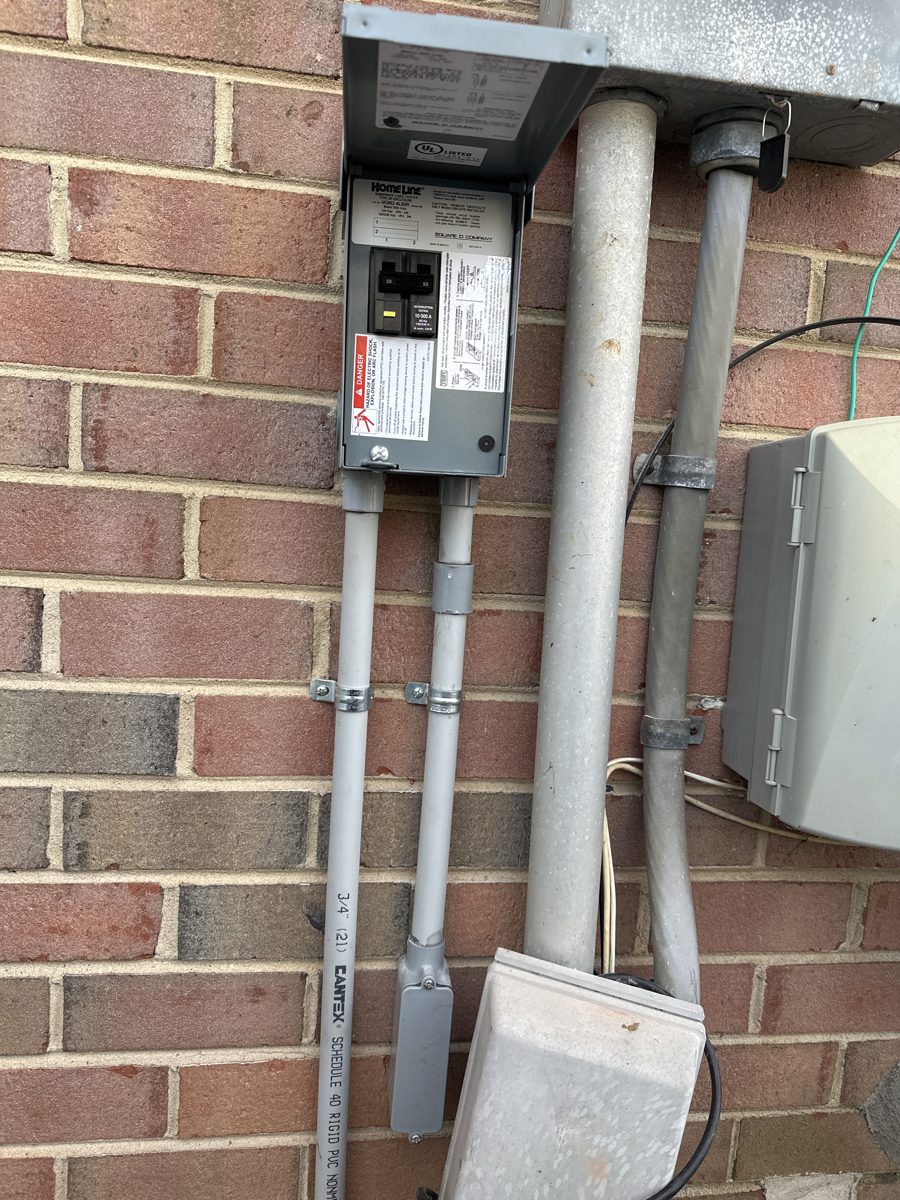
- GFCI-protected disconnect — required by NEC code, installed within sight of the tub (typically 5–10 feet away)
- Sub-panel installation — when the main panel lacks capacity or is too far from the tub location
- Conduit and wiring run — we run wire through conduit from panel to disconnect to the tub connection point
- Permit and inspection — we pull the permit and schedule the inspection so your installation is code-compliant
- Load calculation — we verify your existing panel can handle the added load before we start
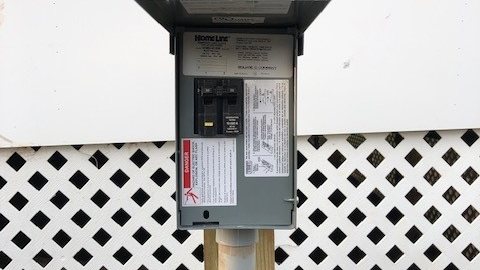
Hot Tub Electrical Requirements
Most residential hot tubs and spas require:
- 240V / 50A or 60A dedicated circuit (check your tub’s manual for exact specs)
- 4-wire connection (two hots, one neutral, one ground)
- GFCI protection at the disconnect — required by NEC Article 680
- Disconnect located within sight of the tub but at least 5 feet away
- All wiring run in conduit when exposed
Some plug-in “soft tubs” run on 120V and don’t require a dedicated circuit — but most full-size hot tubs are 240V. We’ll confirm your requirements before starting any work.
Why You Need a Licensed Electrician
Water and electricity are a dangerous combination. Hot tub wiring done incorrectly can cause electrocution, fire, or damage to the tub itself. Beyond safety, most jurisdictions in Northern Virginia require a licensed electrician to pull the permit and perform the work. An uninspected installation can also affect your homeowner’s insurance coverage.
SparkWise Electric is fully licensed and insured in Virginia. We pull every permit, complete every inspection, and leave you with documentation showing the work was done to code.
Our Process
- Site assessment — we visit your property, evaluate the panel, and determine the best wiring route
- Permit application — we file with your local jurisdiction before work begins
- Installation — sub-panel (if needed), conduit run, disconnect, and tub connection
- Inspection — we schedule and pass the final electrical inspection
- Coordination — we work around your hot tub delivery schedule so everything is ready when the tub arrives
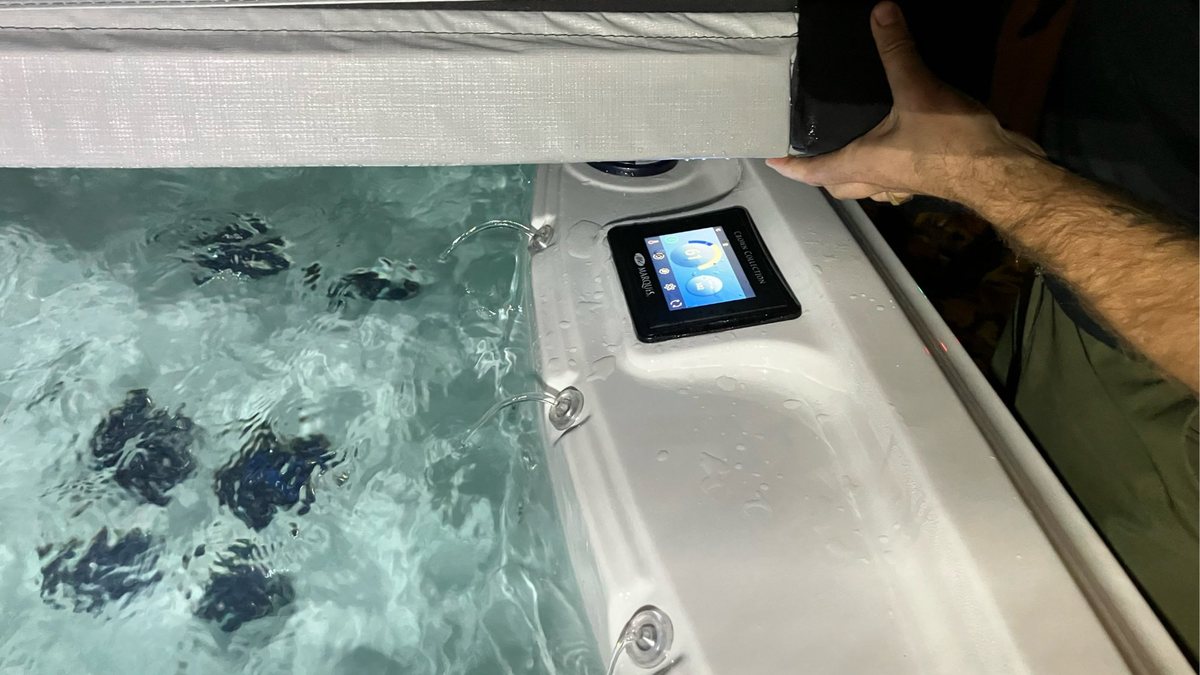
Serving Hot Tub Owners Throughout Northern Virginia
We install hot tub electrical circuits in Fairfax County, Prince William County, Loudoun County, Arlington, Alexandria, and surrounding areas. Whether your tub is going on a deck, patio, or indoor room, we’ll get the wiring done safely and up to code.
Call (703) 915-5351 or book online to schedule your hot tub electrical installation.
Also see: Panel Upgrades | Dedicated Circuit Installation | EV Charger Installation | Commercial Electrical Services
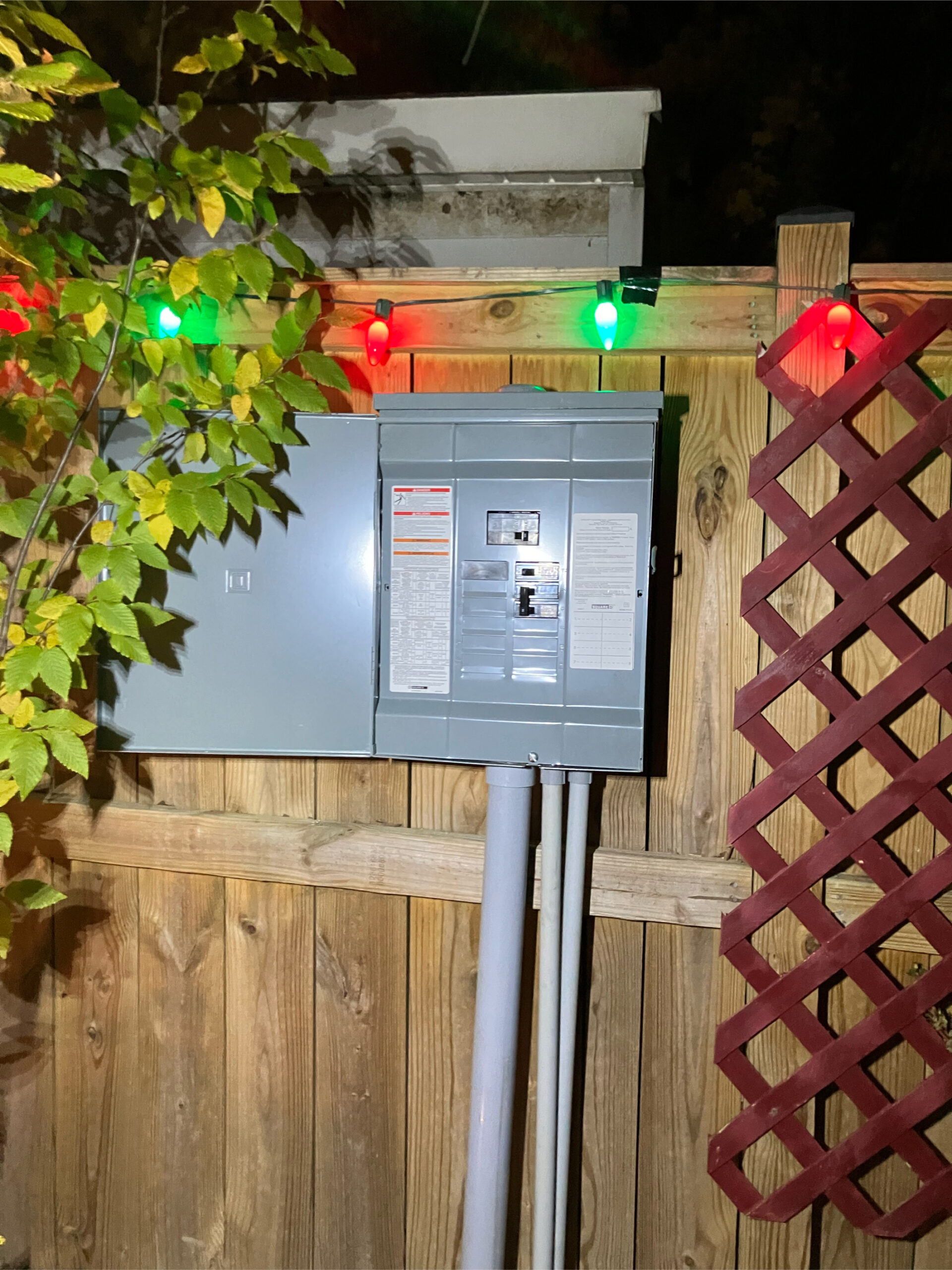
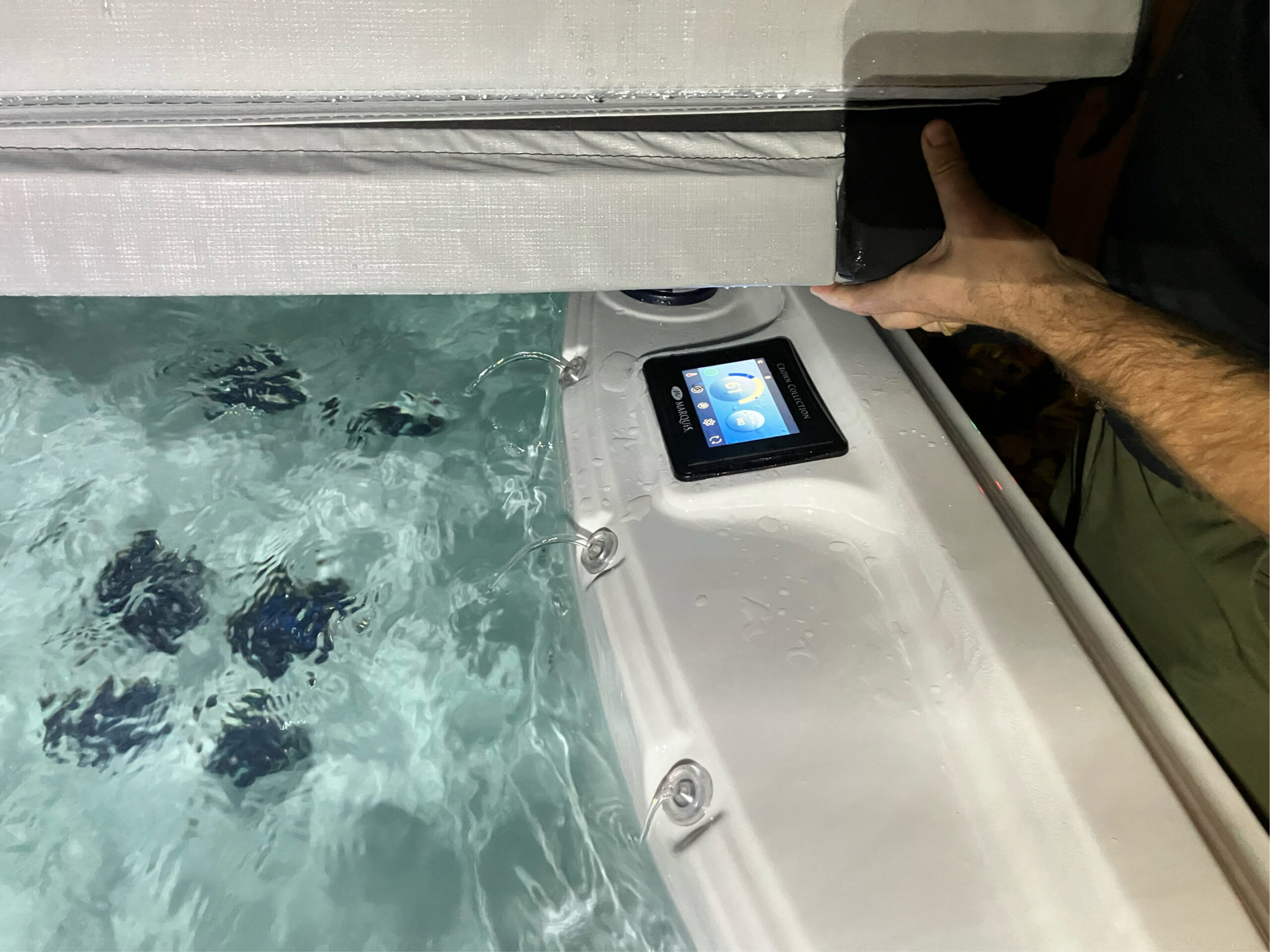
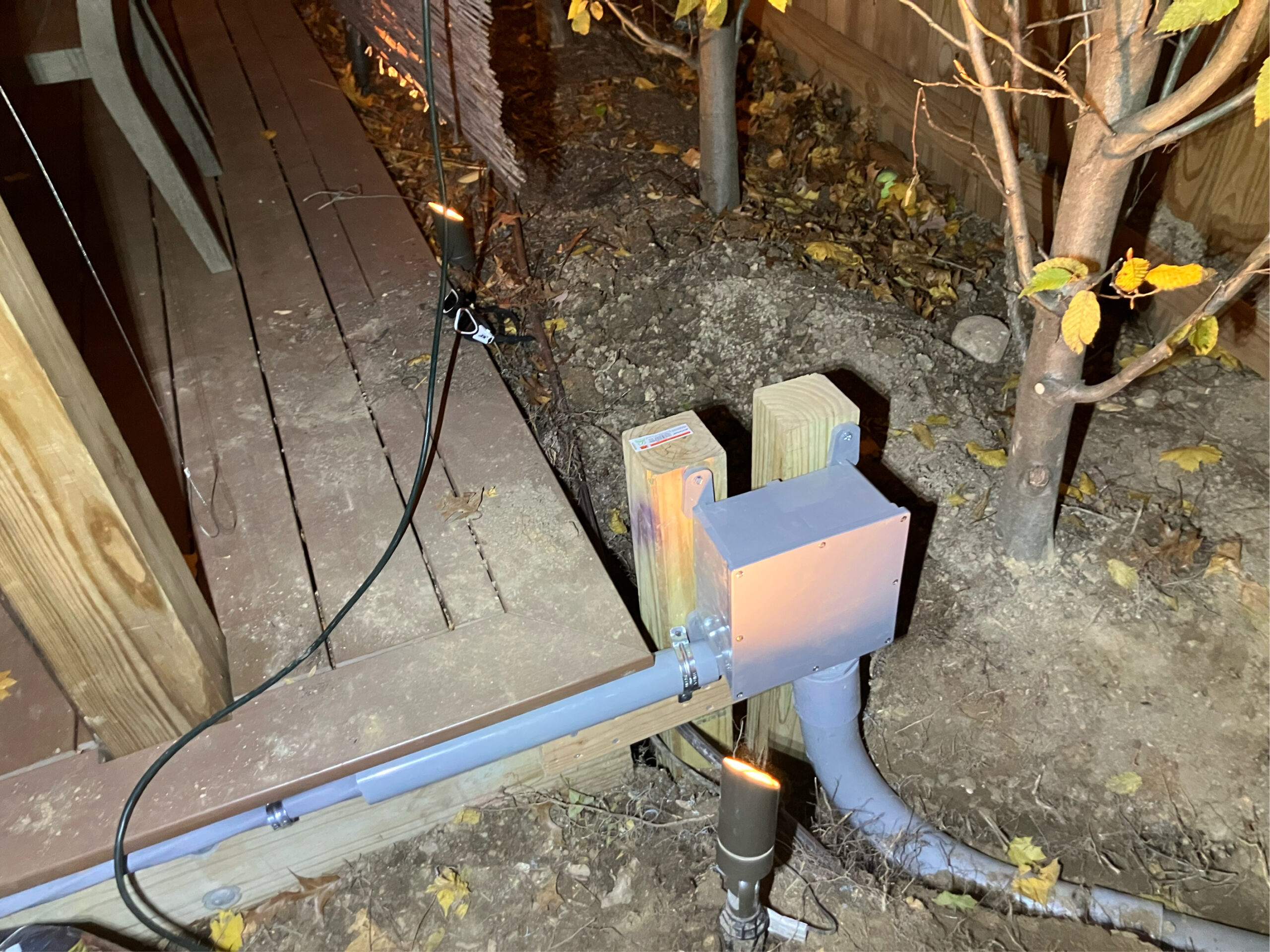
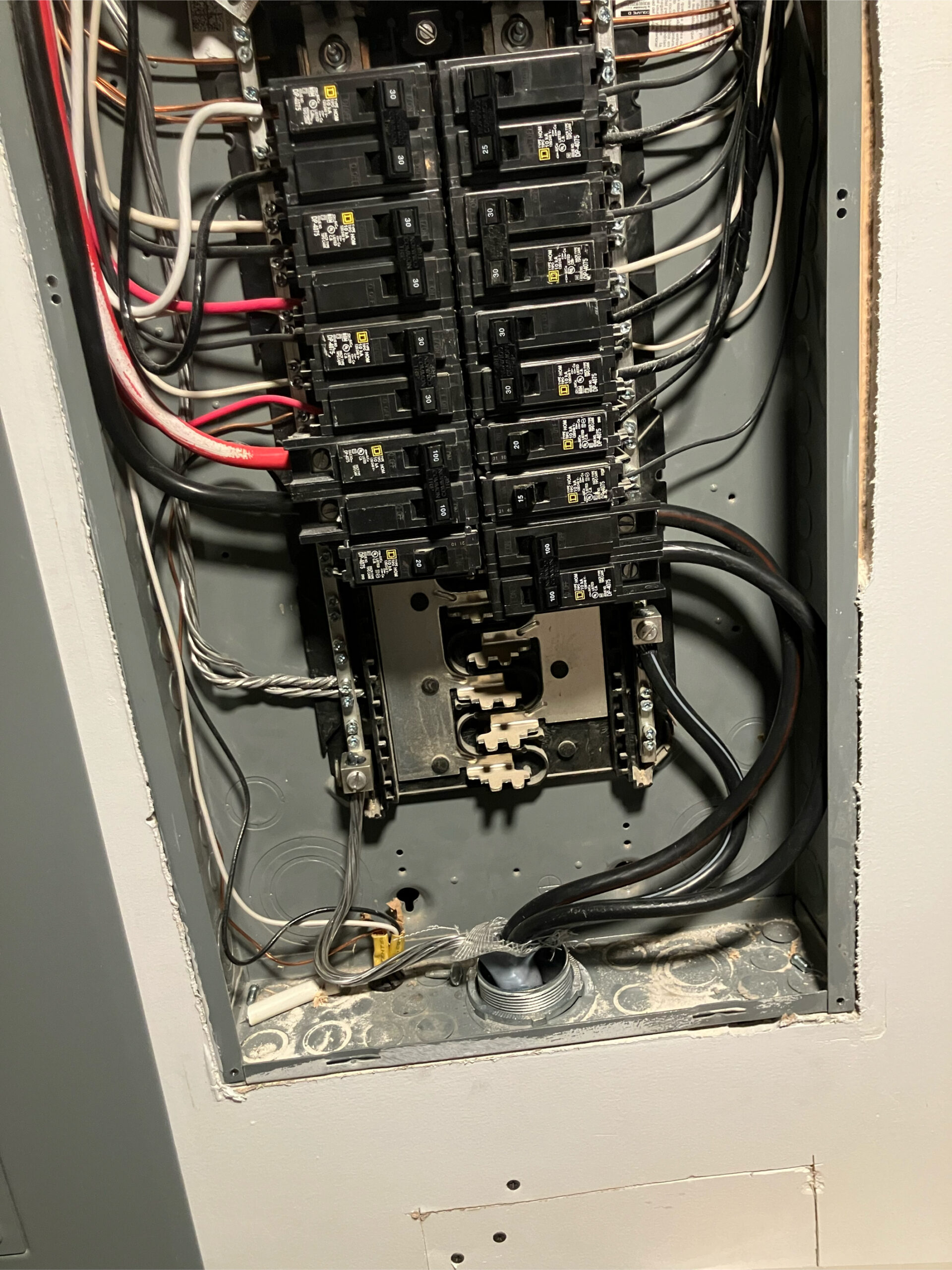
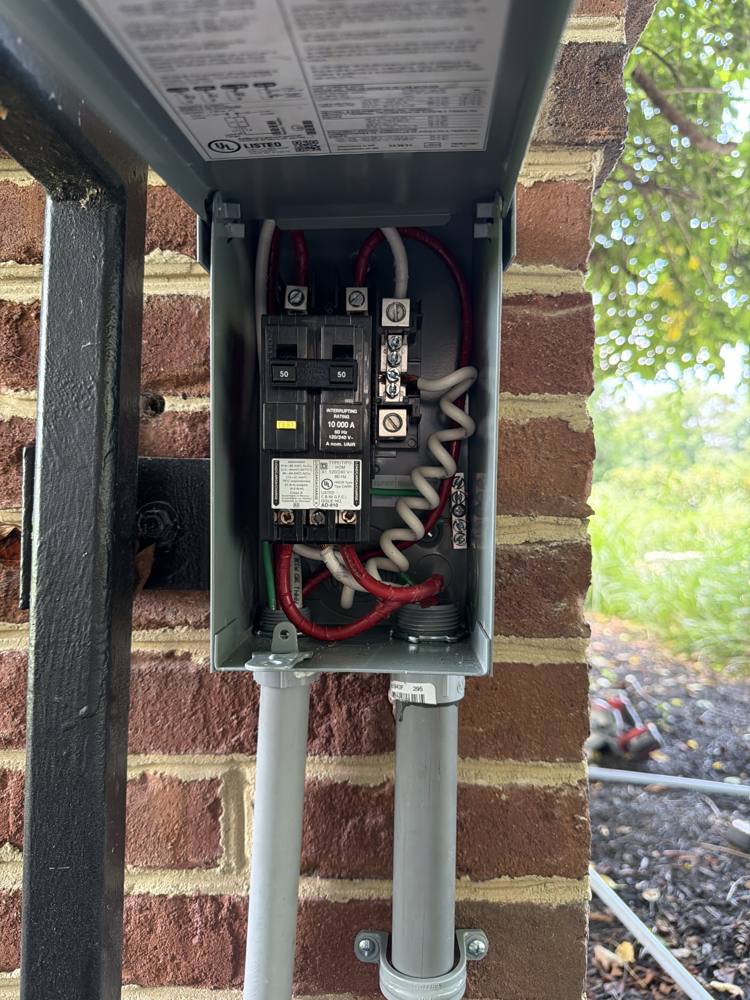
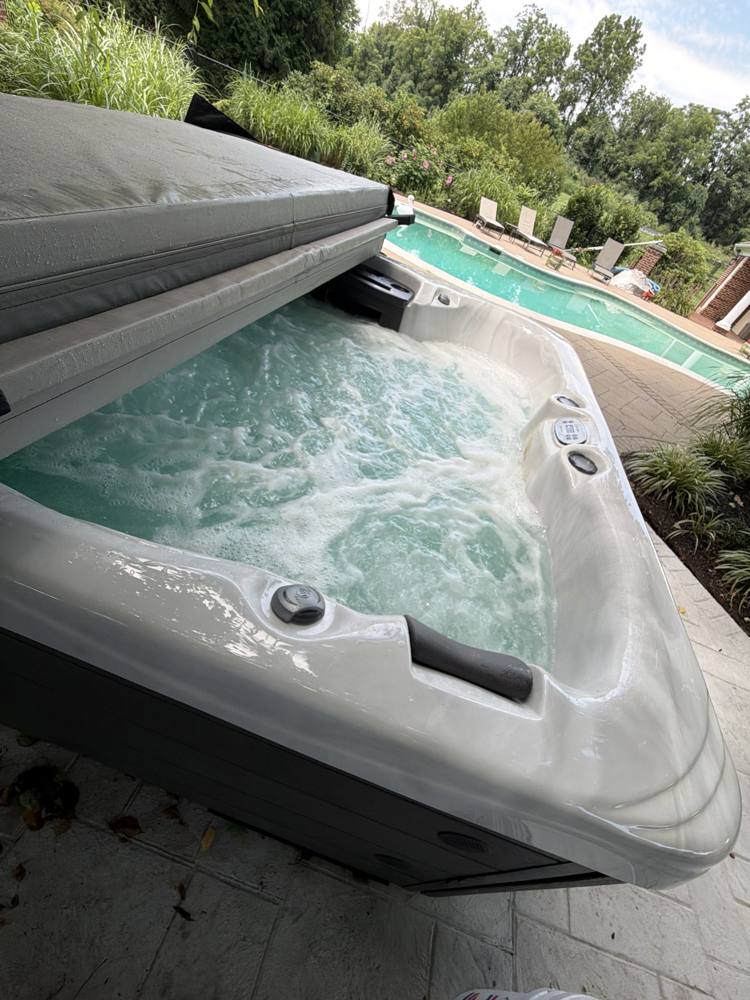
Hot tubs and spas require a dedicated circuit. See our dedicated circuit installation service covers proper circuit sizing, permits, and inspection for EV chargers, hot tubs, and major appliances.
What We Have Learned Wiring Eight Brands of Hot Tub in Northern Virginia
Most hot tub wiring pages stop at "you need a 50-amp GFCI circuit." That is roughly true and not very useful, because the brand you bought decides the amperage, the number of wires, the wire size and where the disconnect can go — and every brand answers those differently.
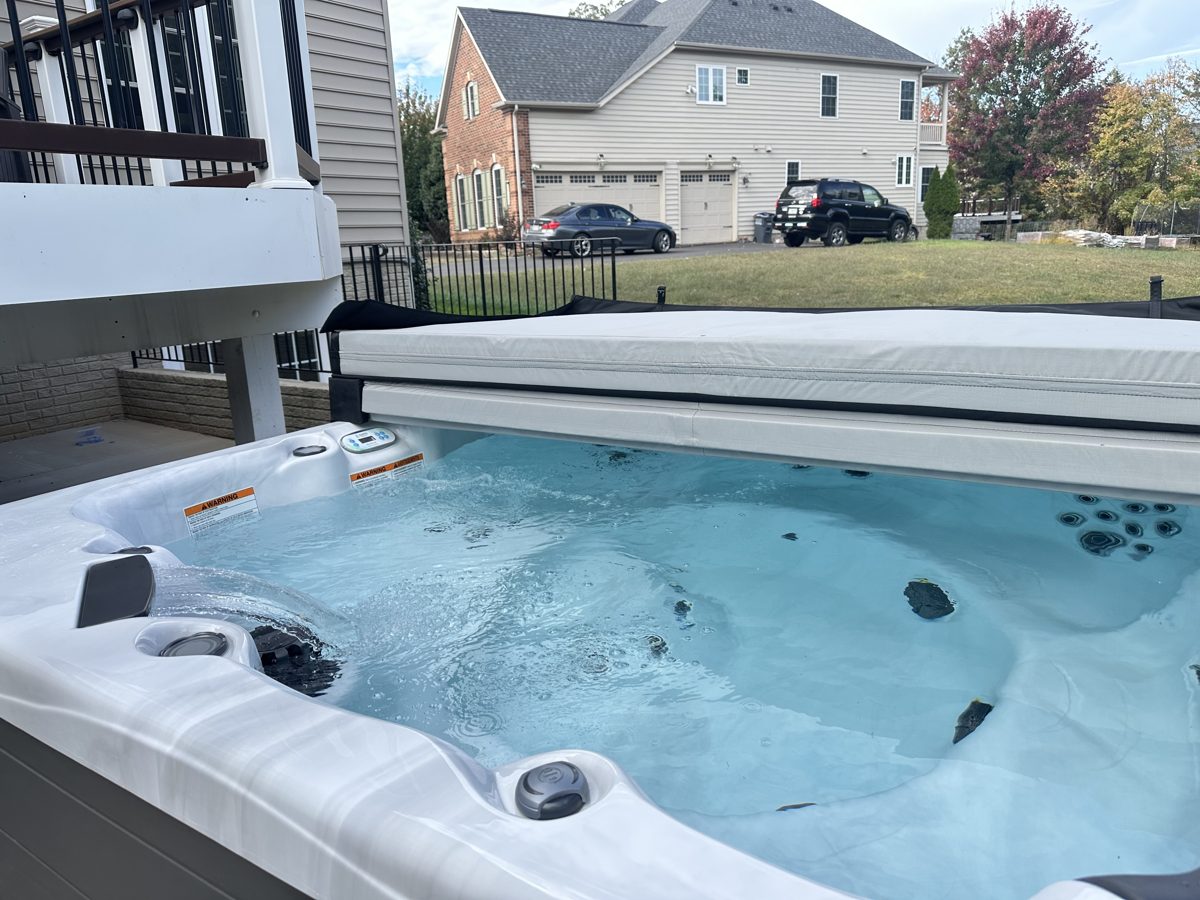
What follows comes from our own completed installs across Northern Virginia — Hot Spring, Caldera, Clarity, Jacuzzi, Bullfrog, American Whirlpool and DayDream spas, in Arlington, McLean, Vienna, Falls Church, Fairfax, Ashburn, Manassas, Woodbridge, Stafford, Fredericksburg and Silver Spring — checked against the manufacturer's own installation sheets. We install these brands; we are not affiliated with any of them.
The Same Question, Eight Different Answers
Here is what the spec sheets actually say, side by side, for spas we have wired:
| Brand / series | Circuit | Wires | What the sheet says about wire size |
|---|---|---|---|
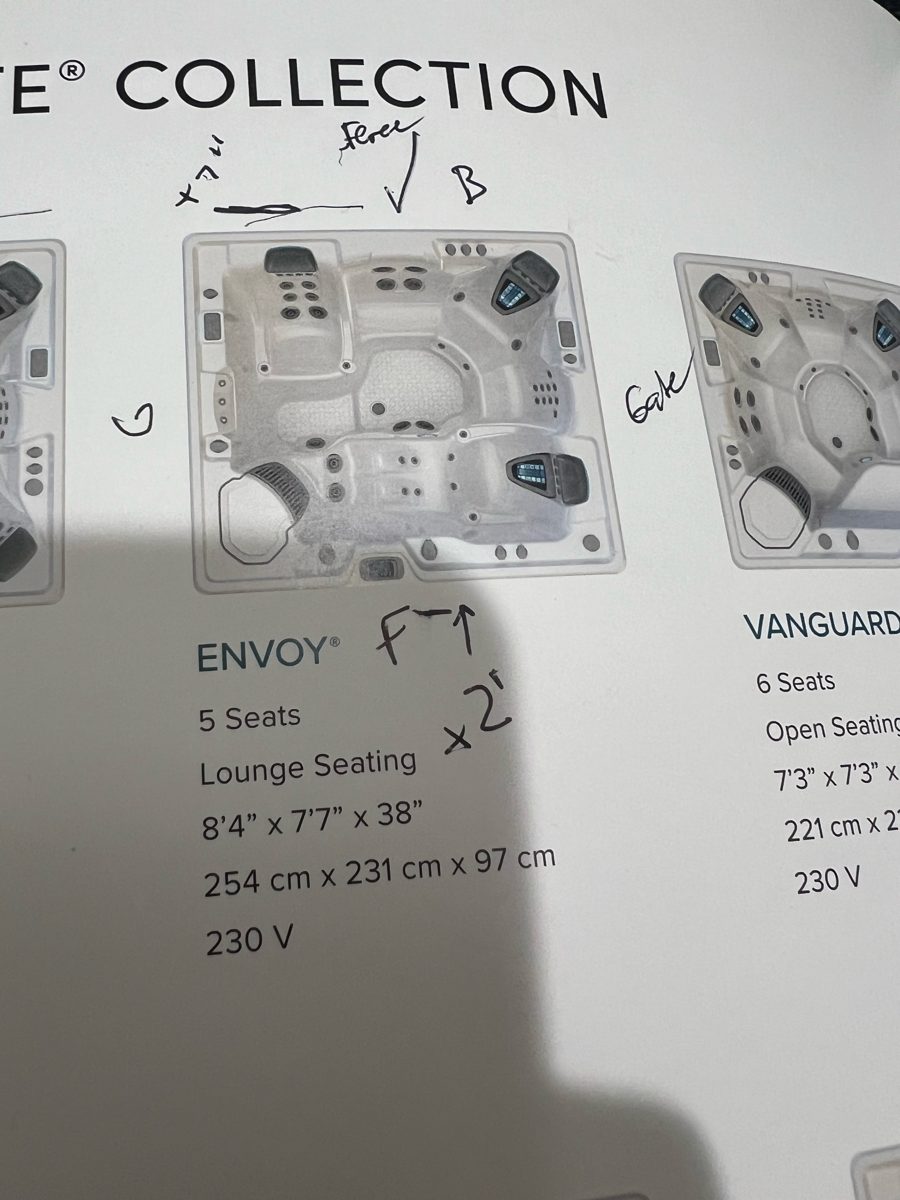
| Hot Spring Highlife (Envoy, Jetsetter LX) | 50A, 230V | 4 | #8 copper minimum; subpanel splits to a 30A and a 20A branch |
| Caldera Utopia (Geneva) | 50A or 30A, 230V (Cantabria: 70A) | 4 | #10 ground minimum; at least 112 volts per line under load |
| Clarity (Balance 8) | 50A, 240V | 4 | #6 copper required, #10 ground |
| Jacuzzi J-300 (J-345) | 40A, 50A or 60A — your choice, 240V | 3 | Copper only; junction box and #6 pigtails if the feeder is larger than #6 |
| Bullfrog (X-Series, M-Series) | 50A; 60A for three-pump M9, M8, A9L | 4 | "Consult your electrician" |
| American Whirlpool 200 (250) | 30A or 40A, 240V | 4 | Not specified |
| DayDream (plug-and-play, converted) | 120V as shipped; 30A or 40A after 240V conversion | 4 | "Must meet code" — #6 solid copper bond |
| Balboa BP500 control pack (used inside many brands) | 40A load, 50A breaker maximum | 4 | Not specified |
Every one of those tubs got a GFCI disconnect at the required distance from the water. That part is universal. Almost everything else in the table is not, and it is where a buyer reading one brand's sheet and assuming it applies to another gets into trouble.
The Spec Sheet Is a Minimum, Not an Instruction
Hot Spring's sheet says #8 copper. On a Silver Spring install, the main panel was well over ninety feet from the tub. We ran #6, because voltage drop over that distance would have left the heater and pumps starved on #8. Caldera puts a number on this in its own instructions — at least 112 volts on each line under load — and it is the reason we test line voltage at the subpanel before we call an install finished.
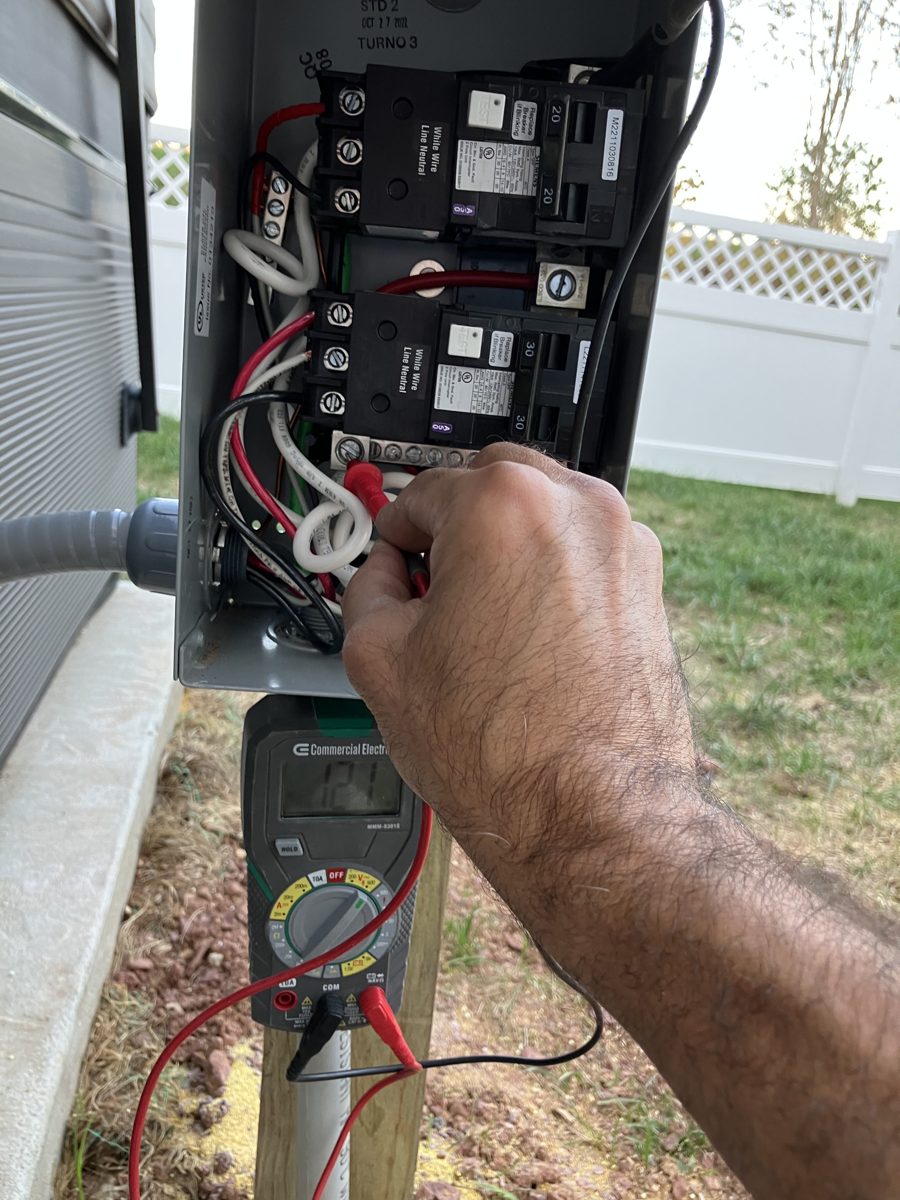
The rule of thumb is simple: the wire size on the sheet assumes a short run. Past about fifty feet the run decides the wire, not the brochure. This is not a place to save money; it is a place to save the heater.
Amperage Is a Feature, Not a Number
On several brands the amperage is not fixed. The same tub can be wired more than one way, and the difference is whether the water stays hot while the jets are running.
- Jacuzzi J-345: at 40 amps the heater shuts off whenever either pump runs on high. At 50 amps — the factory setting — it shuts off when both pumps run on high. At 60 amps the heater runs through all of it. A McLean customer chose 60 amps, and we wired it that way.
- DayDream: 30 amps if the heater only runs with the low-speed pump, 40 amps if it runs with both. Set by a dip switch inside the equipment bay.
- Caldera Cantabria: 70 amps if you want the heater on at the same time as the lounge pump.
This is a decision to make with your electrician before the wire is pulled, not something to discover in January. If your brochure shows one number, ask whether the tub can be configured for more.
Three Wires or Four? It Depends on the Brand
Most spas we install run some of their equipment — pumps, lights, ozone — at 120 volts, which means the circuit needs a neutral: two hots, a neutral and a ground. Jacuzzi's J-300 series does not. Everything in it is 240 volts, so it is wired with three conductors and no neutral. Our McLean Jacuzzi install used black, red and green; our Fairfax Bullfrog used black, red, white and green.
Why this matters: if you replace a three-wire spa with a four-wire one, or the reverse, the existing circuit may not be usable even at the same amperage. Swapping brands is the moment to check.
The Label That Actually Sets the Requirement
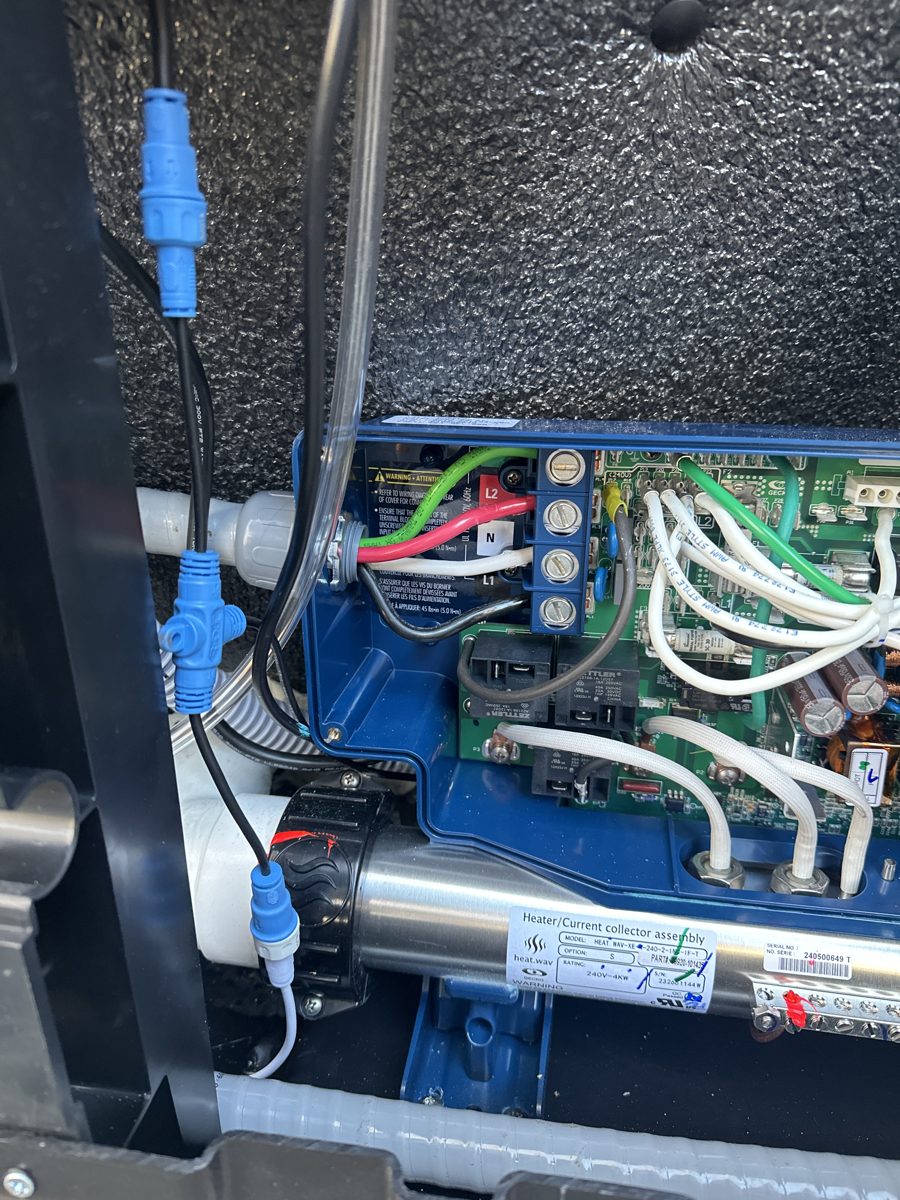
Open the equipment door on almost any spa and you will find a control pack from one of three companies — Balboa, Gecko or the spa maker's own (Watkins builds Hot Spring's and Caldera's). The electrical requirement is printed on that pack, and it is more reliable than the brochure. Balboa's BP500, for example, states a 40-amp load and a 50-amp maximum breaker — which is the continuous-load rule showing up in the real world, and the answer to "why is the breaker bigger than the spec?"
"My Panel Is Full" Usually Does Not Mean a Panel Upgrade
Three of the installs above started with a main panel that had no open spaces — one of them a 200-amp Eaton in Ashburn that already had an EV charger on it. In all three we ran a load calculation, confirmed the service could carry the tub, and freed two spaces with a pair of tandem breakers. No heavy-up. That is the honest answer more often than not, and it is a lot cheaper than the other one.
When the load calculation says the service genuinely cannot carry it, we say so, and a panel upgrade becomes part of the conversation. But we would rather run the numbers than assume.
Where You Put the Tub Can Fail the Inspection Before We Arrive
On a Vienna install, the wiring passed. The location did not. The Fairfax County inspector's list had nothing to do with our work: windows and doors within five feet of the water needed to be tempered glass; the disconnect had to be more than five feet from the water's edge; a nearby light needed GFCI protection; and the gutters, door frames, air-conditioning unit and a metal fence within five feet all needed bonding. The fix was to extend the slab and move the tub a few feet toward the yard.
Every one of those items was decided by where the dealer set the tub, before an electrician was ever involved. If you are still choosing a spot, the five-foot rule around glass and metal is the thing to check first — requirements vary by jurisdiction, and we confirm them with your authority having jurisdiction, but that list is a fair picture of what a Northern Virginia inspector looks at.
The Five Jobs We Actually Get Called For
- The new install, usually against a delivery date. "The tub arrives Thursday, can you wire it Friday?" is the normal case. We work around delivery on most of these.
- The plug-and-play tub that will not stay warm. Many entry spas ship at 120 volts with a 1,000-watt heater, which is slow in a Northern Virginia winter. Most can be converted to 240 volts and a 4,000-watt heater — a licensed-electrician job with a real circuit behind it. We did exactly that on a Woodbridge DayDream.
- The replacement tub on an existing circuit. A Stafford customer replaced a Bullfrog M8 with a bigger M9. Same 60-amp requirement, so the circuit stayed; only the whip needed extending. A bigger tub does not automatically mean a new circuit — unless the wire count changes.
- The relocation. In Fredericksburg the existing spa panel sat under a deck and the new tub went thirty feet away. We extended the feed, set a new GFCI panel and re-landed the breaker.
- The indoor tub. A Falls Church sunroom install ran conduit outside the house to reach it. Indoor installs bring the room itself in front of the inspector, not just the circuit — worth knowing before the tub goes through the door.
One More Thing: Wire to the Sheet That Came With Your Tub
A Falls Church customer's American Whirlpool sheet said 30 or 40 amps. The current listing for the identical model says 40 or 50. Specs change between model years, and a buyer who checks the website instead of the paper in the box can end up with the wrong circuit. Send us a photo of the sheet or the label on the control pack — it takes a minute and it settles the question.
Ready to plan yours? Call (703) 915-5351 or book a free video call estimate. Tell us the brand and model, where the panel is and where the tub is going, and we can usually tell you what the job looks like on the first call.