SparkWise Electric installs standby generators, transfer switches, interlocks and generator inlet boxes across Northern Virginia. We are licensed and insured, we pull the permit, and we meet the inspector.
Before anything else, the honest framing: most homeowners who call us about a generator do not end up needing a permanently installed standby unit. A transfer switch and a portable generator covers a lot of situations for a fraction of the cost. We will tell you which one you are actually in.
The Three Ways to Back Up a House
- Portable generator + transfer switch or interlock. The most common answer, and the bulk of our completed generator work. You already own or buy a portable unit; we install a transfer switch or a panel interlock plus an exterior inlet box so it can be connected safely. Typical setups are 6 to 10 circuits, 30A or 50A.
- Permanently installed standby generator. Sits on a pad outside, runs on natural gas or propane, starts itself when the power drops and transfers automatically. No hauling, no fuel cans, no waiting for it to be light outside. Significantly more money and more coordination.
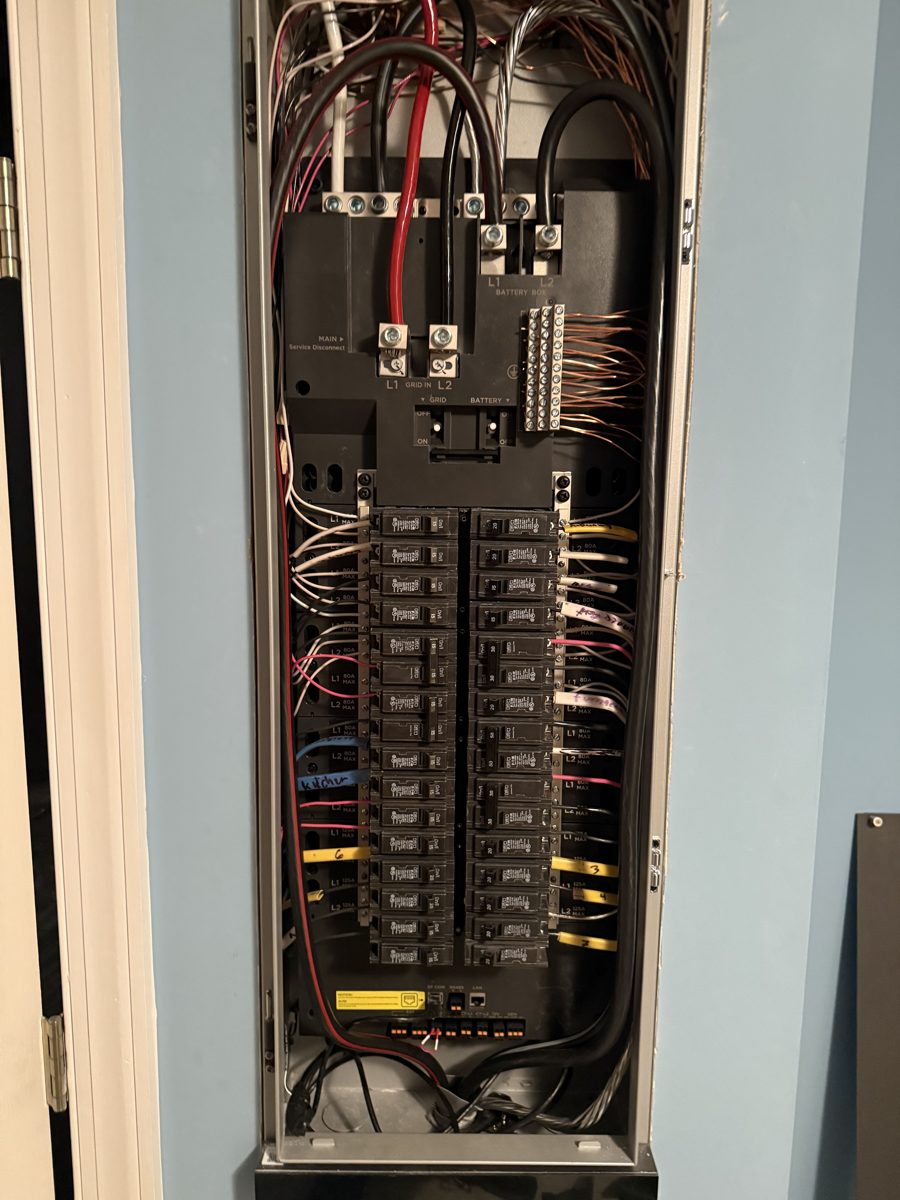
- Battery backup. Silent, no fuel, no maintenance schedule, and it works for outages measured in hours rather than days. See EcoFlow smart home panels. Several of our recent backup jobs have gone this way rather than to a generator.
What a Standby Generator Installation Actually Involves
This is the part most quotes summarise in one line. Below is the real scope from a current SparkWise estimate for a 22kW standby unit with a 200A service-rated automatic transfer switch at a Fairfax County home, so you can see what you are actually buying.
The pad
A pea gravel base — 3/8″ stone, roughly 3″ deep — with a pre-cast concrete generator pad set on top. The unit is then set and levelled on the pad. Getting the base right matters because the pad has to stay level through freeze and thaw.
The electrical
- Automatic transfer switch. A 200A service-rated ATS mounted and wired. Before it goes in, the existing service is field-verified — we do not assume the panel label is accurate.
- Generator feeder. Conductors sized to the unit’s output breaker, not to the nameplate wattage. On this 22kW example that is a 100A output breaker fed with three #3 copper THWN-2 conductors plus a #8 copper equipment grounding conductor.
- Service conductors from the ATS to the main panel. On this job, 4/0-4/0-4/0-2/0 aluminum SER, roughly 40 feet to a basement panel, with proper terminations.
- Underground conduit. PVC Schedule 40 between the generator and the transfer switch, trenched and backfilled at the burial depth the wiring method requires — 18 inches for PVC on this job, per NEC 300.5. Depths differ by method, so we confirm rather than work from memory.
- Grounding. Two 8-foot ground rods, #6 bare copper and acorn clamps, installed as a proper grounding electrode system.
- Starting battery. The generator needs one, and it is not always supplied with the unit.
Load shedding — the part people miss
A 22kW generator will not carry everything in a modern house at once. Rather than upsize the generator, the compliant answer is usually to shed the largest intermittent load — the air conditioning — when the generator is carrying the house. On this job that means running control wiring to the HVAC thermostat so the AC drops out during generator operation.
That is not a shortcut. Capacity compliance under NEC 702.4(B)(2) can be met either by sizing the generator for the full calculated load or by managing the load, and load shedding is the accepted method. Anyone quoting a standby generator without addressing this either sized it for the whole house or has not done the calculation.
Commissioning
Startup, a live transfer test and commissioning. A generator that has never been tested under transfer is an assumption, not a backup plan.
The Gas Side Is Not Included — Budget For It
This is the single biggest surprise in standby generator projects, so we put it in writing on every estimate. Gas line trenching, gas piping and propane tank placement and connection are excluded from our electrical scope and handled by others. You will need a licensed gas contractor or your propane supplier for that portion.
It also affects the electrical price. If the final propane tank location moves the generator further from the transfer switch, the conduit, conductor and trenching quantities change with it. We quote on an assumed distance and say so.
Customer-Supplied Equipment
Plenty of homeowners buy the generator themselves — warehouse clubs and online retailers sell package deals that are hard to beat. We are happy to install customer-supplied equipment. What changes is the warranty split: we warrant our workmanship, the manufacturer warrants the equipment. If the unit itself fails, that is a manufacturer claim, not a callback.
Transfer Switches, Interlocks and Inlet Boxes
The larger share of our completed generator work. Anonymized, from our own jobs:
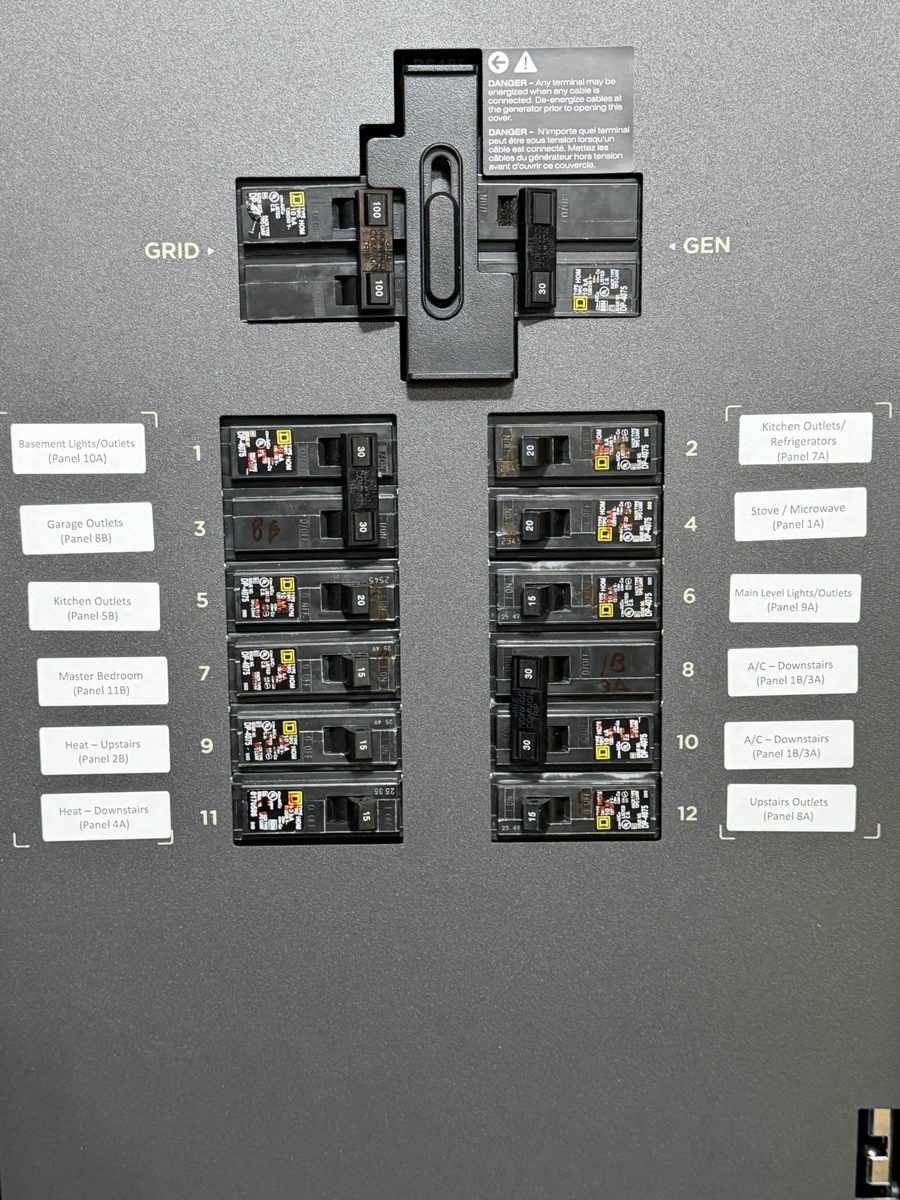
- Manual transfer switches. 6-circuit and 10-circuit units at 120/240V, typically paired with an exterior inlet box. Installed on jobs in Stone Ridge, Fredericksburg, Warrenton and Manassas.
- Panel interlocks. A mechanical interlock kit lets you back-feed the panel from a generator breaker while making it physically impossible to have both sources connected at once. Installed on an Alexandria panel. Cheaper than a transfer switch and covers the whole panel rather than a fixed circuit list — but it requires you to manage the load manually.
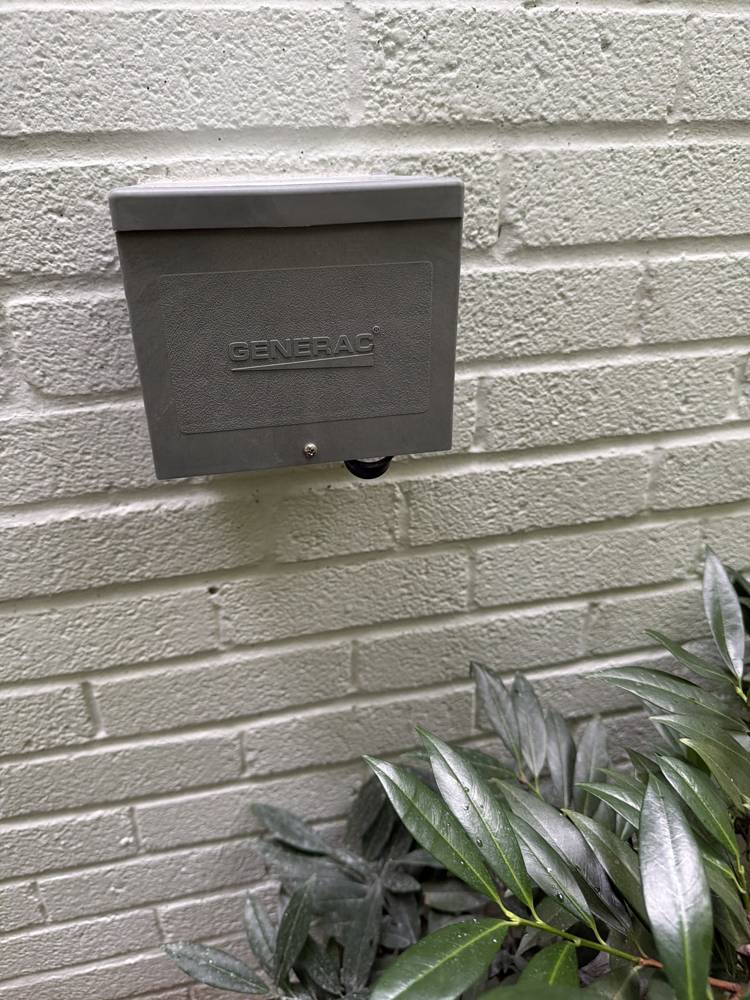
- Generator inlet boxes. A Stafford client wanted a 50A inlet box on the exterior wall next to the meter base. A Fredericksburg client had an inverter generator on the way and needed it tied in properly.
Full detail on generator transfer switch installation.
What we will not do: connect a generator by back-feeding a receptacle with a double-male cord. It energises the utility side, it can kill a lineman, and it is not a grey area.
Permits and Inspections
Generator work requires an electrical permit and inspection. On the Fairfax County example above, the permit and inspection fees are a line item on the estimate rather than a surprise at the end.
We file in Fairfax County through the PLUS portal, Loudoun County through LandMARC, Prince William County through the ePortal, and directly with Arlington County, Stafford, Fredericksburg, King George and the independent cities. Requirements vary by jurisdiction and do change, so we confirm the current rule with the authority having jurisdiction rather than assuming.
What It Costs
A transfer switch or interlock with an inlet box is a modest job. A permanently installed standby generator is a several-thousand-dollar electrical scope before the generator and before the gas work.
What moves the number: the distance from the pad to the transfer switch, whether the run is trenched, the size of the service, whether the panel is in a basement or on an outside wall, whether the ATS is service-rated, and the local permit fee. We put all of it on the estimate as line items, and we stage payment across acceptance, rough-in and final inspection rather than asking for it all up front.
Generator Installation FAQ
Will a 22kW generator run my whole house? Usually not everything at once. It will run the house with the largest intermittent load managed — typically by shedding the air conditioning while the generator carries the rest. That is a compliant design, not a compromise.
Do I need a standby generator or is a transfer switch enough? If your outages are short and occasional, and you do not mind going outside to start a portable unit, a transfer switch or interlock is the sensible answer. Standby makes sense when outages are long, frequent, or you cannot be there to start one.
Can I buy the generator myself? Yes. We install customer-supplied equipment and warrant our workmanship; the manufacturer warrants the unit.
Do you do the gas line? No. Gas piping, trenching and propane tank work is excluded from our scope and handled by a licensed gas contractor or your propane supplier.
Does my panel need upgrading first? Sometimes. The service size is field-verified before the transfer switch goes in, and if it is undersized the honest answer is a panel upgrade first.
What about battery backup instead? Worth considering if your outages are hours rather than days. No fuel, no noise, no annual service. See EcoFlow smart home panels.
Get a Generator Quote
Tell us how long your outages usually last and what you need to keep running. That conversation decides whether you are buying a transfer switch, a standby generator or a battery.
Call (703) 915-5351 or book online. Related: transfer switches, panel upgrades, whole-house surge protection, emergency electrician.
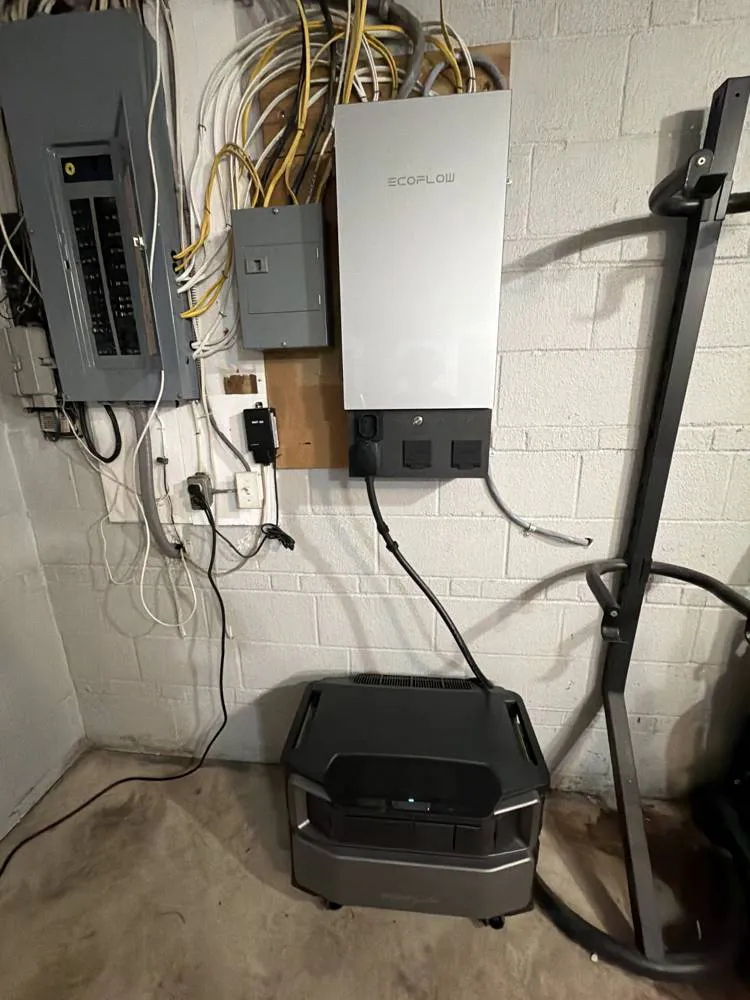
Backing up a larger home with a generator can call for an electrical panel upgrade.
Weighing a battery instead of a fuel-burning unit? Battery backup covers a chosen set of circuits silently and with no fuel to store, but it will not run indefinitely. Our EcoFlow DELTA Pro Ultra installation page explains what a whole-home battery really backs up, so you can compare the two honestly.
Battery backup instead of a generator? Besides EcoFlow, we install the Anker SOLIX Home Power Panel and F3800 kit.
Shopping a specific brand? See our Generac and Kohler standby generator installation page for placement clearances and what is in the electrical scope.