When the power goes out in Northern Virginia, most homes simply go dark and wait. A growing number do something different: a battery system takes over in a fraction of a second, the refrigerator never blinks, the Wi-Fi stays up, and the house keeps running on stored energy until the grid comes back. That is whole-home battery backup, and the equipment that makes it work — a smart electrical panel paired with high-capacity batteries — has matured fast. This post explains how these systems work, why they have become particularly relevant for Northern Virginia homeowners, and what an installation actually involves, using the EcoFlow Smart Home Panel platform we install as the working example.
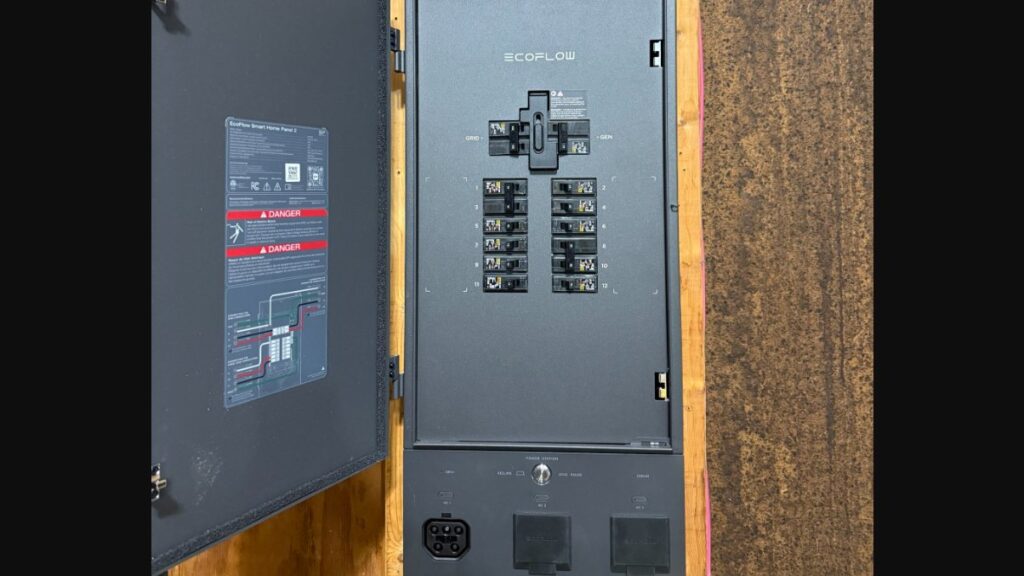
What a Smart Panel + Battery System Actually Does
Three jobs, one system:
- Outage backup. When grid power drops, the smart panel switches your home’s circuits to battery power automatically — no generator to start, no fuel, no manual transfer switch to throw. Switchover is fast enough that most electronics ride through without interruption.
- Load management. The panel controls circuits individually. You decide — from an app — which circuits are backed up, which shed first when the battery runs low, and when big loads like EV charging should run. During an extended outage, that control is the difference between a battery that lasts hours and one that lasts days.
- Solar-ready design. The same battery bank that backs up your home can charge from solar panels. If you install solar now or later, excess production fills your backup reserve first, and the system can shift the house onto stored solar power during expensive evening hours.
The practical result: instead of a portable generator running a few extension cords, you get a house that behaves normally when the grid does not.
Why This Matters in Northern Virginia Right Now
Northern Virginia’s grid is under a kind of demand pressure few regions have ever seen. The area is the largest data-center market in the world, and that build-out — along with the broader electrification of homes and vehicles — has utilities planning for load growth at a pace the region has not experienced in decades. None of that means the lights are about to start flickering, but it does mean the margin for weather events is a live question, and homeowners here have noticed.
The weather itself does its part. Summer thunderstorm lines, derechos, ice storms, and the occasional remnant of a tropical system all take down lines in Fairfax, Loudoun, Prince William, and Arlington counties every year. Most outages are short. The ones people remember — multi-day outages after a derecho or ice event — are exactly the scenario battery backup with solar charging is built for. And unlike a standby generator, a battery system helps on the 364 days the power stays on, by managing loads and storing cheap or solar energy for expensive hours.
The EcoFlow System: Smart Home Panel + DELTA Pro Ultra
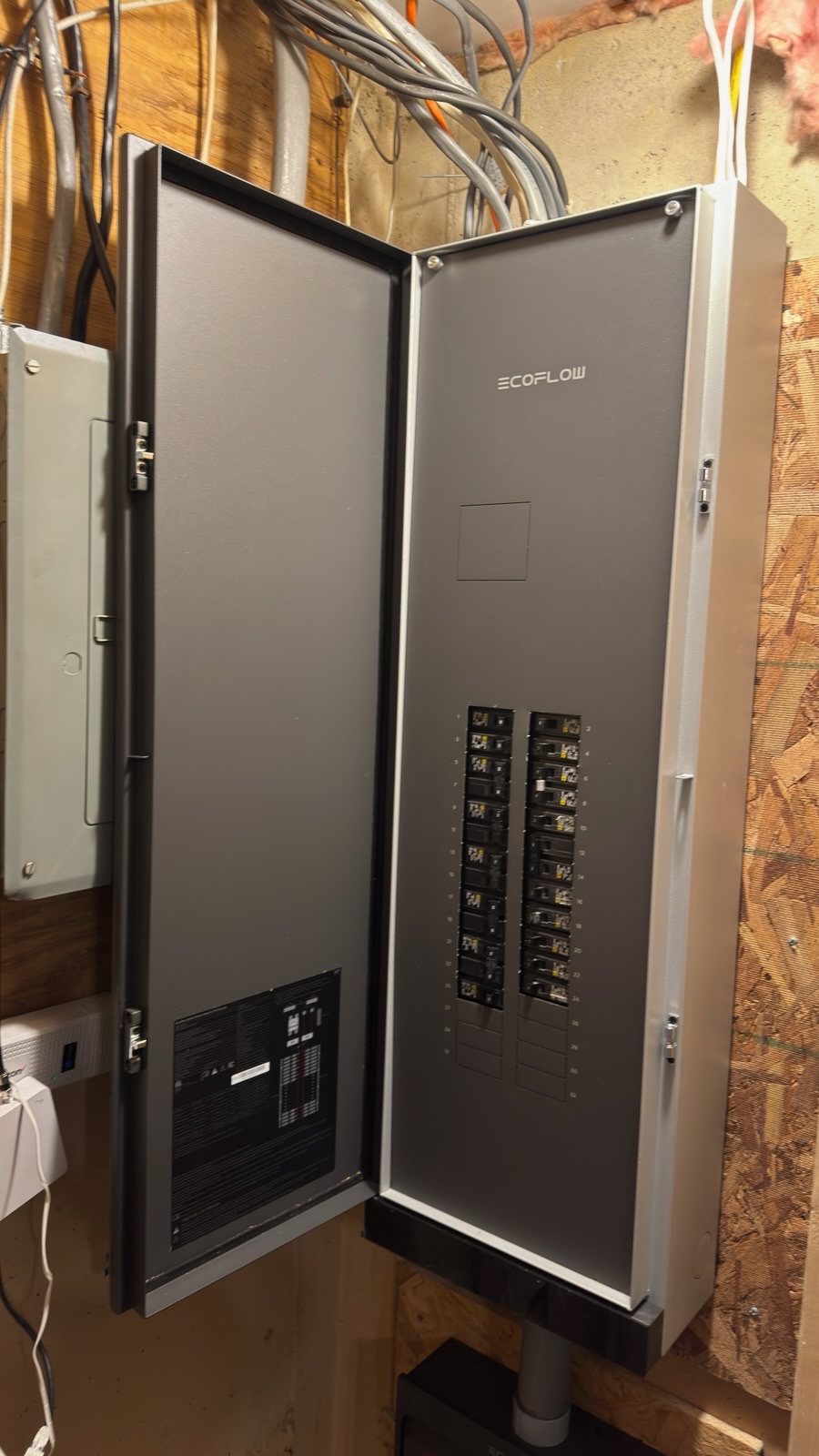
SparkWise Electric is a certified installer for the EcoFlow Smart Home Panel platform. The system has two main parts:
- The Smart Home Panel installs alongside your existing electrical panel and takes over control of selected home circuits. It handles the automatic grid-to-battery switchover and gives you per-circuit monitoring and control through the EcoFlow app.
- The DELTA Pro Ultra is the battery and inverter unit that actually powers the house — delivering up to 7.2kW of output per unit, with expandable battery capacity, so the system can be sized to your home’s real loads and runtime needs. Batteries can recharge from the grid or from solar.
Which circuits should be backed up, how much battery capacity you need, and whether your existing panel needs work first are all questions a load assessment answers — that is the starting point of every quote we do.
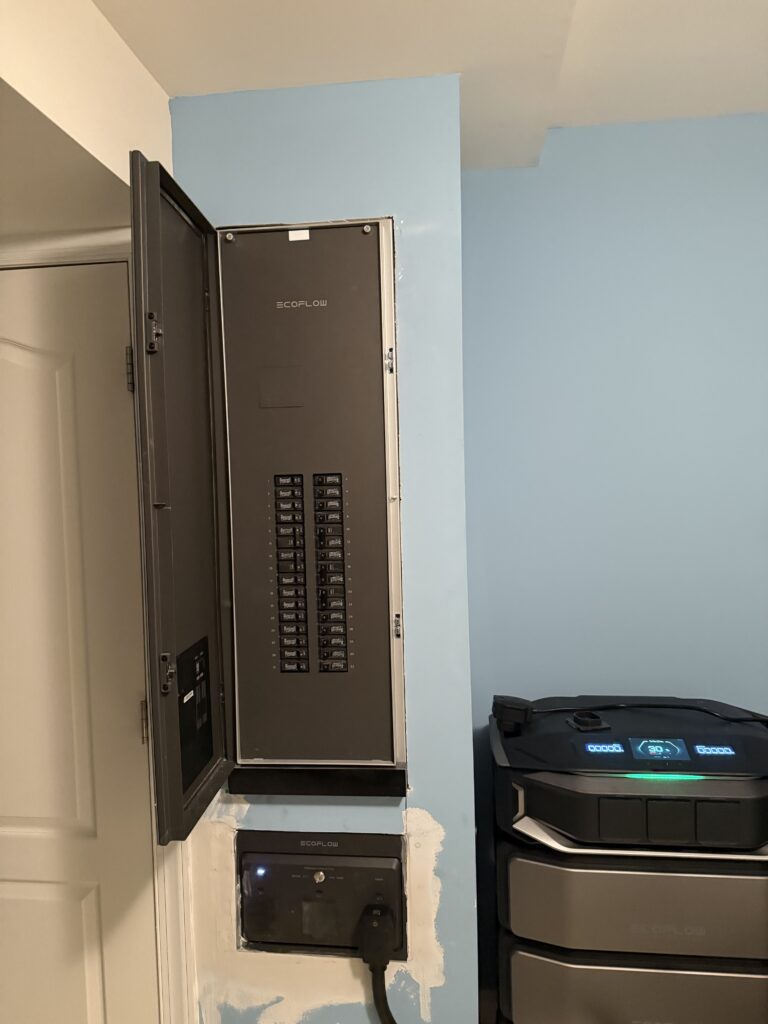
What Installation Involves
This is not a plug-in appliance — it is electrical service work that belongs in the hands of a licensed electrician. A typical installation includes:
- Assessment. We evaluate your existing panel, service size, and load profile, and identify which circuits you want backed up. Some homes need panel work first; many do not.
- Permits. Battery and interconnection work is permitted and inspected. Requirements vary by jurisdiction — Fairfax, Loudoun, Prince William, Arlington, and the independent cities each run their own process — and we handle the filing and inspection scheduling in all of them.
- Panel interconnect. The Smart Home Panel is wired to your main panel, the selected circuits are moved under its control, and the battery units are placed, mounted, and connected.
- Commissioning. We test the switchover, configure circuit priorities in the app with you, and walk you through operation before we leave.
If you are also planning a standby generator comparison, it is worth reading about generator transfer switches — the traditional approach the smart panel replaces — and pairing either path with whole-house surge protection, since backup equipment is itself sensitive electronics worth protecting.
One more installation note: placement matters. Battery units need appropriate clearances and an environment within their operating temperature range, so garages, utility rooms, and basements are the usual homes for them. We plan placement during the assessment so cable runs stay short and the finished installation looks like it belongs in the house.
What It Costs
System cost depends mostly on capacity — how many battery units you need for the runtime you want, and how many circuits come under smart control. A system sized to carry essentials through a typical outage is a very different project from one sized to run a whole large home for days, which is why we do not quote from a price sheet. Installation quotes are free: we assess the home, size the system honestly, and give you a firm written number.
Whole-Home Battery Backup FAQ
How is this different from a standby generator?
A generator burns fuel, needs maintenance and exercise cycles, makes noise, and only earns its keep during outages. A battery system is silent, maintenance-light, switches over faster, and works for you year-round through load management and solar storage. Generators still win on indefinite runtime during very long outages — unless the battery system can recharge from solar, which narrows that gap considerably.
Will it power my whole house?
It can be designed to — that is a sizing decision. Many homeowners choose to back up essentials (refrigeration, HVAC, well pump, internet, lighting) for longer runtime rather than every circuit for a shorter one. The smart panel makes either strategy work and lets you change priorities from the app.
Do I need solar panels to use it?
No. The batteries charge from the grid and back up your home without any solar at all. Solar adds the ability to recharge during an extended outage and to store your own production — and the system is designed so solar can be added later without redoing the installation.
Does it need a permit?
Yes. Panel interconnection and energy storage work is permitted and inspected, and the specifics vary by county and city in Northern Virginia. We pull the permit and handle inspections as part of every installation — it is included in the quote, not an extra.
Talk to a Certified EcoFlow Installer
SparkWise Electric installs EcoFlow Smart Home Panel systems across Northern Virginia — licensed and insured, VA Master #2710064102, VA Contractor #2705160838. Start with our EcoFlow Smart Panel installation page, or go straight to a free assessment: call (703) 915-5351 or book online.
If you have narrowed your choice to EcoFlow specifically, we go much deeper on the electrical side in EcoFlow DELTA Pro Ultra installation in Northern Virginia — what the install involves, how circuits get selected, and what drives the price.
Looking at Anker instead? We also cover Anker SOLIX Home Power Panel installation, including the Daily Mode vs Backup Mode decision that changes the scope.
Prefer an engine to a battery? See Generac and Kohler standby generator installation.