
Running power out to a shed, detached garage, or backyard workshop is one of the most common projects homeowners underestimate. It looks like a long extension cord problem. It is actually a permitted, inspected electrical installation with its own set of code requirements — trench depth, conduit or cable type, a disconnecting means at the building, grounding at the structure, and GFCI protection for every outdoor receptacle.
SparkWise Electric installs underground feeds to detached structures across Northern Virginia and the surrounding counties. We pull the permit, call in the utility locate, dig and inspect the trench, and leave you with a shed that is safe to use in the rain and legal to sell with the house.
What a Shed Electrical Installation Actually Involves
Every job is different, but a typical detached-building feed includes most of the following:
- A permit and inspection. Nearly every jurisdiction in Virginia treats a new circuit to a detached structure as permit work. The inspector will want to see the trench open before it is backfilled.
- A utility locate. Virginia law requires a locate request before any excavation. In practice this means a VA811 ticket and marked lines on the ground before a shovel moves.
- A trench at code depth. Required burial depth depends on the wiring method — direct-buried cable, PVC conduit, and rigid metal conduit each have different minimums, and some residential branch circuits qualify for reduced depth. Your electrician should confirm the applicable depth with the local inspector rather than assuming.
- A disconnecting means at the building. The NEC generally requires a way to shut off power at the detached structure itself, not only back at the house panel.
- Grounding at the structure. When a detached building is fed by a feeder, it typically needs its own grounding electrode — usually one or more ground rods — bonded per code.
- GFCI protection and weatherproof covers. Outdoor receptacles need GFCI protection and an in-use (“bubble”) cover rated for wet locations.
- Interior circuits. Lighting, switches, and receptacles inside the building, sized for what you actually plan to run out there.
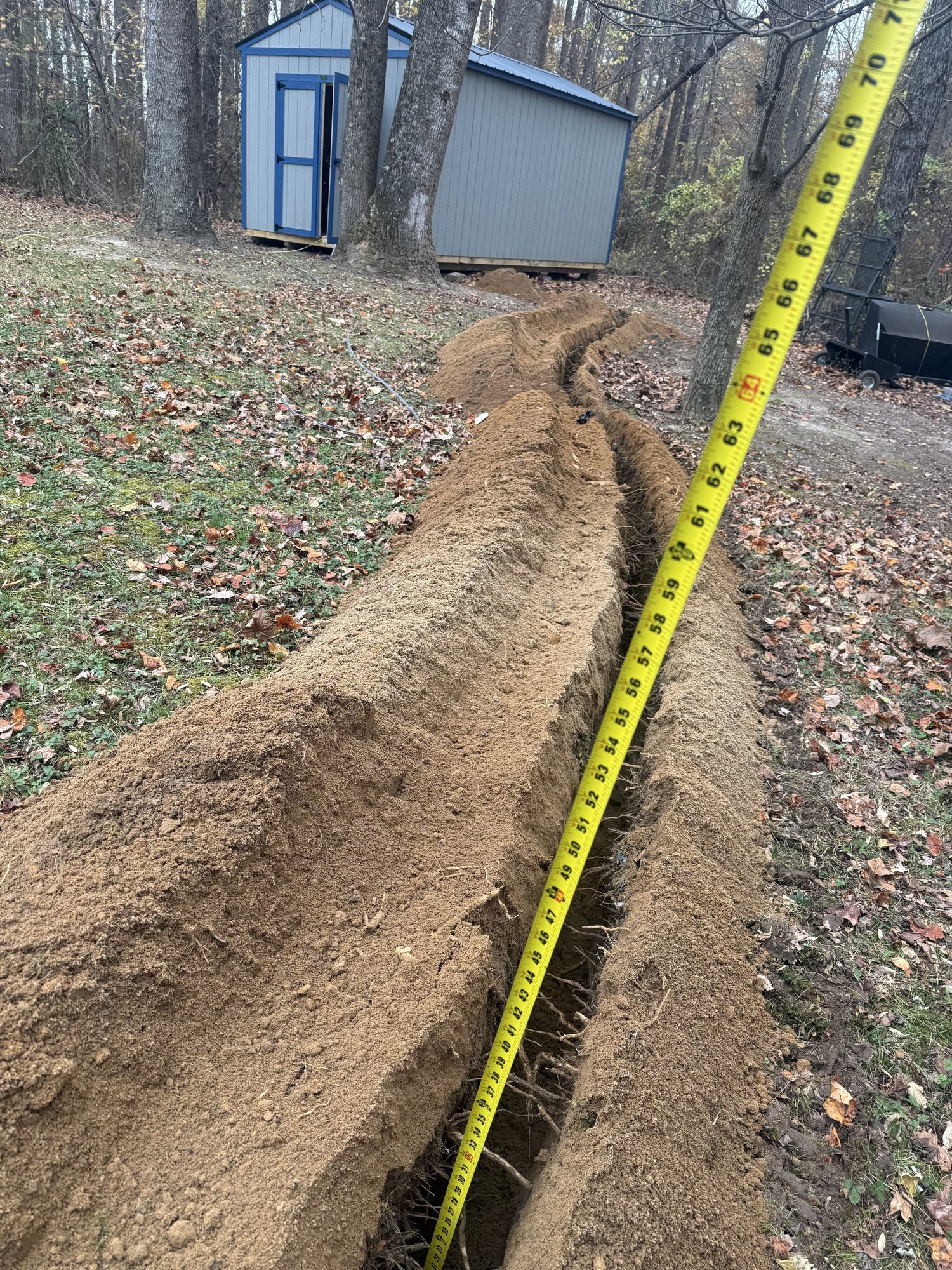
A Real Job: Underground Feed to a Backyard Shed in King George County
A homeowner in King George County contacted us to run power from the panel in their attached garage out to a new backyard shed — roughly 80 to 90 feet of underground run. They wanted two receptacles, a ceiling light, and a switch inside the door.
The complication was what was already in the ground. The path from the house to the shed crossed the property’s drainage lines, and there were propane lines running from the tank to a standby generator and to a fireplace at the corner of the house. Digging blind was not an option.
We filed a VA811 locate request and pulled a King George County electrical permit before any excavation. With the lines marked, we routed the trench to clear the known utilities and dug to a measured depth of 24 inches, set the conduit, and had the trench inspected before backfilling.
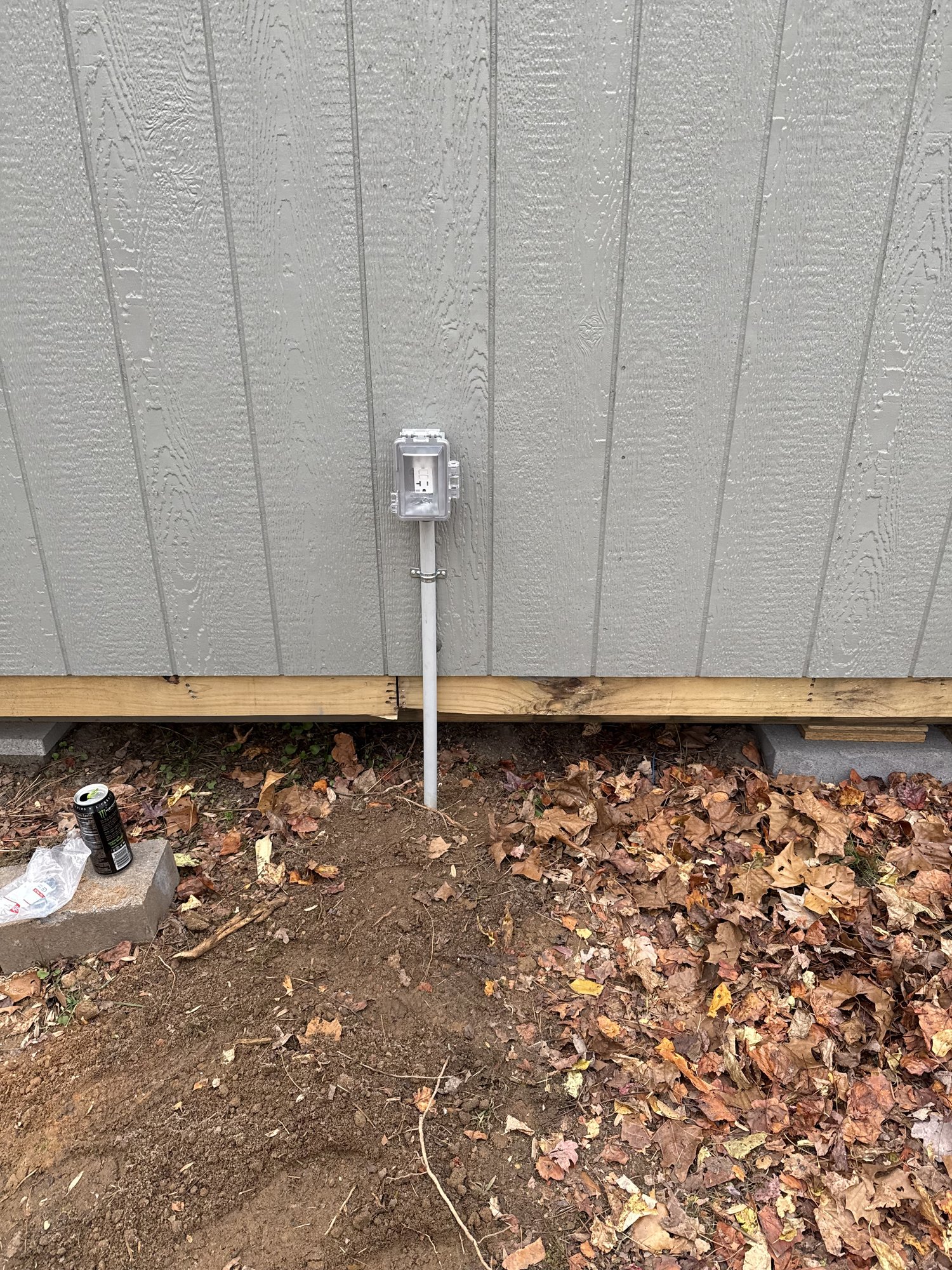
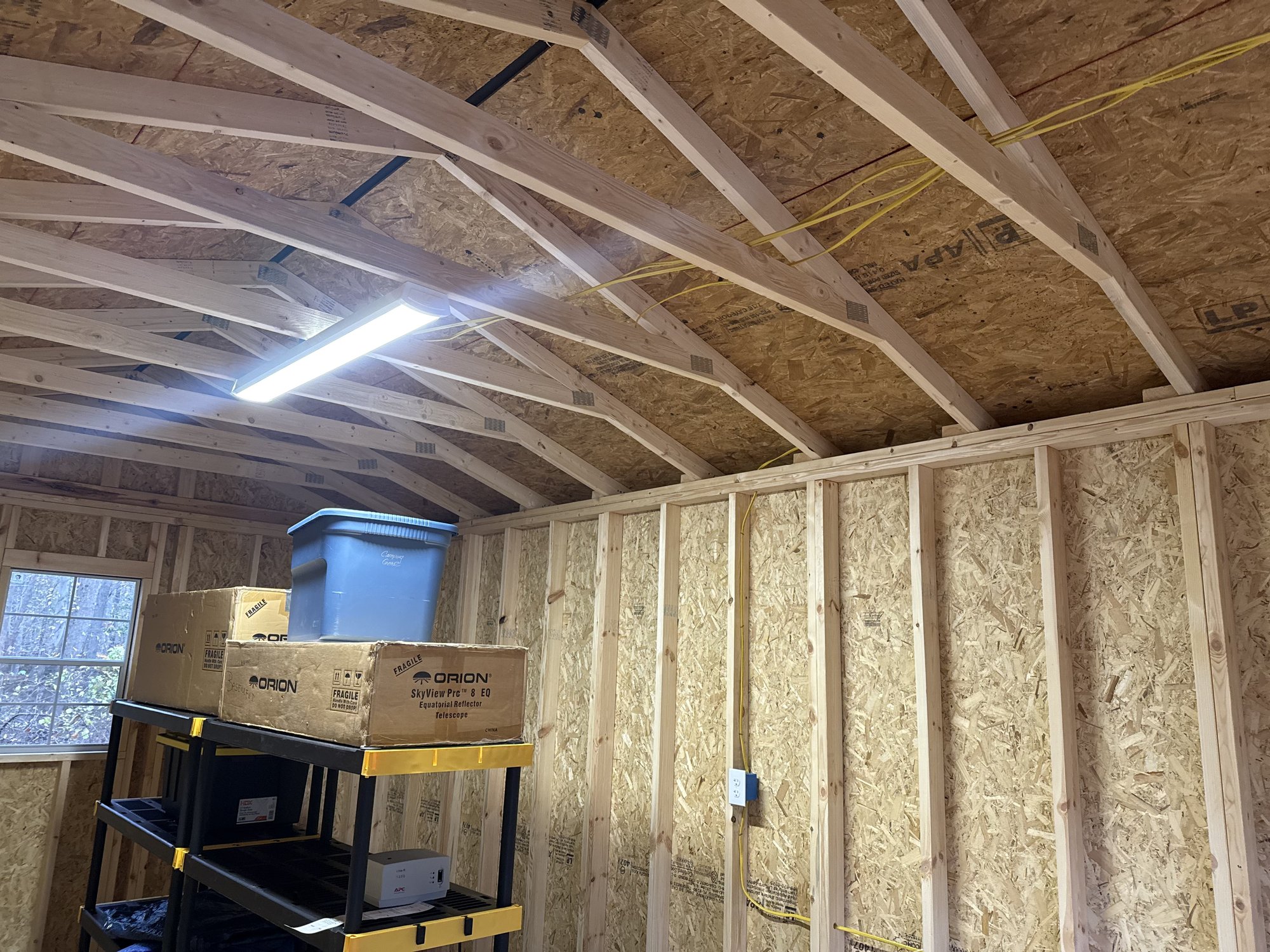
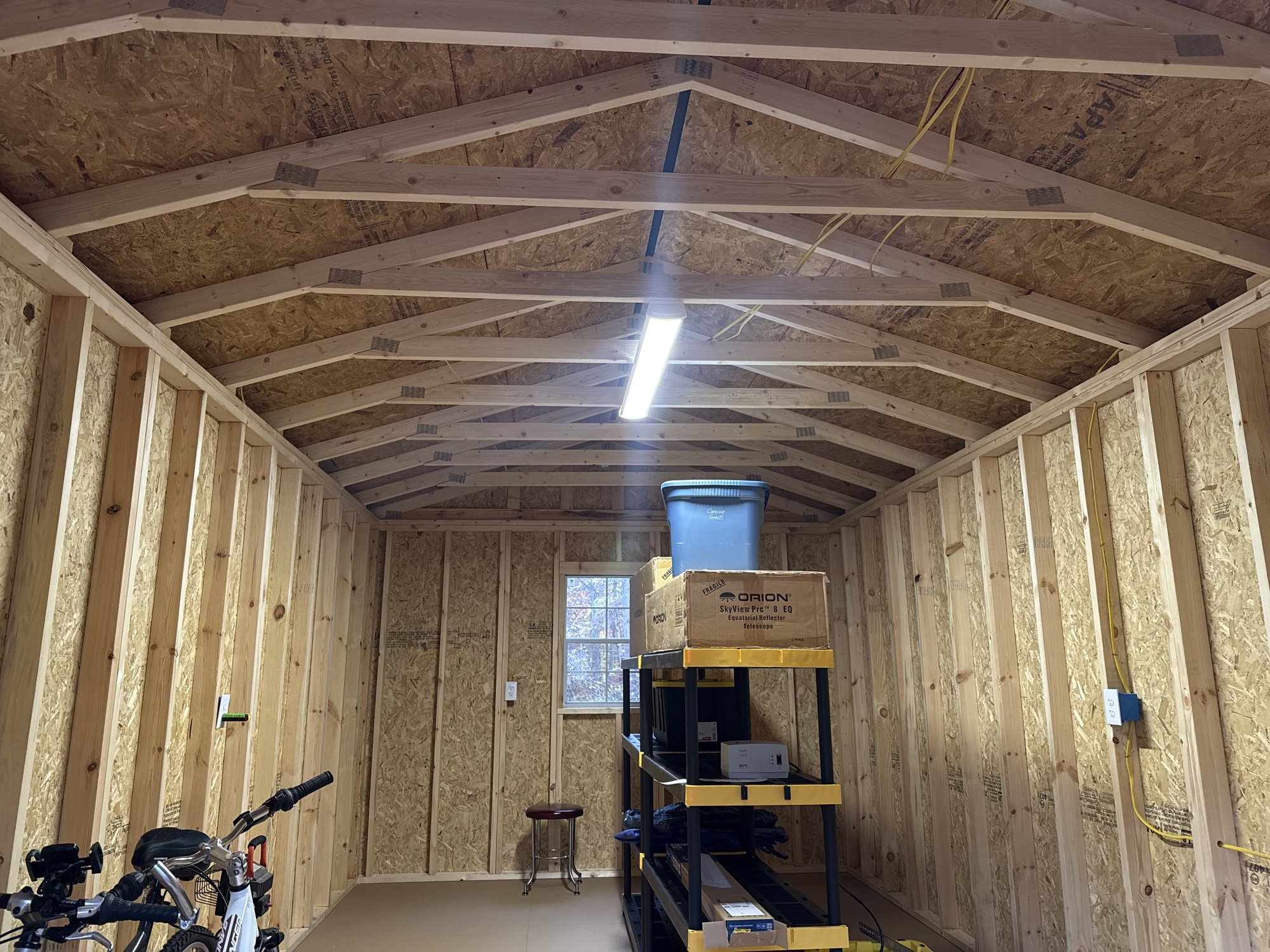
Inside the shed we installed the receptacles and the lighting circuit, ran the branch wiring along the roof trusses, and set an LED shop light on a switch by the door. Outside, a weatherproof GFCI receptacle with an in-use cover gives them power for tools and yard equipment without opening the building.
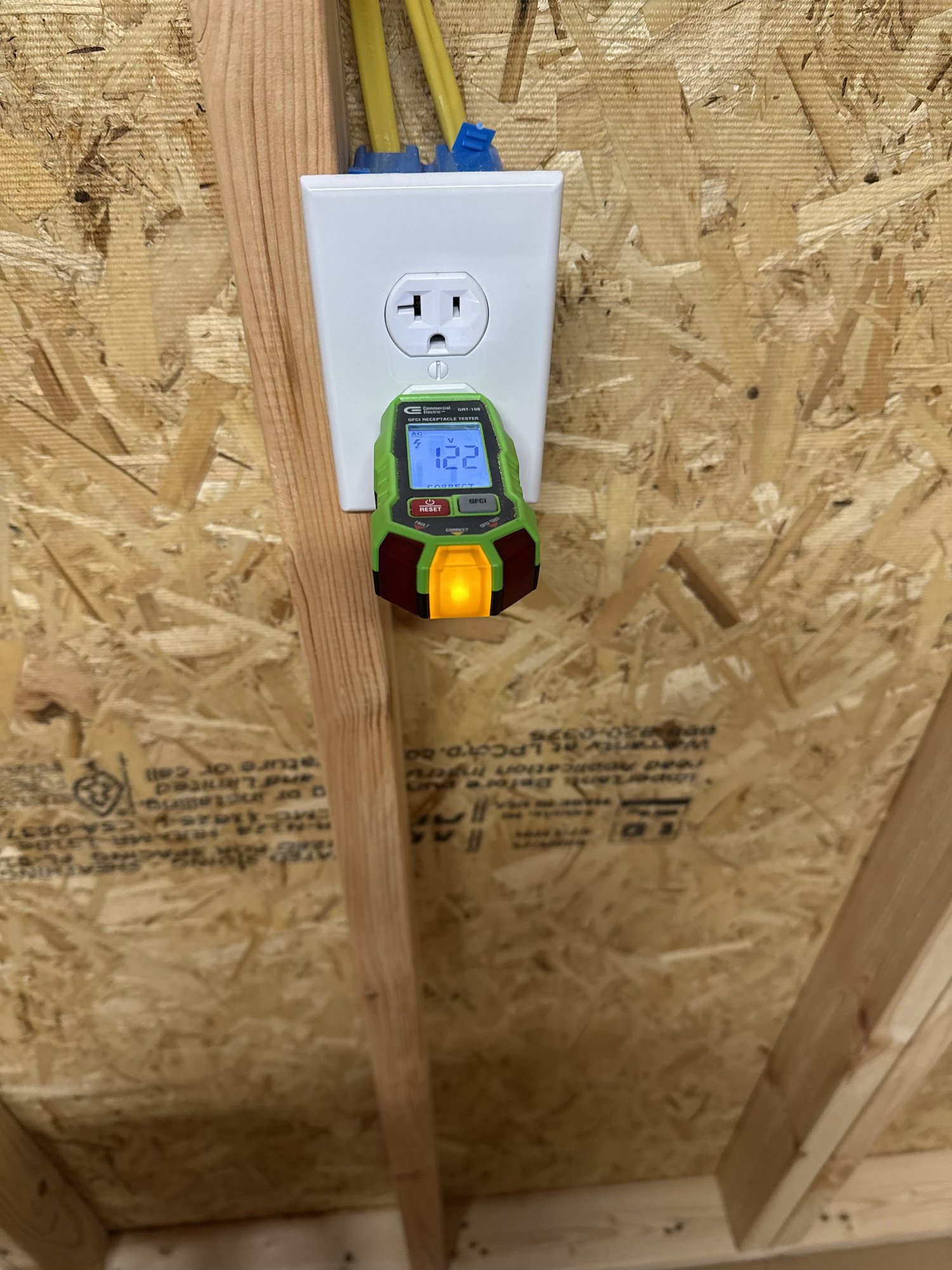
Every device was tested before we left. The work passed county inspection.
Why Homeowners Should Not DIY the Trench Run
We get called out to fix DIY shed feeds fairly often, and the failures repeat:
- Extension cords used as permanent wiring. A cord run through the grass to a shed is a shock and fire hazard, and it is not a wiring method the code recognizes for permanent use.
- Buried too shallow, or the wrong cable underground. Indoor-rated cable does not belong in a trench, and shallow burial invites a shovel or an aerator through the conductor later.
- No locate before digging. Hitting a gas line is a life-safety event. Hitting a communications or water line is an expensive afternoon.
- No disconnect or grounding at the building. These are the details inspectors catch, and they are the details that matter if something faults out at the shed.
- Unpermitted work discovered at closing. Unpermitted electrical work becomes the seller’s problem during a home sale, usually on the buyer’s timeline.
What It Costs
Pricing depends mostly on three things: the distance from the source panel to the building, what is in the ground along that path, and how much you want powered once you get there. A short run to a small shed with a light and two outlets sits at the low end. A long run with a sub-panel, obstacles to route around, and a workshop’s worth of circuits sits considerably higher.
We quote after looking at the actual path and your panel’s available capacity — not over the phone from a square-footage guess. If your existing panel does not have room for the new circuit, we will tell you that up front, since a panel upgrade may need to come first.
Common Questions
Do I need a permit to run power to my shed?
In almost every Virginia jurisdiction, yes. Requirements and fees vary by county or city, and your Authority Having Jurisdiction makes the final call — we confirm the specifics with your local office before we start.
Does my shed need its own sub-panel?
Not always. A single branch circuit is often enough for lighting and a couple of receptacles. A sub-panel makes sense when you are running multiple circuits, powering a workshop, or planning ahead for equipment like a compressor, welder, or mini-split.
Can the wire just be buried without conduit?
Some cable types are rated for direct burial, and some installations use conduit. Each method carries its own minimum burial depth and its own trade-offs for future serviceability. The right choice depends on the run, the soil, what else is in the ground, and what your inspector expects to see.
How long does it take?
A straightforward run is often a one- or two-day install, but the schedule is driven by the utility locate window and the inspection, not just the labor. Locates take a few business days, and the trench has to stay open until it is inspected.
Can you power a shed that is far from the house?
Yes. Long runs need larger conductors to keep voltage drop in check, which affects cost, but distance itself is not a barrier. We size the conductors for the actual run length rather than defaulting to whatever fits the breaker.
Related Services
- Electrical wiring and rewiring
- Dedicated circuit installation
- Electrical panel upgrades
- Lighting installation
- EV charger installation
Licensed and insured. Virginia Master Electrician #2710064102 | Virginia Class A Contractor #2705160838 | Maryland Master Electrician #16613. Permit, inspection, and code requirements vary by jurisdiction; your local Authority Having Jurisdiction has final say on what a given installation requires.
Lighting Inside the Building
Workshops and bar areas often want more than a shop light once the power is there. See under-cabinet and LED tape lighting installation for cabinet and accent lighting work.
Lost power to an outbuilding unexpectedly? See emergency electrician — answered 24/7.
Lighting the outside of the house too? See landscape and outdoor lighting.