
A ceiling fan adds comfort and cuts cooling costs year-round — but installing one safely is more than hanging a fixture. SparkWise Electric has completed 35 ceiling fan installations and replacements across Northern Virginia: brand-new installs where no fixture exists, swaps for an old fan or light, high-ceiling and sloped-ceiling mounts, and remote and wall-control setups. Licensed, insured, and done to code.
What people actually call us about
Looking back through completed work, the same handful of situations come up again and again. These are real jobs, with the customer details left out.
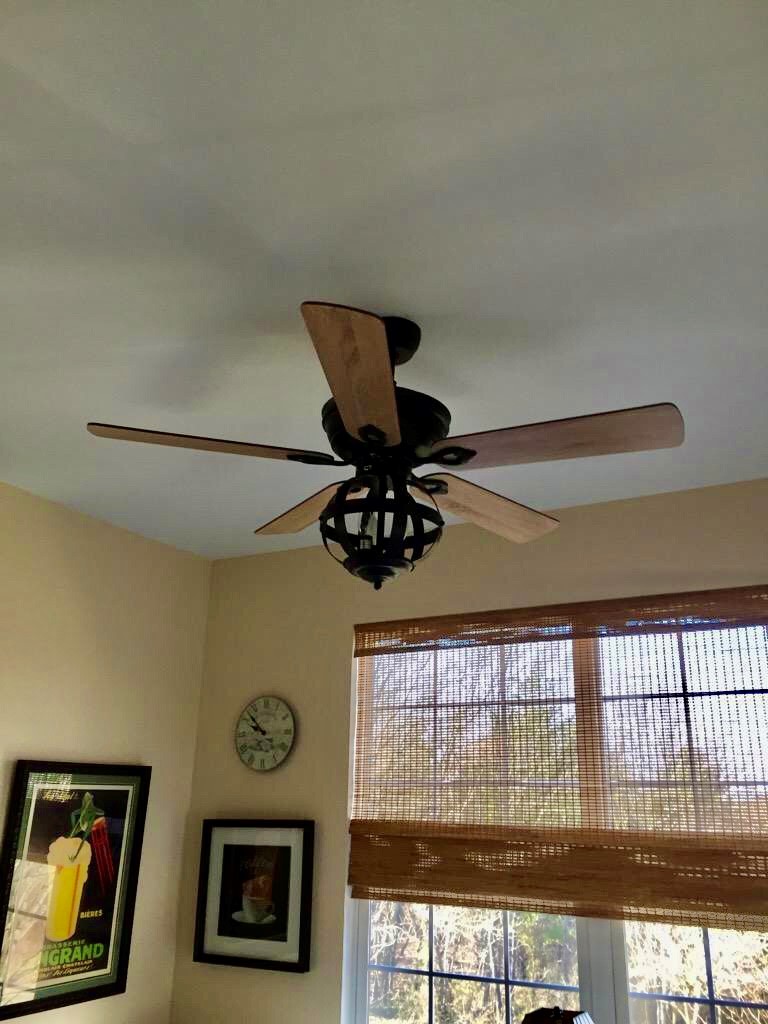
- A fan where a light used to be. A Falls Church homeowner wanted fans in two bedrooms that only had ceiling lights. Both existing boxes were standard fixture boxes, so we replaced each with a fan-rated box before mounting anything. This is the single most common version of the job.
- No fixture on the ceiling at all. Springfield and Warrenton jobs both needed a new fan box and switch wiring run from scratch — there was nothing on that ceiling to work from.
- Wiring nearby, but not where the fan goes. A Herndon home had attic access above the room and existing wiring in the general area, but nothing at the ceiling location itself. Attic access is what made that job straightforward instead of invasive.
- Two fans, two different jobs. A Lorton customer wanted two fans installed — one replacing an existing fixture, one a brand-new install with no fixture there. Same visit, very different amounts of work.
- High ceilings. Alexandria, Woodbridge and Linton Hall jobs all involved fans well above standard height, including a 72-inch fan in a high-ceiling room. These need the right downrod and safe access equipment, not a taller ladder.
- Fans as part of a bigger project. A Stafford job replaced four ceiling fans and three lights alongside a sub-panel installation and a new 240V garage circuit. When several things are already open, doing the fans at the same time saves a separate visit.
New install vs. replacement
These two jobs share a name and almost nothing else. It is worth knowing which one you have before you call anyone, because it changes the time and the price substantially.
- Replacing an existing fan: usually straightforward. We confirm the box is fan-rated and in good condition, swap the unit, and balance it. If the old fan was properly installed, this is the short version of the job.
- Replacing a light fixture with a fan: looks like a swap, usually is not. Most light-fixture boxes are not fan-rated, so the box comes out and a fan-rated one goes in. If you want the fan and light on separate switches, that may mean new switch wiring too.
- Brand-new install with no fixture there: the real job. Running the wiring, adding a switch leg, cutting in and bracing a fan-rated box. This is where a licensed electrician matters most, and where attic or crawlspace access makes the biggest difference to cost.
Why a fan-rated box is non-negotiable
This is the most common thing we find wrong on fans that were installed by someone else, and it is the one with real consequences.
A ceiling fan is heavier than a light fixture and, unlike a light, it moves continuously. A standard fixture box is not built for that load. Under NEC 314.27(C), an outlet box can only be the sole support of a ceiling-suspended fan if it is specifically listed for that use and marked with the maximum weight it will carry — and heavier fans need a box and bracing listed for that weight. A box that has held a light fine for twenty years tells you nothing about whether it will hold a fan.
We install the correct box and bracing every time, wire separate switching for fan and light where you want it, and confirm the circuit can carry the load. We will not hang a fan on a box that is not rated for one — not as a favour, not to save an hour. If that is the situation we find, replacing the box becomes part of the job.
Getting the size and height right
Fans we have installed have ranged from 42 inches up to 72 inches. Blade span should suit the room — an undersized fan in a large room moves air you cannot feel, and an oversized one in a small bedroom is loud and uncomfortable. As a typical guide:
- Up to about 144 sq ft (a small bedroom or office): 36–44 inch span
- About 144–225 sq ft (a standard bedroom): 44–50 inch
- About 225–400 sq ft (a living or family room): 50–56 inch
- Over 400 sq ft or a long great room: 56 inch and up, or two fans rather than one large one
Height matters as much as span. Blades should sit roughly 8 to 9 feet above the floor and far enough below the ceiling for air to move, which is what the downrod is for. An 8-foot ceiling usually calls for a flush or hugger mount; 9-foot and 10-foot ceilings take short downrods; vaulted and two-storey rooms need a longer one plus a sloped-ceiling adapter. Manufacturer specifications vary, so we size to the fan you have actually chosen.
Outdoor and covered-porch fans
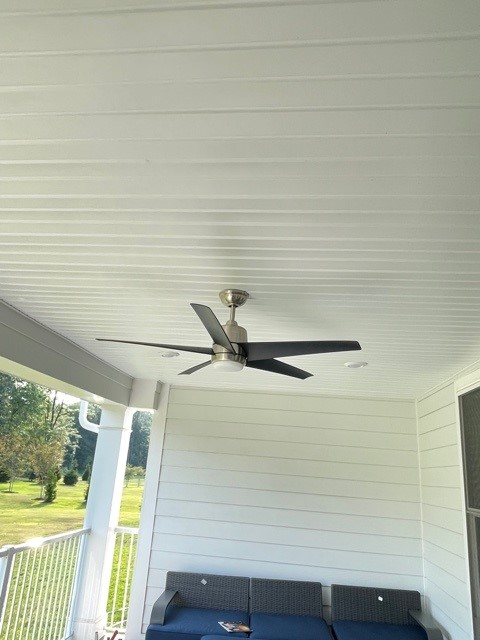
Porch and patio fans are a regular request, and the fan itself has to be right for the location. A damp-rated fan suits a covered porch that stays out of direct rain. Anywhere exposed to actual weather needs a wet-rated fan. Indoor fans installed outside corrode, the blades warp, and the motor fails early — it is not a code technicality, it is a fan that will not last. We also confirm the circuit feeding an exterior location is properly protected.
Fans in garages, shops, and commercial spaces
Larger spaces are a different problem. Rather than a residential paddle fan, a garage, workshop, or warehouse usually needs high-volume fans mounted to structure and fed in conduit — often on their own circuit rather than shared with lighting or receptacles.
What a SparkWise ceiling fan install includes
- Fan-rated support box and secure bracing on new installs
- Wiring for separate fan and light control, or remote and wall-control setup
- High-ceiling, vaulted and sloped-ceiling mounting with the correct downrod and adapter
- Balancing so the fan runs quiet and does not wobble
- Assembly of a fan you supplied yourself, if that is how you bought it
- Haul-away of the old fixture, cleanup, and a full test on every speed before we leave
Permits and inspections
A like-for-like fan replacement generally does not require a permit. Running new wiring or adding a new circuit often does, and requirements differ between Fairfax County, Arlington, Prince William County, Loudoun County, Alexandria, and Falls Church. We confirm with the authority having jurisdiction before starting, pull the permit when one is needed, and meet the inspector. If a job needs a permit, we will tell you so before we begin rather than after.
What drives the cost
We quote each job rather than working from a flat rate, because the range is genuinely wide. The things that move the number:
- Whether wiring already exists at that spot. The single biggest factor by a distance.
- Access. An accessible attic above the room is straightforward. A finished ceiling with occupied space above means fishing wire, and sometimes drywall repair.
- Ceiling height. Anything needing a lift or scaffold rather than a ladder adds time and equipment.
- Switching. Separate fan and light control, or adding a wall control where there is only one switch leg, means additional conductors.
- Quantity. Several fans in one visit costs less per fan than the same fans across separate visits.
Ceiling fan FAQ
Can you install a fan where there is only a light?
Yes. If the box is not fan-rated, and most are not, we replace it with one that is.
Can you add a fan where there is no fixture at all?
Yes. We run the wiring and add the switch. This is the version of the job that genuinely needs a licensed electrician.
Do you handle high or vaulted ceilings?
Yes, with the correct downrod, a sloped-ceiling adapter where needed, and proper access equipment.
Can I supply my own fan?
Yes, and plenty of customers do. We will assemble and install it. We warrant our workmanship; the manufacturer warrants the fan itself.
Will a ceiling fan lower my cooling bill?
It can, but not the way people expect. A fan cools people, not rooms — it works by moving air across your skin. Running one in an empty room costs money and does nothing. Used properly, it lets you raise the thermostat a few degrees and stay comfortable, and that is where the saving comes from.
My fan wobbles. Is that dangerous?
Usually it is a balance or mounting issue rather than an emergency, and it is fixable. But a fan that has started wobbling, dropped, or is making a grinding noise should be switched off until someone looks at it — that can indicate the box or bracing is failing. If a fan is sparking, smoking, or the switch is hot, treat it as urgent and see our emergency electrician page.
Where we install ceiling fans
Living rooms, bedrooms, kitchens, sunrooms, high-ceiling great rooms, garages and workshops, and covered patios and porches. Completed fan work spans Springfield, Fairfax, Falls Church, Alexandria, Gainesville, Manassas, Chantilly, Reston, Herndon, Woodbridge, Arlington and McLean, plus Stafford, Warrenton, Dumfries, Aldie, Lorton and Haymarket.
Related electrical work
Fans are often one part of a larger lighting or wiring project. See lighting installation for fixtures and retrofits, recessed lighting installation where fans and cans share a ceiling, electrical wiring for new circuits and rewiring, and dedicated circuits when a room needs capacity of its own.
Stay comfortable year-round
Get a free ceiling fan installation estimate from a licensed Northern Virginia electrician — call (703) 915-5351 or book online.
If the fan you need is in the roof, not the ceiling, see attic fan installation and replacement — a different job with different wiring.
Swapping a fan for a chandelier is a common request; the box rating is the first thing we check.
Already on the ladder? We often replace expired alarms in the same visit — smoke and CO detector installation.