
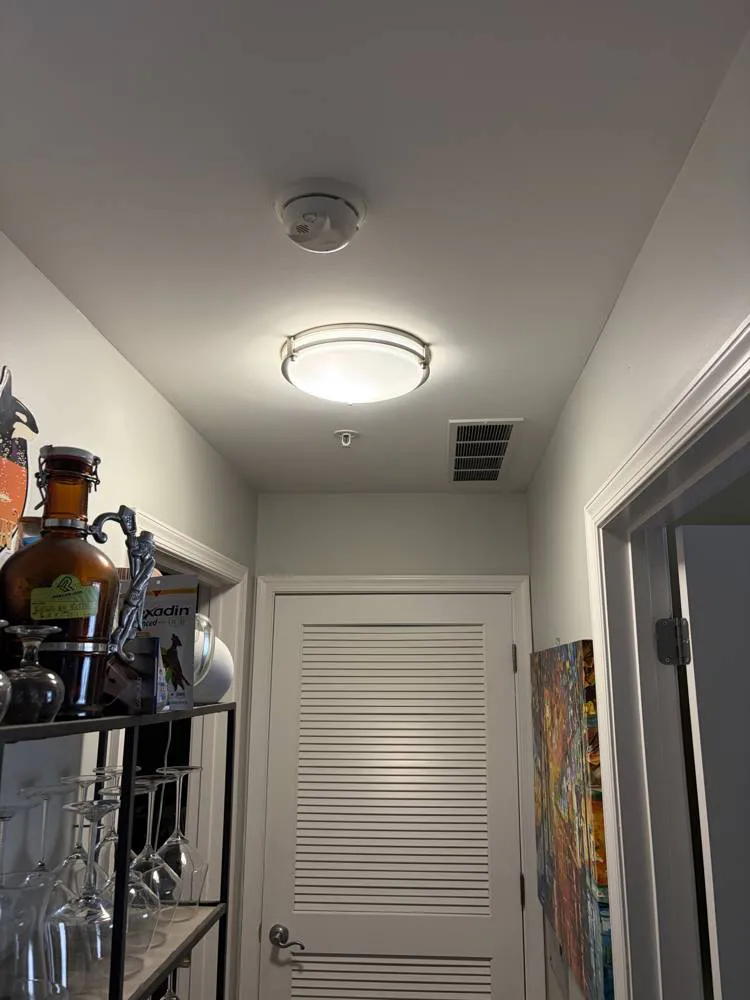
Smoke and CO Detector Work We Actually Do
Across Northern Virginia and the Maryland suburbs we have completed more than thirty smoke and carbon monoxide detector jobs — in Chantilly, Gainesville, Alexandria, McLean, Woodbridge, Leesburg, Springfield, Dumfries, Arlington, Fairfax, Falls Church, Bristow, Round Hill and King George. Almost all of them are one of four things:
- Whole-house replacement of expired hardwired units — every smoke and CO alarm in the home swapped at once so they are all the same age, the same brand and interconnected. The most common job, and the one we recommend when the units are past ten years.
- Labor-only replacement of owner-furnished detectors in Chantilly, Alexandria and Round Hill — you buy the units, we hang and interconnect them. A common request, with one caveat below.
- Adding a hardwired CO alarm where a home had smoke alarms but no carbon monoxide detection, including a Chantilly install and a Falls Church home where the new unit interconnects with battery backup.
- Battery combo smoke/CO units in an Arlington home where the wiring did not support hardwiring — a legitimate option, and we say so rather than sell a rewire nobody needs.
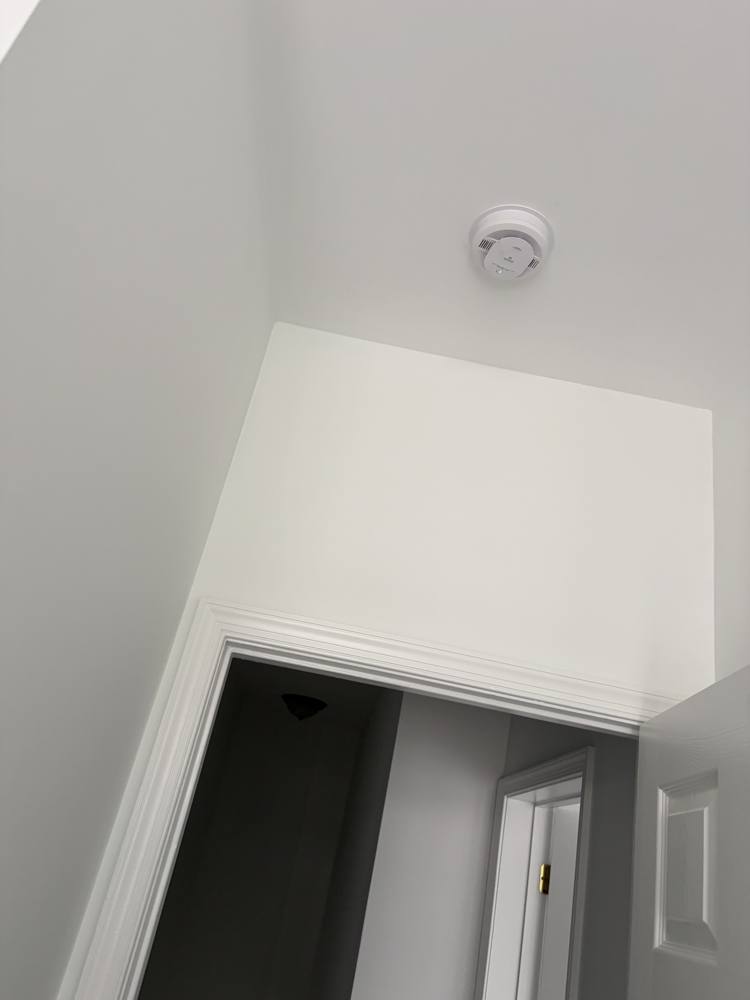
Hardwired, Interconnected, Battery Backup — What Those Words Mean
Hardwired means the alarm is powered from a 120-volt circuit, so it never depends on a battery to work. Interconnected means the alarms are wired together on a third conductor (or paired wirelessly) so that when one sounds, they all sound — a basement fire wakes the person asleep upstairs. Battery backup keeps them working during a power outage, which is exactly when candles and generators come out.
Most homes in the region built since the 1990s have all three. Older homes often have a mix: a hardwired unit in the hall, a battery unit in a bedroom someone added later, and nothing in the basement. We can extend the interconnected circuit into an addition or a finished basement, and where a room has no wiring at all, listed wireless-interconnect units bridge the gap without opening walls.
Where They Go
The usual pattern the model codes and Virginia's residential code point to: inside each sleeping room, outside each sleeping area in the hallway, and on every level of the home including the basement. Carbon monoxide alarms go outside sleeping areas and on every level with a fuel-burning appliance or an attached garage. Requirements differ between new construction, additions, and straight replacements, and your authority having jurisdiction has the final say — we confirm before quoting rather than guess.
- Ceiling mount in the center of the space where possible, or high on the wall within the manufacturer's stated distance from the ceiling.
- Away from bathrooms, cooking appliances and supply registers — the three biggest sources of nuisance alarms.
- Not in the peak of a vaulted ceiling where dead air collects; the manufacturer's instructions give the offset.
- In the Alexandria labor-only job, one unit at 20 feet on a two-story ceiling had to be scheduled separately with a lift — height matters for these too.
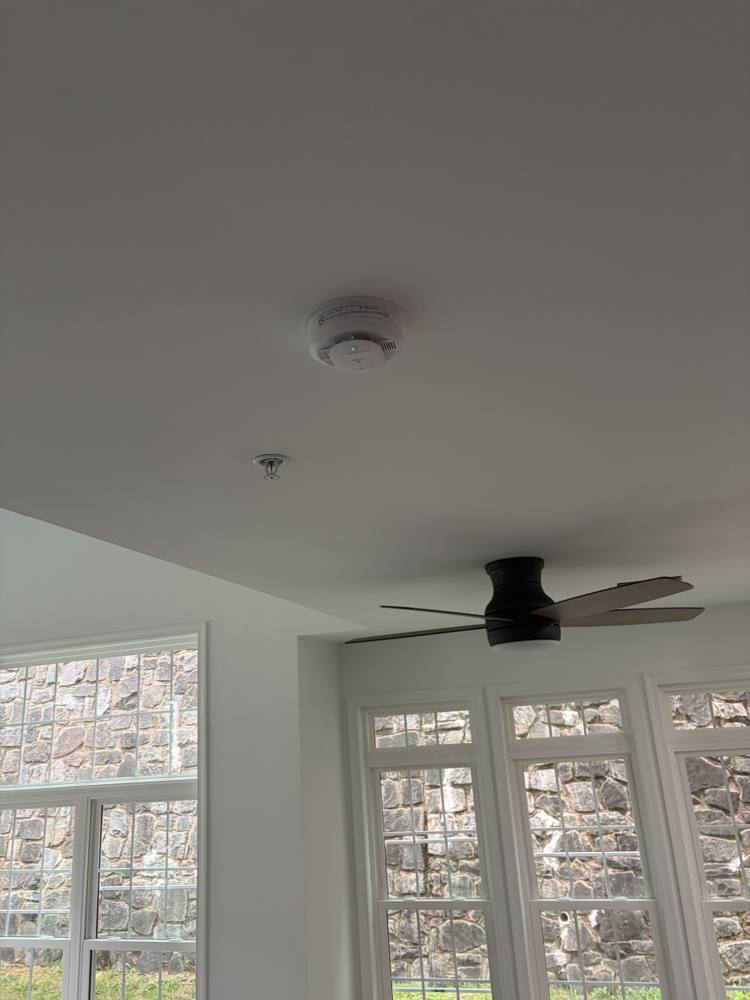
First Alert, Kidde, X-Sense — Which Ones Interconnect
Nearly every hardwired alarm we replace in Northern Virginia is a Kidde or a First Alert / BRK, and the single most useful thing to know before you shop is that hardwired alarms interconnect only within their own brand family. A new Kidde will not talk to the First Alert units in the next hallway. Match the brand already in the house, or replace the whole set at once. X-Sense and the newer First Alert and Kidde wireless-interconnect models are the answer for a room with no alarm wiring: a listed wireless unit joins the hardwired group without opening a wall. Combination smoke/CO units from either brand are what we install by default where a CO alarm is required.
The Expiry Rule Nobody Checks
Every smoke alarm has a manufacture date on the back and a service life, typically ten years; CO alarms are often shorter. After that the sensor degrades even if the test button still chirps. If you have lived in the house long enough to have replaced a water heater, the alarms are probably due. A whole-house swap is a two-hour job and the cheapest life-safety upgrade available.
Buying Your Own Detectors: One Caveat
We install owner-furnished units all the time. Two things to check before you order: hardwired alarms from different manufacturers generally will not interconnect with each other, so match the brand already in the house or replace all of them; and buy the hardwired version, not the battery-only one, if the box in the ceiling has wiring in it. On an Alexandria service call the owner's new unit turned out to be defective out of the box — we carry units on the truck for exactly that reason.
Permits
Replacing detectors on existing wiring is generally treated as maintenance. Running new wiring for detectors in an addition or a finished basement is new work and may be permitted depending on your jurisdiction; Fairfax, Loudoun, Prince William, Arlington and the independent cities each handle it differently. We confirm with the authority having jurisdiction.
Common Questions
Why does my alarm chirp at 3 a.m.?
Almost always a low backup battery, and it chirps at night because the house is cooler and the battery voltage dips. If a fresh battery does not stop it, the unit is at end of life.
Do I need CO alarms if everything in the house is electric?
An attached garage is a fuel-burning source. If you have no gas appliances, no fireplace and no attached garage, the requirement is lighter — but a combination unit costs little more and we generally recommend it.
Can you add a detector to a room with no wiring?
Yes — either by fishing a cable to extend the interconnected circuit, or with a listed wireless-interconnect unit that talks to the hardwired ones. We will tell you which is sensible for the room.
Will you do this as part of a bigger job?
Often. Detector replacement is bundled with panel work, safety inspections, ceiling fan installs and pre-sale punch lists all the time. If we are already on a ladder in your house, ask.
Call (703) 915-5351 or book a free video call estimate. If you are selling or just bought a home, our electrical safety inspection covers detectors along with the panel, GFCI protection and grounding.