
Most people find out they have a Federal Pacific panel in one of three ways: a home inspector flags it during a sale, an insurer asks about it, or an electrician opens the cover while quoting something else entirely.
Whichever way you got here, the useful thing is a straight account of what is actually known about these panels, what is myth, and what replacing one involves. SparkWise Electric replaces Federal Pacific and other obsolete panels across Northern Virginia — recent ones in Fairfax, Reston and Woodbridge.
How to Tell If You Have One
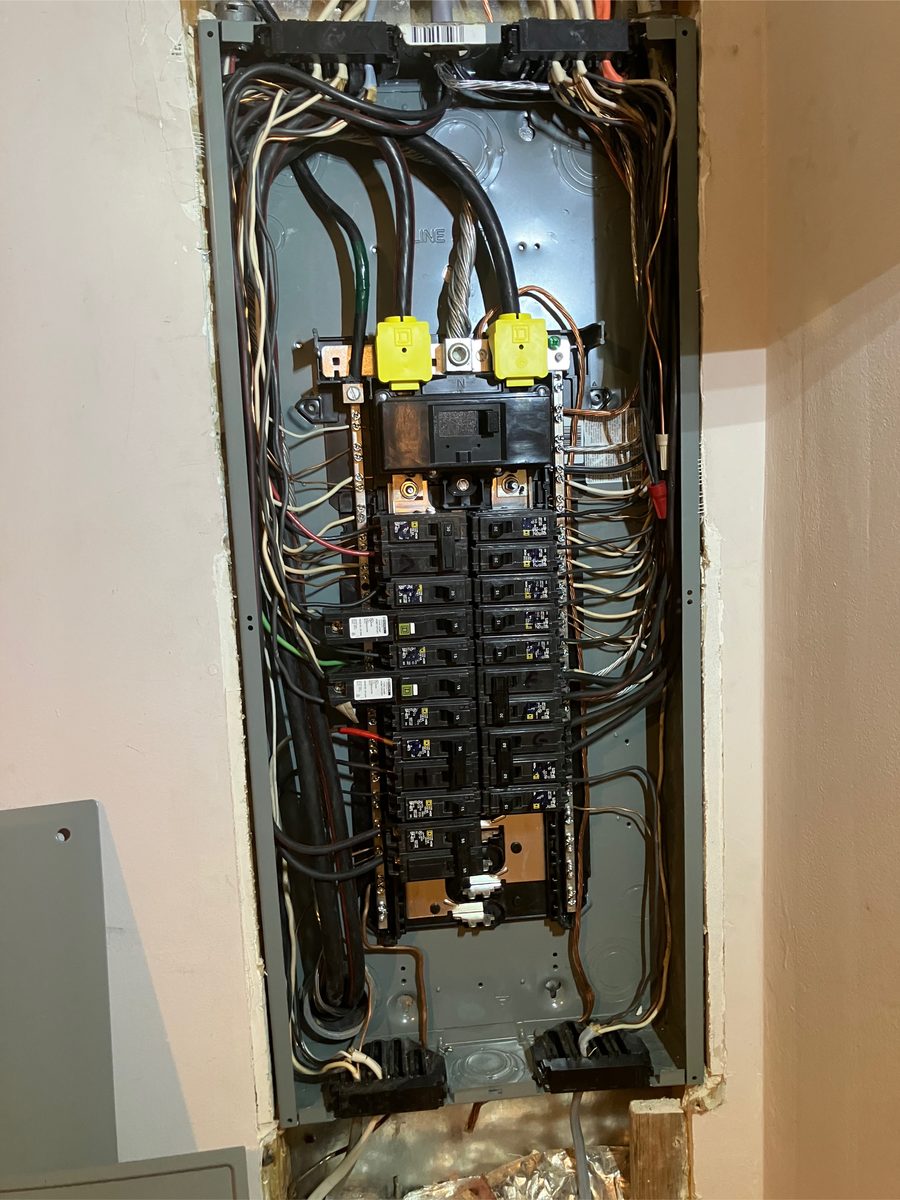
Federal Pacific Electric panels were installed widely from roughly the 1950s into the early 1980s, which puts them squarely in Northern Virginia’s mid-century housing stock — the brick ramblers and 1960s and 1970s colonials across Arlington, Fairfax, Falls Church, Reston and Annandale.
- Look for “Federal Pacific Electric” or “FPE” on the panel door or label.
- Look for “Stab-Lok” — usually on the label inside the door, sometimes on the breakers themselves.
- The breaker handles are often a distinctive narrow style, and many are red-tipped, though colour alone is not a reliable test.
If you are not sure, send us a photo of the open panel door and the label. That costs you nothing and settles it in a minute.
The Recall That Never Happened
This is where most of what you will read online is wrong, including on other electricians’ websites, so it is worth being precise.
Federal Pacific panels were never recalled. The Consumer Product Safety Commission opened an investigation around 1980 and closed it in 1983 without making a final safety determination, citing the cost of continuing. No recall was issued then and none has been issued since.
That is not the same as a clean bill of health, and the CPSC said so itself — in a later clarification the commission noted that closing the case was not a finding that the panels were safe. The question was left unanswered rather than settled.
What has accumulated since is independent testing. Research published by electrical-safety engineer Jesse Aronstein, PhD, PE, found that a substantial share of Stab-Lok breakers failed to trip under overload conditions in laboratory testing, and that a smaller fraction would jam and fail to trip at all. Estimates of resulting fires and damage exist in that literature, but they are estimates drawn from fire reports rather than an official finding, and we would rather cite them as such than dress them up.
So the honest summary: no recall, no official determination, and a body of independent testing serious enough that inspectors flag these panels, many insurers ask about them, and essentially every working electrician replaces them on sight. That is the basis on which we would recommend replacing yours — not a recall that does not exist.
What the Actual Concern Is
A circuit breaker has one critical job: to open the circuit when current exceeds what the wiring can carry safely. The concern documented in independent testing of Stab-Lok breakers is that some do not do that reliably. A breaker that does not trip leaves the wire behind it to absorb the fault.
There is a second, more immediate issue worth knowing about. Some Stab-Lok breakers have been found to allow current through even with the handle in the off position. If you have one of these panels, do not assume a circuit is dead because you switched it off — test before touching anything.
It is also worth saying what we are not claiming. We cannot tell you that your specific panel will fail, and nobody honest can. Panels of this vintage have been in service for decades. The case for replacement is about a component whose reliability has been credibly questioned sitting at the point in your house where reliability matters most.
Why It Usually Comes Up
Across the Federal Pacific replacements we have done, the trigger is almost never the panel itself misbehaving. It is one of these:
- Buying the house. A Fairfax customer contacted us with a sentence we hear often: they had just bought a home with a 1960s Federal Pacific panel and wanted it replaced with something current. Inspection reports routinely flag these panels, and the question lands on the buyer.
- Insurance. Some carriers ask about panel brand, and some will surcharge or decline. This varies enormously between insurers, so ask yours directly rather than assuming — but if a renewal or a new policy is what brought you here, you are not imagining it.
- Adding a modern load. A Woodbridge customer called about installing an EV charger. The panel turned out to be a 150-amp Stab-Lok, and the honest advice was to deal with the panel first rather than hang a 48-amp continuous load off it.
- Selling. It is better to handle it on your own timetable than during a negotiation, with a documented permit and inspection to hand the buyer.
What Replacement Actually Involves
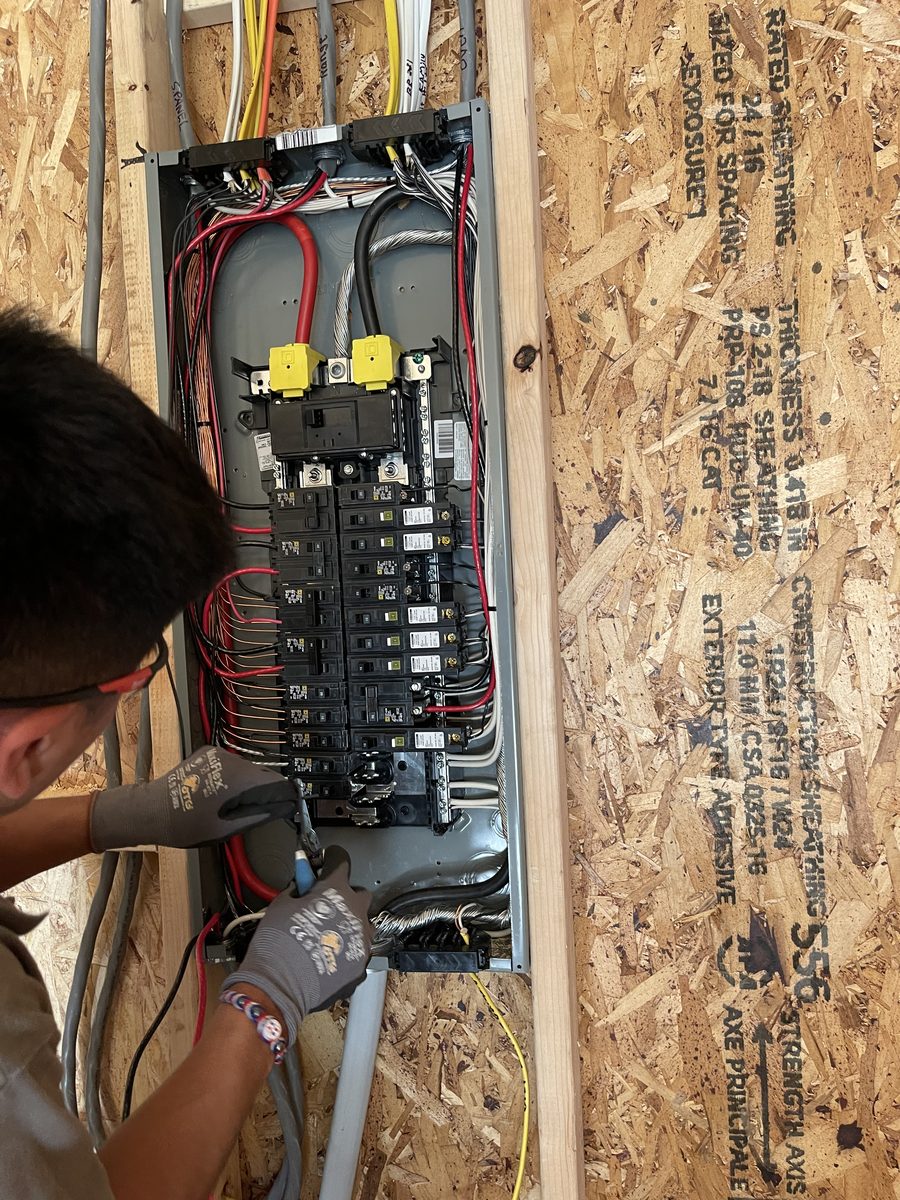
A panel replacement is a day of work in most homes, and the shape of it is consistent:
- Coordinate the utility disconnect and reconnect. On service-entrance work this often drives the schedule more than our calendar does.
- Remove the old panel and the existing breakers, terminations and conduit connections.
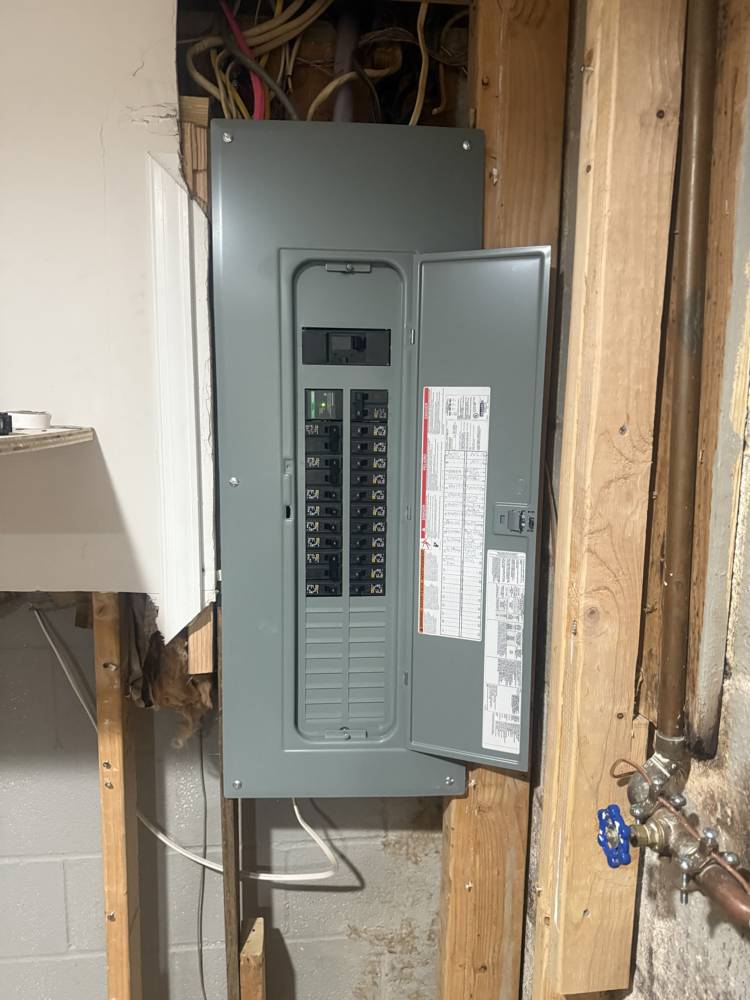
- Install the new load center. Ours are typically Square D — Homeline or QO — sized to the service and the circuit count.
- Re-land every circuit and label them properly. This is where the time goes, and where a rushed job shows.
- Bring grounding and bonding to current requirements — on our recent replacements that has meant driving ground rods and adding bonding at the water heater where it was missing.
- Install AFCI protection where current code requires it. This is a genuine safety gain that a 1960s panel simply did not offer.
- Permit and inspection, with the record handed to you at close-out.
If the panel is flush-mounted in a finished wall, the drywall around it needs opening and closing. We include that patching rather than leaving you with a hole — on a Reston replacement that was part of the scope from the start.
Straight Swap, or Do You Need More Capacity?
Two different jobs get confused here, and the difference is money.
A panel replacement swaps the obsolete panel for a modern one at the same amperage. If your 100-amp or 150-amp service genuinely suits how you use the house, this is the right call and the cheaper one. On a Reston job we replaced a Federal Pacific panel with a 100-amp Square D QO load center, because 100 amps was adequate for that home and spending more would have bought nothing.
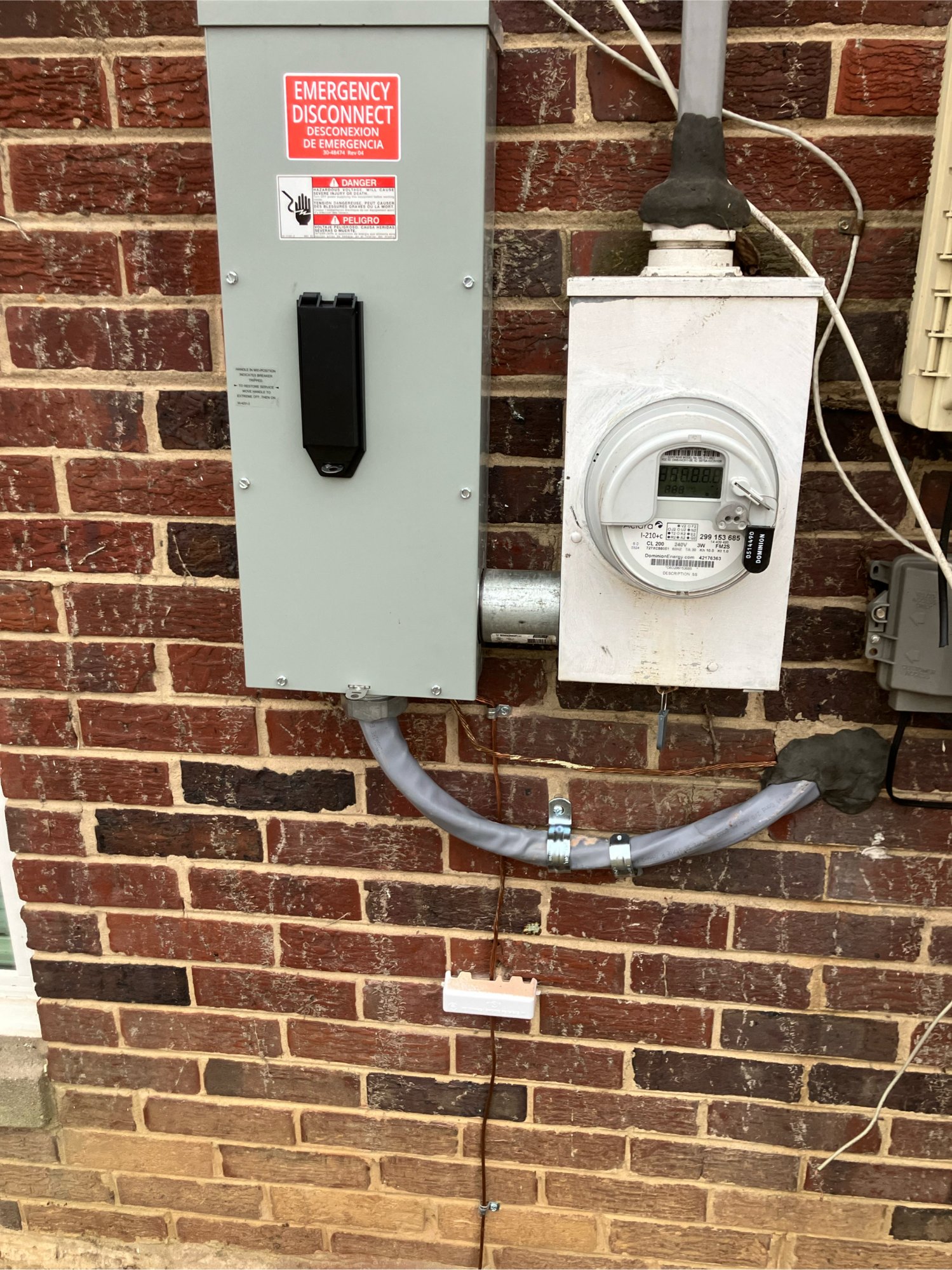
A heavy-up increases the service — usually 100 or 150 amps to 200 — and involves the meter base, service-entrance conductors and utility coordination as well. That is the right call when the panel has to go and you are adding an EV charger, a heat pump, an induction range or a finished basement. On the Fairfax replacement above, the scope included new service equipment and an exterior disconnect because the service itself needed the work.
We will tell you which one you need after looking, including the case where it is the cheaper one. More detail on both: panel swaps and panel upgrades.
Other Panels We Get Asked About
Federal Pacific is the one people name, but it is not alone.
- Pushmatic. We replaced a 1970s Pushmatic panel in Reston. They are not implicated the way Stab-Lok is, but they are obsolete, breakers are hard to source, and the panel is generally at the end of its useful life.
- Zinsco (and the GTE-Sylvania panels that followed it). Also never recalled, also widely flagged for bus-bar and breaker-connection problems. We have not replaced one recently and would not pretend otherwise — but it is on the list of brands we would want to look at.
- Challenger. A limited 1988 recall covered specific GFCI breakers, not the panels generally. The panels raise similar age and design questions.
If your panel is simply old rather than one of these brands, that is a different conversation and often a less urgent one. Age alone is not a reason to replace a sound panel.
Permits and Inspection
Panel replacement is permitted electrical work and we pull the permit every time. In practice that has meant Fairfax County through its electrical permit process, Prince William through its portal, and the surrounding jurisdictions through theirs. Requirements, fees and inspection scheduling vary by jurisdiction and change, so we confirm the current process with your authority having jurisdiction rather than assuming.
The inspection record matters beyond the day. It is what you hand a buyer, and what an insurer may ask to see.
What Drives the Cost
We quote these individually because the spread between a straightforward swap and a full service replacement is wide. What moves it:
- Whether it is a like-for-like replacement or a heavy-up with new service equipment.
- How many circuits have to be re-landed, and whether existing conductors reach comfortably.
- Surface-mounted or flush in a finished wall, and the drywall work that follows.
- What the grounding and bonding look like once the cover is off — older installations are often missing pieces that current requirements expect.
- Whether AFCI protection is required across the circuit list.
- Permit and inspection fees for your jurisdiction.
Common Questions
Do I have to replace it?
No one can compel you to, and the panel may well have run for forty years without incident. What we would say is that it is the one component in your house whose failure mode is a fire, and the independent testing is serious enough that we would not leave one in our own home.
Can I just replace the breakers?
Replacement Stab-Lok breakers are available, but they are the component whose reliability is in question, and fitting new ones does not resolve the concern. We replace the panel.
Will my insurance improve afterwards?
Often, but it depends entirely on your carrier — some care a great deal and some do not ask. Confirm with your insurer directly. We provide the permit and inspection documentation either way.
Will the power be off all day?
For a good part of the working day, yes. We will tell you what to expect for your specific job before we start, and we would rather over-warn you than have you plan around a number we cannot keep.
Is a Federal Pacific panel illegal?
No. Existing installations are generally allowed to remain, and code requirements apply to new work rather than retroactively. Whether anything is required in your situation is a question for your local authority having jurisdiction.
Get It Looked At
Send us a photo of the panel label and we will tell you what you have, whether it is one of the brands worth acting on, and whether you need a straight replacement or a heavy-up. No charge for the answer.
SparkWise Electric is a licensed and insured electrical contractor serving Northern Virginia and Maryland. Call (703) 915-5351 or book a free video call estimate. You can also start with an electrical safety inspection if you want the whole system looked at.