
If you are looking at an EcoFlow DELTA Pro Ultra or DELTA Pro Ultra X, the hard part is not choosing the battery. It is working out what has to change in your electrical system before it can actually back up your house — and that is the part the product pages do not cover.
SparkWise Electric has installed EcoFlow whole-home backup systems across Northern Virginia, including Great Falls, McLean, Ashburn, Annandale and Stafford, with both the Smart Home Panel 2 and the newer Smart Home Panel 3. This page walks through what the electrical work actually involves, based on those installs.
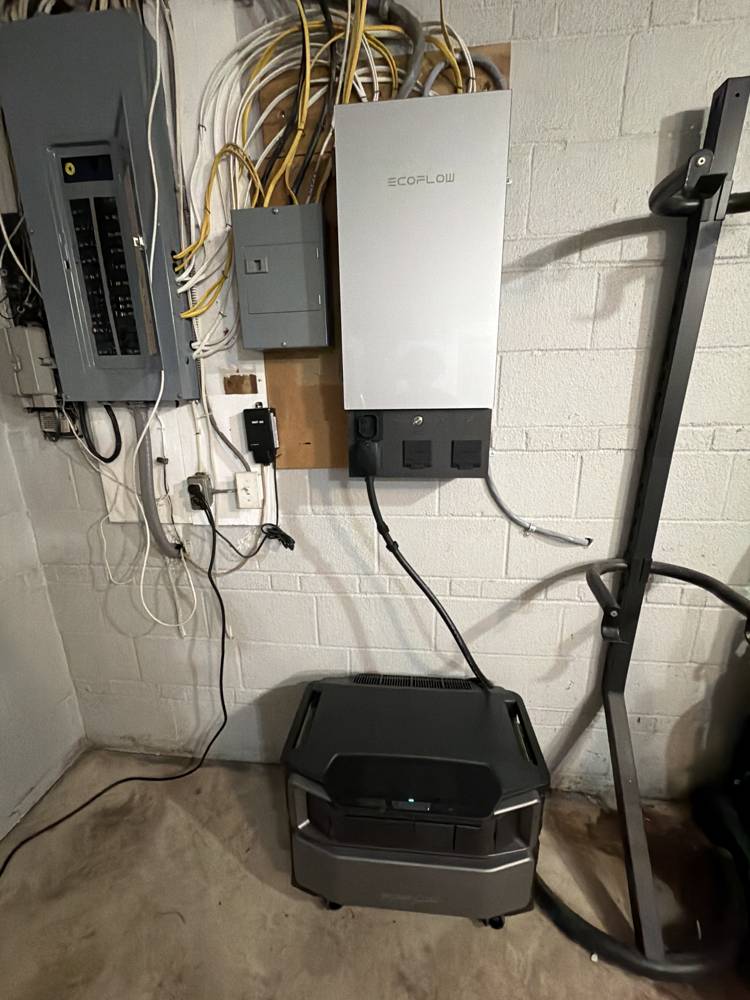
What You Are Actually Buying
A DELTA Pro Ultra system is three things, and homeowners often only price the first one:
- The battery and inverter. EcoFlow builds the Ultra platform around stackable battery packs — roughly 6.1 kWh each on the Ultra X — so the 18 kWh bundles sold through Costco and other retailers are typically three packs. Capacities and output figures change as EcoFlow revises the lineup, so confirm the current specification for the exact model you are buying.
- The Smart Home Panel. This is a sub-panel that sits between your main panel and the circuits you want backed up. It is what decides, automatically, which circuits keep running when the grid drops. Without it you have a large battery and no way to hand it your house.
- The electrical work. A feeder from the main panel, a supply-side breaker, physically relocating the circuits you want backed up, a data connection for monitoring, and a permit and inspection. This is the part we do.
The battery is the purchase. The Smart Home Panel and the wiring are what turn it into backup power.
What the Installation Involves
The pattern is consistent across every EcoFlow system we have installed, whatever the battery size:
- Mount the Smart Home Panel and battery connection box on a wall close to the existing main panel, indoors.
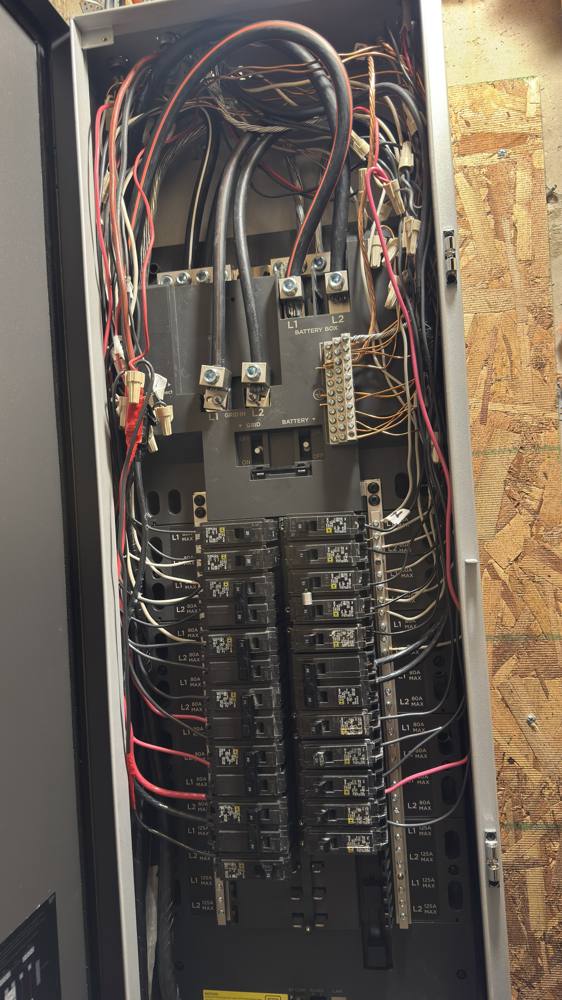
- Run a feeder from the main panel to the smart panel. On our installs this has typically been 1/0 aluminium service-entrance cable landing on a 100-amp or 125-amp two-pole breaker, sized to the system and the panel it is feeding.
- Move the circuits you want backed up out of the main panel and into the smart panel. In practice this has usually been in the range of a dozen circuits — commonly a mix of 15-amp and 20-amp single-pole breakers, plus a two-pole circuit where something larger is being backed up.
- Run the data cable so the system can monitor and switch.
- Pull the permit, meet the inspector, and label everything.
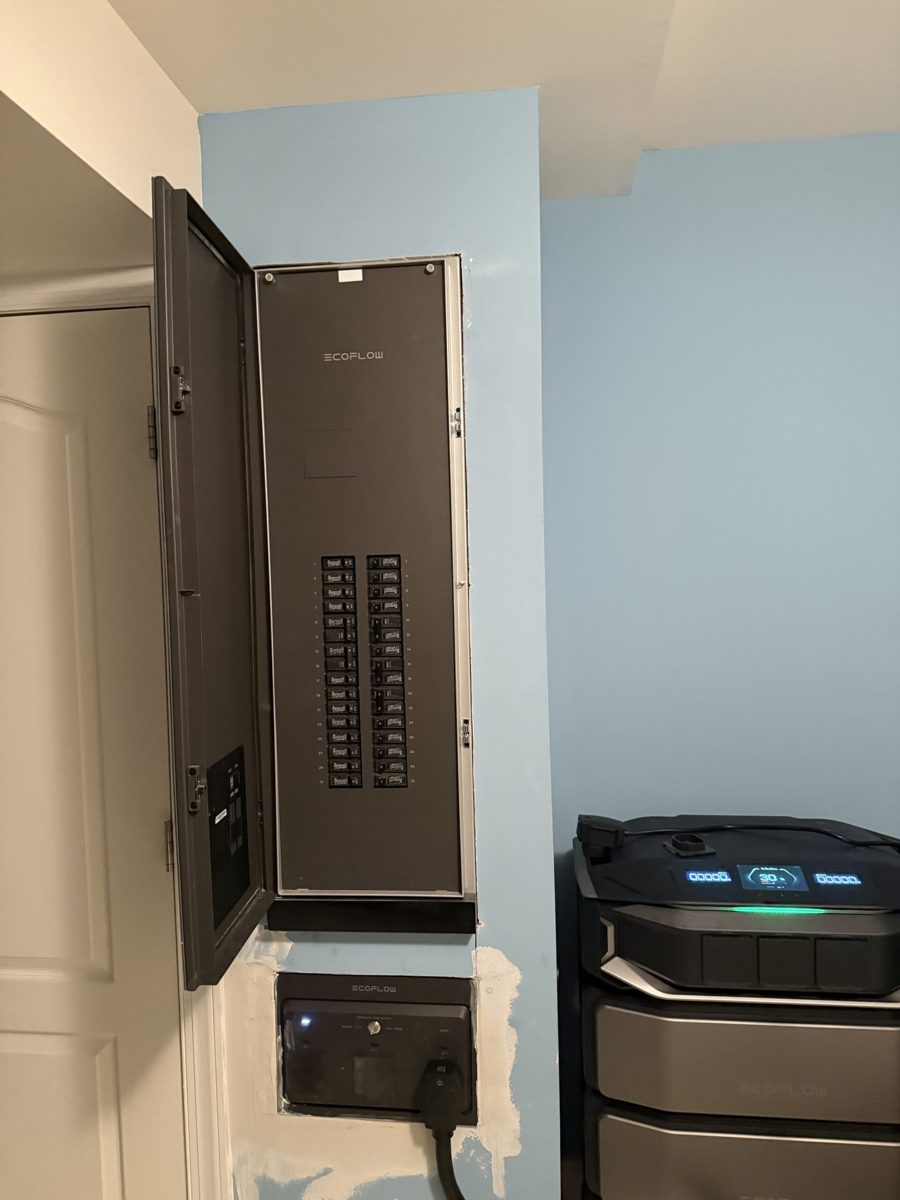
The variable that drives the job is not the battery — it is where your backed-up circuits currently live and how far they have to travel. On a Great Falls install, twelve circuits had to be extended to reach the new panel location, which was a meaningful piece of labour on its own. On an Annandale install, the circuit assignments were revised after the HVAC contractor finished, moving the air handler onto a correctly sized breaker and returning the water heater to the main panel.
How Many Circuits Do You Actually Get?
This is the question worth settling before you buy, and it is where expectations most often slip.
A whole-home battery does not usually back up the whole home. It backs up the circuits you chose to move into the smart panel, within the limit of what the inverter can carry at once and how long the battery can sustain it. Everything else goes dark exactly as it did before.
So the real design conversation is about priorities. Refrigeration, a furnace or air handler, well pump, internet, a few lighting and receptacle circuits, and a medical device if there is one — those are the circuits worth the panel space. Central air conditioning and electric ranges are possible on larger configurations but they consume capacity quickly, and an electric water heater will empty a battery faster than almost anything else in the house.
We will walk the panel with you and work out which circuits earn their place before anything is ordered. It is a much cheaper conversation to have beforehand than afterwards.
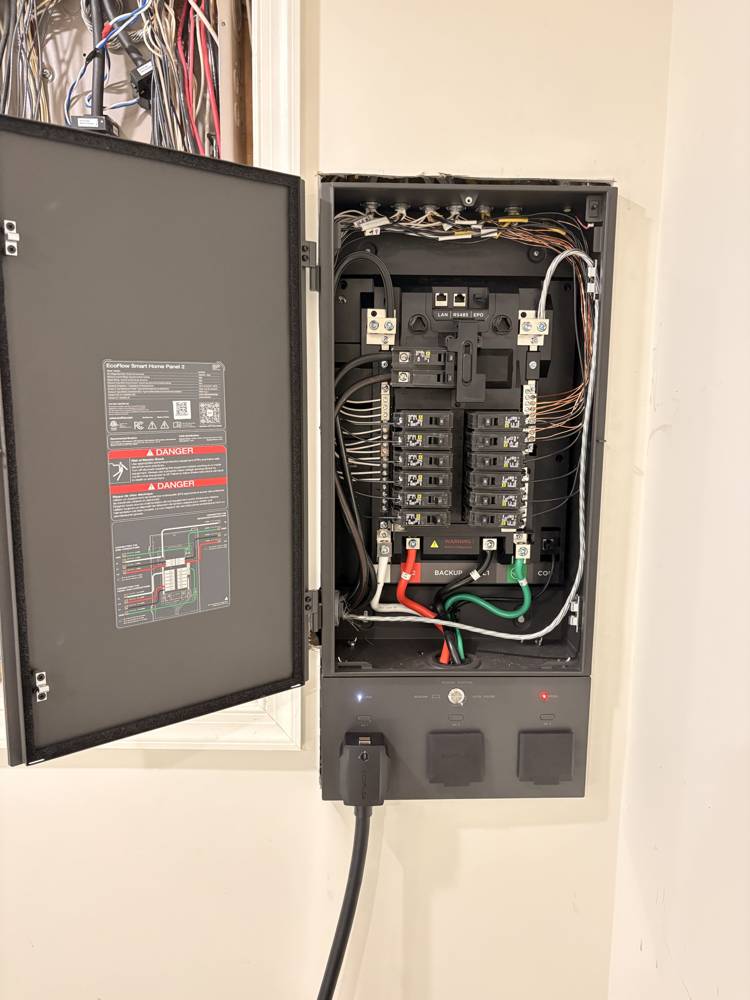
Smart Home Panel 2 or Smart Home Panel 3?
We have installed both. The choice generally follows the battery platform you are buying and how many circuits you want under backup — the Smart Home Panel 3 offers considerably more circuit positions, which matters if your priority list is long or you expect it to grow.
If you are still deciding, we wrote a full comparison: EcoFlow Smart Home Panel 2 vs. Smart Home Panel 3. If you have already bought the battery, the panel decision is usually made for you.
Adding a Generator Inlet
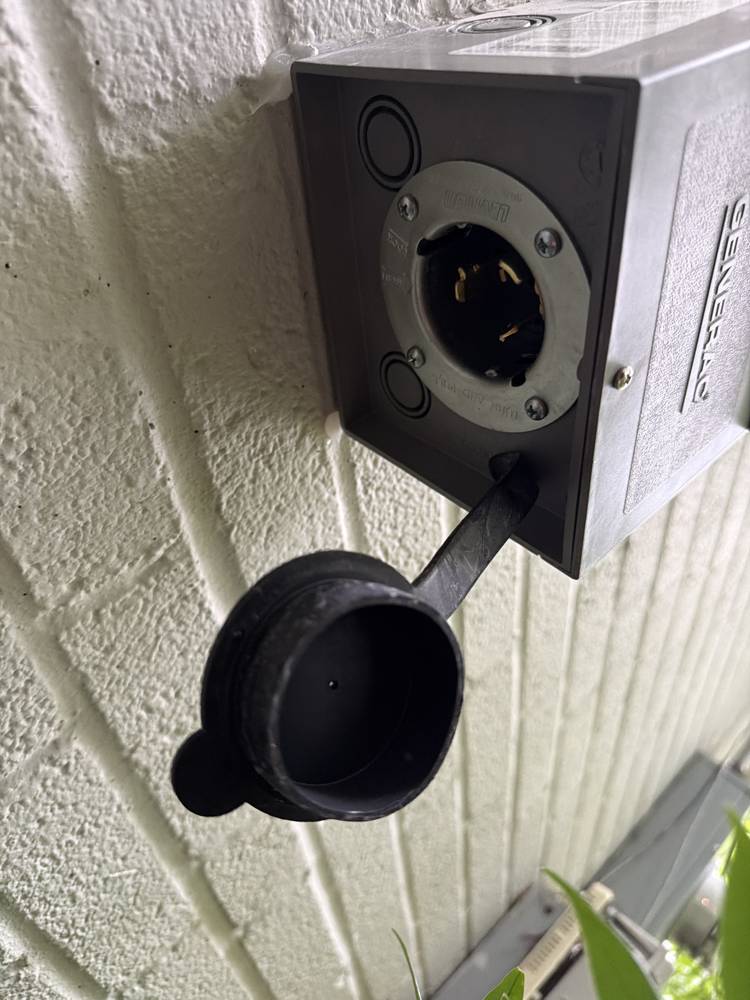
Several customers have paired the battery with a 50-amp exterior generator power inlet, so a portable generator can recharge the system or carry the backed-up circuits during a long outage. It is a modest addition at the time of the original install and considerably more disruptive to retrofit later.
If you think you may ever want that flexibility, say so before we design the job. If you are weighing a battery against a fuel-burning unit instead, our generator installation page covers that comparison, and we will give you a straight answer about which suits your situation.
Permits and Inspection
This work is permitted electrical work. Every EcoFlow system we have installed has been permitted and inspected — Fairfax County through its electrical permit process, Loudoun County for Ashburn installs, and Stafford County through its online portal. Requirements, fees and inspection scheduling vary by jurisdiction and change over time, so we confirm the current process with your authority having jurisdiction rather than assuming.
Be cautious of anyone offering to install a whole-home battery without a permit. Beyond the safety and code exposure, uninspected work on your service equipment is a problem that surfaces later, usually when you sell.
What Drives the Cost
We quote every one of these individually, because the range between an easy install and a difficult one is wide. What moves the number:
- How far the backed-up circuits are from the new panel — the single biggest variable. Circuits that need extending are labour.
- How many circuits you want backed up, and whether any of them are two-pole loads.
- Where the smart panel can physically go relative to the main panel, and what the wall and route look like.
- Whether your existing main panel has capacity for the feeder breaker, or needs attention first.
- Whether you want a generator inlet added at the same time.
- Permit and inspection fees for your jurisdiction.
We will give you a fixed price after we have seen the panel — including on a free video call, which is how several of these projects started.
If You Bought the Costco Bundle
A good number of these calls begin the same way: someone has bought, or is about to buy, an 18 kWh EcoFlow whole-home bundle from Costco and wants to know whether it can actually be installed in their house. The answer is almost always yes — but the install is a real electrical project, not an afternoon, and it is worth having the panel looked at before the pallet arrives.
If you have not bought yet, a short conversation first can save you from ordering the wrong panel or a configuration that does not fit your priorities.
Common Questions
Can I install it myself?
Permit and inspection requirements for this kind of work are set by your local authority having jurisdiction, and they vary. What we would say plainly is that the connection to your service equipment is not a good place to learn, and uninspected work on a panel is difficult to unwind later.
Will it run my whole house?
Only the circuits you move into the smart panel, and only for as long as the battery holds out under that load. Anyone telling you a single battery will run an entire house indefinitely is selling, not advising.
How long will it power things during an outage?
That depends entirely on which circuits you backed up and what is running. A fridge, some lighting and internet is a very different draw from a fridge, lighting, internet and central air. We will talk through realistic runtime for your actual circuit list rather than quoting a headline figure.
Can I add batteries later?
The Ultra platform is designed to expand, and that is one of its genuine advantages over a fixed-capacity unit. Confirm the expansion limits for your specific model with EcoFlow, and tell us your plans up front so the install does not need reworking.
Do you install systems you did not supply?
Yes. Most of these have been customer-supplied equipment. We warrant our workmanship; the manufacturer warrants the hardware.
Talk to Us About Your Install
SparkWise Electric is a licensed and insured electrical contractor serving Northern Virginia and Maryland. We have installed EcoFlow whole-home backup systems on both Smart Home Panel generations, permitted and inspected in each jurisdiction.
Call (703) 915-5351 or book a free video call estimate. Send a photo of your main panel and your list of must-have circuits, and we can usually tell you what the job looks like on the first call.
Comparing this with the Anker system? See what an Anker SOLIX Home Power Panel installation involves — the electrical work is similar, the products are not.