EcoFlow makes two whole-home smart panel systems: the Smart Home Panel 2 and the Smart Home Panel 3. Both integrate with EcoFlow’s battery systems to provide backup power and give you circuit-level control over your home’s electrical loads — but they differ in capacity, compatibility, and capability. This guide covers the key differences and helps you figure out which one might be the right fit for your home.
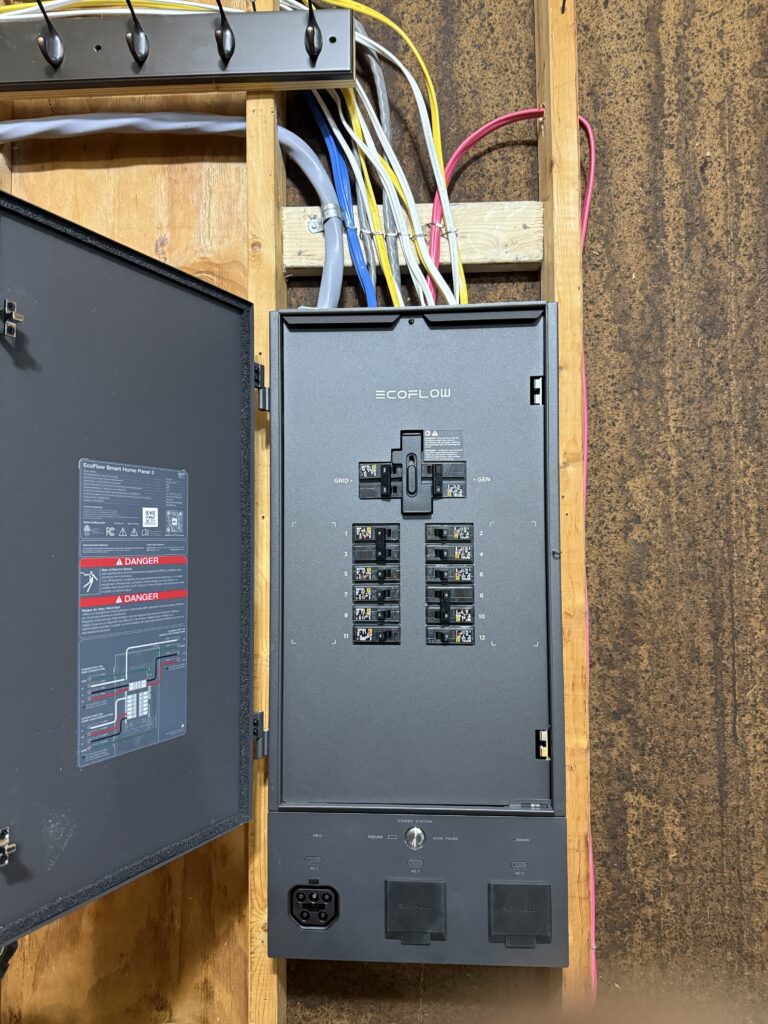
Quick Overview of Each
EcoFlow Smart Home Panel 2
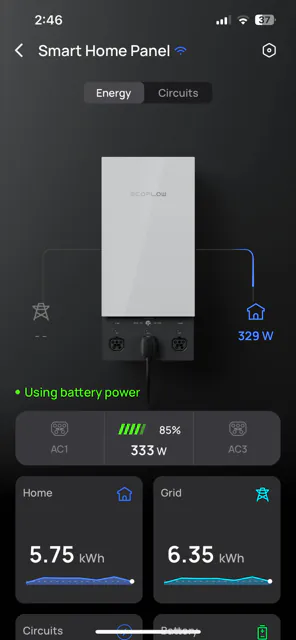
The Smart Home Panel 2 is designed to integrate with EcoFlow’s DELTA Pro and DELTA Pro Ultra battery systems. It manages up to 10 home circuits with automatic transfer switching, supports up to 7,200W of input power, and includes solar compatibility through EcoFlow’s ecosystem. The app gives you real-time monitoring by circuit and lets you set schedules, prioritize backup circuits, and track energy usage. Installation requires a licensed electrician to integrate the panel with your home’s existing electrical service.
EcoFlow Smart Home Panel 3
The Smart Home Panel 3 is EcoFlow’s current flagship system. It’s built for higher capacity, broader compatibility with solar and grid integration, and more sophisticated energy management controls. It can handle more circuits, supports higher sustained input and output, and is designed to work with a wider range of solar inverters and third-party systems. The app interface is more advanced, with energy scheduling, time-of-use optimization, and more granular monitoring. It’s a larger installation scope and generally suited for homes with more complex energy setups.
Major Differences
The most meaningful differences between the two systems come down to capacity, solar integration, and circuit count. The Smart Home Panel 2 is optimized for use with EcoFlow’s DELTA Pro ecosystem and handles most residential use cases comfortably — whole-home backup for essential circuits, solar charging, and basic EV integration. The Smart Home Panel 3 is designed for homes that need more: more circuits under management, higher wattage handling, more flexible solar and grid integration, and deeper energy management controls.
The Smart Home Panel 3 also has a more capable time-of-use optimization feature, which can be valuable if your utility has peak and off-peak pricing — the system can automatically draw from battery storage during expensive peak hours and recharge during cheaper off-peak windows. The Smart Home Panel 2 has basic scheduling, but the Panel 3’s optimization is more automated.
Best-Fit Use Cases
Smart Home Panel 2 is a good fit if:
- You want whole-home backup power for essential circuits (HVAC, refrigerator, lighting, medical devices)
- You already own or plan to buy a DELTA Pro or DELTA Pro Ultra
- Your home doesn’t have solar yet but you might add it later
- You want a cleaner, simpler system without over-engineering for a straightforward backup power goal
- Your home’s electrical panel has room for the integration without a major upgrade
Smart Home Panel 3 is a better fit if:
- You already have solar panels installed or are adding solar as part of the same project
- You want to manage more circuits — a larger home with more loads to prioritize
- You want to take advantage of time-of-use rate optimization with your utility
- You need higher sustained input and output capacity than the Panel 2 provides
- You’re building out a more comprehensive energy independence setup and want maximum flexibility
Installation Requirements
Both systems require installation by a licensed electrician. These are not DIY products — they integrate directly with your home’s main electrical panel and service entrance, require proper transfer switching, and must be inspected and permitted in most jurisdictions in Northern Virginia.
The installation scope varies by home. Some properties can accommodate the system with minimal panel work. Others may need a panel upgrade first to support the additional load capacity or to create space for the integration. If your panel is already near capacity or outdated, that work is typically done in the same project. See our panel upgrade service for more context on what that involves.
The Smart Home Panel 3 generally has a larger installation footprint than the Panel 2, particularly in homes with existing solar or where higher-capacity solar integration is planned. In those cases the scope of work expands to include proper integration with the solar inverter and battery system — work that requires both electrical and system-level knowledge.
Working With a Trained Installer
EcoFlow has a certified installer program for the Smart Home Panel systems. Working with a trained installer matters for a few reasons: proper integration with your home’s electrical service, accurate permitting and inspection, and making sure the system is configured correctly so it actually works as expected during an outage or under a solar-charging scenario.
An installer who isn’t familiar with these systems may handle the basic electrical work correctly but misconfigure the panel’s circuit priorities, miss transfer switch requirements, or fail to document the installation properly for the inspection. Getting the details right at installation avoids problems later.
When to Contact SparkWise
If you’re in Northern Virginia and are trying to decide between the Smart Home Panel 2 and Smart Home Panel 3 — or simply want to know whether either system is a fit for your home — the best starting point is an in-home consultation. We’ll assess your current electrical setup, talk through your goals (backup power, solar, EV charging, energy cost reduction), and give you a clear picture of what each system would require and cost at your specific property.
SparkWise Electric is a certified EcoFlow installer for both the Smart Home Panel 2 and Smart Home Panel 3. Visit our EcoFlow Smart Panel installation page or call (703) 915-5351 to schedule a consultation.
If your home’s existing electrical panel needs an upgrade before adding an EcoFlow system, we handle that too. Learn more about our panel upgrade services.
Once the panel question is settled, the next one is what the install actually takes. See EcoFlow DELTA Pro Ultra installation for the feeder sizing, circuit selection and permit process, drawn from systems we have installed on both panel generations.