Most electrical problems in a house announce themselves well before they become dangerous. A breaker that trips when two appliances run together, an outlet that stopped working and nobody bothered to investigate, lights that dim when the AC kicks on — these are symptoms, and each one points at something specific.
What follows is drawn from what we actually get called out for across Northern Virginia. The region’s housing stock skews old — a lot of 1950s through 1970s construction in Arlington, Alexandria, Fairfax, and Vienna — and that shapes which problems show up. Homes wired for one window air conditioner and a handful of appliances are now running heat pumps, induction ranges, home offices, and EV chargers.
Breakers That Trip Under Normal Use
A breaker doing its job occasionally is fine. A breaker that trips predictably — every time you run the dryer and the microwave, or when the AC starts — is telling you the circuit is carrying more than it was designed for.
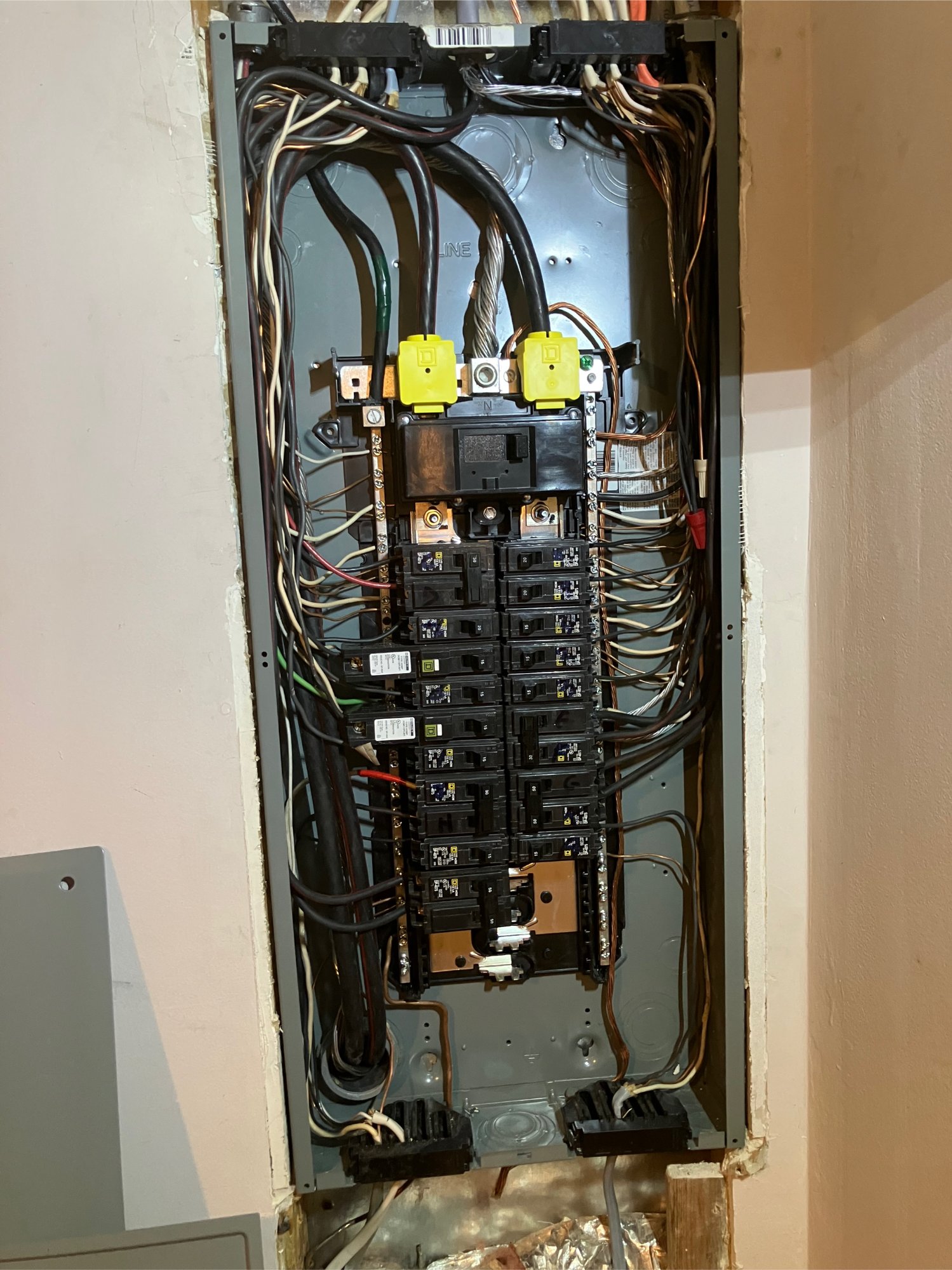
A Falls Church homeowner called us because the main panel tripped whenever both heating furnaces ran at once, and noticed the panel board felt warm to the touch. That combination — a load-related trip plus heat at the panel — is not a nuisance breaker. Heat at a panel means resistance somewhere it should not be, usually a loose connection or a breaker that is failing.
What not to do: replace the breaker with a larger one. The breaker is sized to protect the wire behind it. Putting a 30-amp breaker on a circuit wired for 20 amps removes the protection and lets the wiring overheat inside the wall, which is how electrical fires start.
Anything Warm, Buzzing, or Discolored
This is the category to stop reading and call someone about. A warm panel cover, a buzzing breaker, a scorch mark or brown discoloration around a receptacle, or a burning smell near a fixture all indicate heat where there should be none.
We were referred to a Fairfax homeowner for a full panel replacement after their existing panel was damaged by overheating. That failure did not happen overnight — it started as a warm spot that nobody investigated.
If you smell burning or see scorching, shut off the affected circuit at the panel and get a licensed electrician out. This is not a wait-until-the-weekend item.
Dead Outlets
An outlet that stopped working usually has one of a handful of causes, in rough order of likelihood:
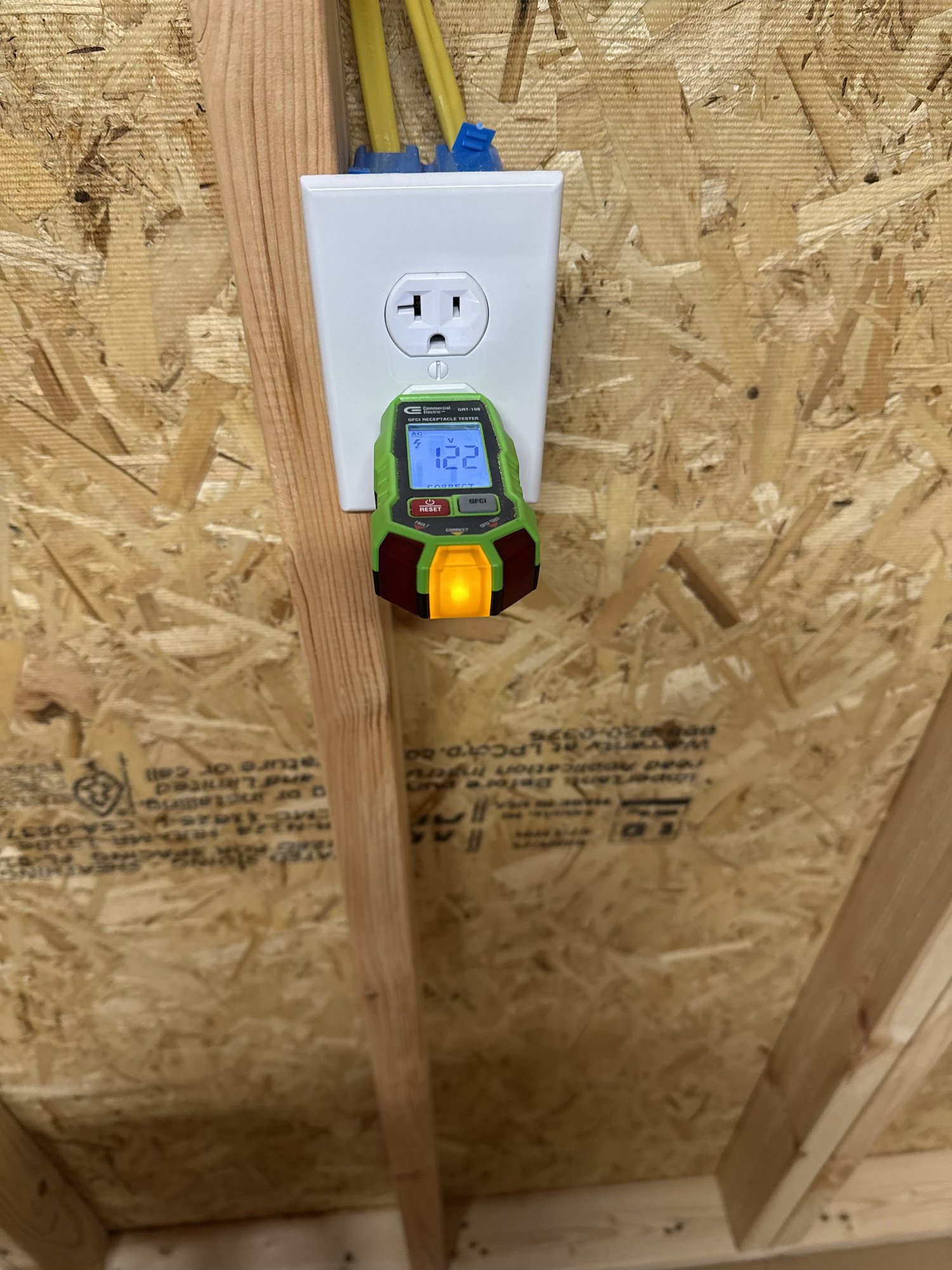
- A tripped GFCI upstream. One GFCI receptacle often protects several downstream outlets — including ones in other rooms, garages, or outdoors. The dead outlet may be nowhere near the GFCI that tripped.
- A failed receptacle. Back-stabbed connections (wire pushed into a hole rather than secured under the screw) loosen over decades. This is extremely common in older construction.
- A loose connection upstream. One bad splice in a junction box can kill everything past it.
- A tripped breaker that nobody noticed because the panel is in a basement or closet.
Circuits also do not always follow the logic you would expect. An Alexandria homeowner called us after discovering that some of their outlets and devices required flipping two separate breakers to restore power — a wiring arrangement that made troubleshooting nearly impossible without tracing the circuits properly.
Flickering and Dimming Lights
Worth separating into two very different situations.
A brief dim when a large motor starts — the AC compressor, a well pump, a shop vac — is normal voltage sag. It is only a concern if it is getting worse or if lights dim noticeably across the whole house.
Random flickering with no obvious trigger is different. It commonly points to a loose neutral, a failing connection at the panel or meter, or a deteriorating service conductor. A loose neutral in particular can send abnormal voltage to parts of the house and damage electronics. Flickering that comes and goes on its own is worth a diagnostic visit rather than a bulb change.
The third possibility, increasingly common: LED bulbs on a dimmer that was designed for incandescent. That is a compatibility problem, not a wiring fault, and swapping the dimmer for an LED-rated one usually resolves it.
Older Panels and Problem Brands
Two panel brands turn up regularly in Northern Virginia homes from the 1960s and 1970s: Federal Pacific Stab-Lok and Zinsco. Both have documented histories of breakers failing to trip under fault conditions, and both are routinely flagged during home inspections and by insurers.
We replaced one for a Fairfax homeowner who discovered a Federal Pacific panel shortly after buying the house — a common sequence, because panels are exactly the sort of thing that surfaces after closing.
The difficult part of this conversation is that these panels usually appear to work fine. The concern is what happens during a fault, which you do not observe until it matters. If you have one, get an honest assessment rather than a sales pitch — see our page on electrical panel upgrades for what replacement involves.
Shocks and Tingles
Any shock from an appliance, faceplate, or switch means current is finding a path it should not have. Usually that is a grounding fault or a wiring error. It is never something to live with, and it is one of the few symptoms where we would say stop using the circuit until it has been looked at.
Older homes with two-prong outlets are a related issue. Ungrounded circuits are not automatically a code violation if they predate the requirement, but they offer no fault path, and adding a three-prong receptacle to an ungrounded circuit without GFCI protection creates a false sense of safety.
Missing Covers and Exposed Splices
Every splice belongs in an enclosed, accessible box with a cover. Open junction boxes, wire nuts hanging in a basement joist bay, and missing panel covers are among the most common things we find during inspections — and among the easiest to correct.
Grounding and bonding problems fall in the same family. We are regularly called specifically to inspect a panel for proper grounding and bonding, and it is a worthwhile check on any older home or any house where previous work is of unknown quality.
Too Few Circuits for How the House Is Used
A lot of what looks like a “problem” is really a capacity mismatch. A kitchen wired in 1962 was not designed for a microwave, a countertop oven, an induction cooktop, and a coffee maker on the same circuit. Space heaters, window units, and shop equipment in garages produce the same result.
The fix is usually a dedicated circuit for the heavy loads rather than a bigger breaker. Where the panel has no room left, that becomes a panel conversation instead.
What Actually Prevents Most of This
- Test your GFCIs. Press the test button on GFCI receptacles periodically. If it does not trip, or will not reset, it needs replacing.
- Do not chain power strips. A power strip plugged into a power strip is a common finding in home offices and behind entertainment centers.
- Take heat seriously. Warm faceplates, warm cords, and warm panel covers all warrant a look.
- Label the panel. A labeled panel turns a 10 p.m. problem into a 30-second fix.
- Get an inspection before you buy. A pre-purchase electrical safety inspection costs far less than discovering a panel or wiring problem after closing.
- Plan ahead for big loads. Before buying an EV, a hot tub, or a heat pump, find out whether your service can carry it.
When to Call an Electrician Immediately
- Burning smell, scorch marks, or discoloration at an outlet, switch, or panel
- Any shock or tingle from a fixture, appliance, or faceplate
- A panel or breaker that is warm to the touch
- Buzzing or crackling from a panel, switch, or outlet
- Repeated tripping of the same breaker
- Sparks when plugging something in
- A breaker that will not reset
Everything on that list is a symptom of a fault that is already happening. None of them get better on their own.
Get It Diagnosed Properly
SparkWise Electric troubleshoots and repairs residential electrical problems across Northern Virginia and the Maryland suburbs — Arlington, Alexandria, Fairfax, Vienna, McLean, Falls Church, Manassas, Gainesville, and the surrounding area. We find the actual cause rather than resetting the breaker and leaving.
Call (703) 915-5351 or book online. Licensed & insured — VA Master Electrician #2710064102, VA Class A Contractor #2705160838, MD Master Electrician #16613. Permit and inspection requirements vary by jurisdiction; your local Authority Having Jurisdiction has final say on what any given repair requires.
If a breaker keeps going, start with why your breaker keeps tripping.
A burning smell is different — see burning smell from an outlet or panel and treat it as urgent.
See also: what happens during a home electrical safety inspection.
Seasonal reading: electrical safety tips for winter.
Worth reading: hiring a local electrician vs a national chain.
If the brand on your panel is Federal Pacific or Stab-Lok, that deserves its own answer — see Federal Pacific panel replacement for what is established, what is myth, and what we do about it.