A breaker that trips once is doing its job. A breaker that trips every week is telling you something, and the mistake most homeowners make is treating the reset switch as the fix. We get called out for this constantly — and the cause is almost never the breaker itself.
Here is what we actually find, drawn from real service calls across Northern Virginia.
First, What the Breaker Is Actually Doing
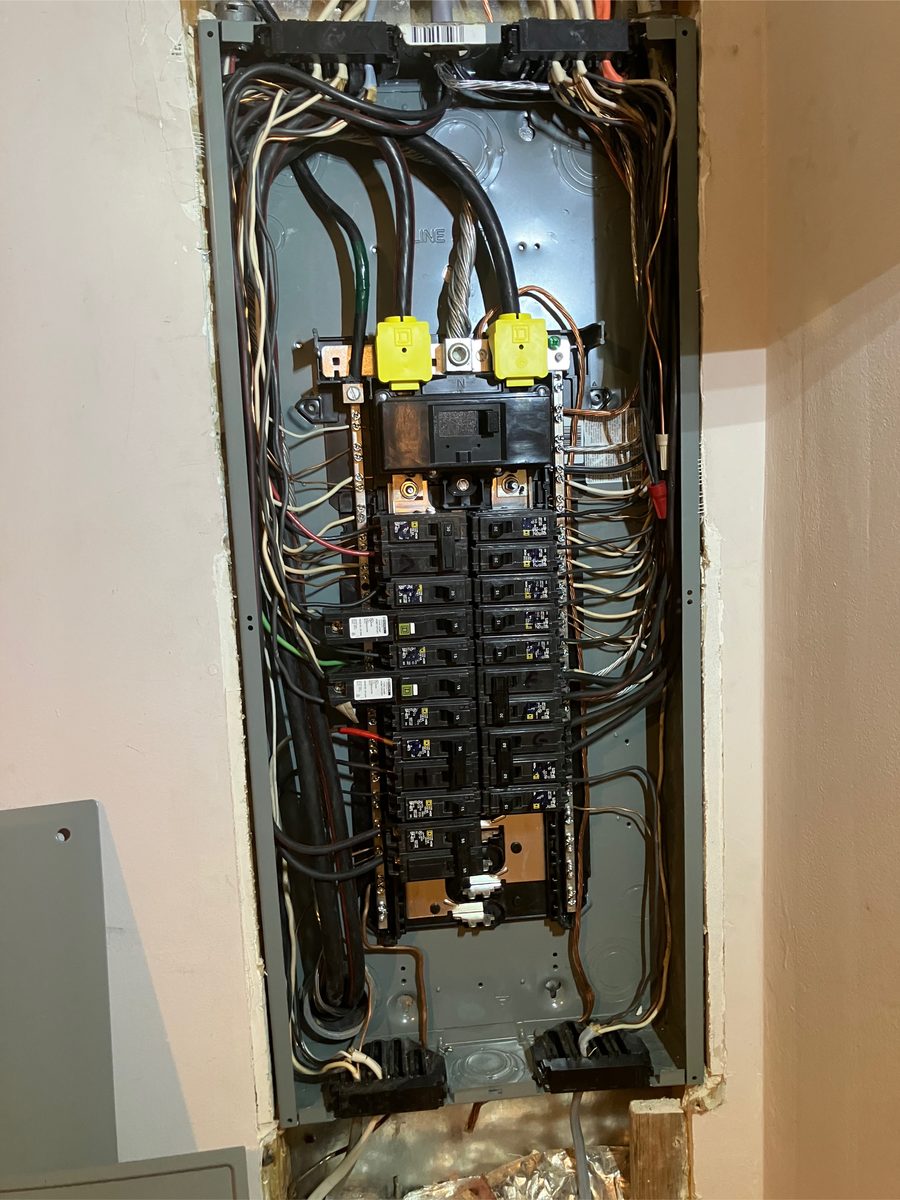
A breaker protects the wire, not the appliance plugged into it. When it trips, it has decided that the current flowing through that cable is high enough to overheat it. Wire that overheats inside a wall is how fires start, so the breaker opens the circuit before that happens.
That framing matters, because it explains the one thing you must never do: put in a bigger breaker to stop the tripping. A 20-amp breaker on 14-gauge wire will happily let that wire cook. We have replaced oversized breakers in homes where a previous owner or handyman “solved” the problem exactly that way.
1. The Circuit Is Genuinely Overloaded
The most common cause, and usually the easiest to confirm. Two appliances that each draw heavily land on the same circuit and the total exceeds what the wire is rated for.
A Bristow homeowner called us because circuits kept tripping whenever a microwave upstairs and a portable cooking heater in the basement ran at the same time. Nothing was faulty. The two loads simply shared a circuit that was never designed to carry both. The fix was a new dedicated run, not a repair.
How to test it yourself: note what is running when it trips. If unplugging one appliance stops the problem, you have an overload rather than a fault. That is a genuinely useful thing to tell an electrician on the phone.
2. Motors Drawing Startup Current
Anything with a compressor or a large motor pulls far more current in the first second than it does running. A breaker sized for the running load can still trip on that surge.
We saw this on a Springfield hot tub that tripped its breaker every single time it started, and again on an Ashburn laundry room where a newly added freezer kept tripping the GFCI outlet it was plugged into. In both cases the appliance was fine. The circuit and protection arrangement were wrong for it.
Freezers and refrigerators on GFCI-protected receptacles are a particular nuisance — the motor produces small leakage currents that a GFCI reads as a fault. Worth knowing before you lose a freezer full of food to a trip you never noticed.
3. A Ground Fault, Usually Moisture
If a GFCI or a breaker trips outdoors, in a bathroom, in a garage or after rain, water is the first suspect. A Vienna customer worked this out before we arrived: an outdoor receptacle kept tripping and they suspected moisture was getting into the box. They were right. The receptacle and the weatherproof cover both needed replacing.
Ground faults are also the reason one tripped GFCI can kill outlets in several rooms. A Fairfax homeowner called about a set of outlets that had gone dead; the culprit was a single GFCI upstream feeding all of them. Before you call anyone, find and reset every GFCI in the house — garage, bathrooms, kitchen, exterior. It is free and it solves this more often than you would think.
4. A Failing Device — Switch, Receptacle or Breaker
Devices wear out. An Oakton job started as “the three-way switch trips the breaker” and ended as a round of switch and dimmer replacements — the old devices were failing internally and shorting when operated.
Breakers themselves fail too, just less often than people assume. One customer described a breaker that had tripped occasionally for years and had finally reached the point where it would not reset at all. Mechanical parts get tired. But we test before replacing, because swapping a breaker on a circuit that is genuinely overloaded fixes nothing and hides a real problem.
5. The Panel or Service Itself Is the Limit
Sometimes no single circuit is at fault — the house has outgrown its service.
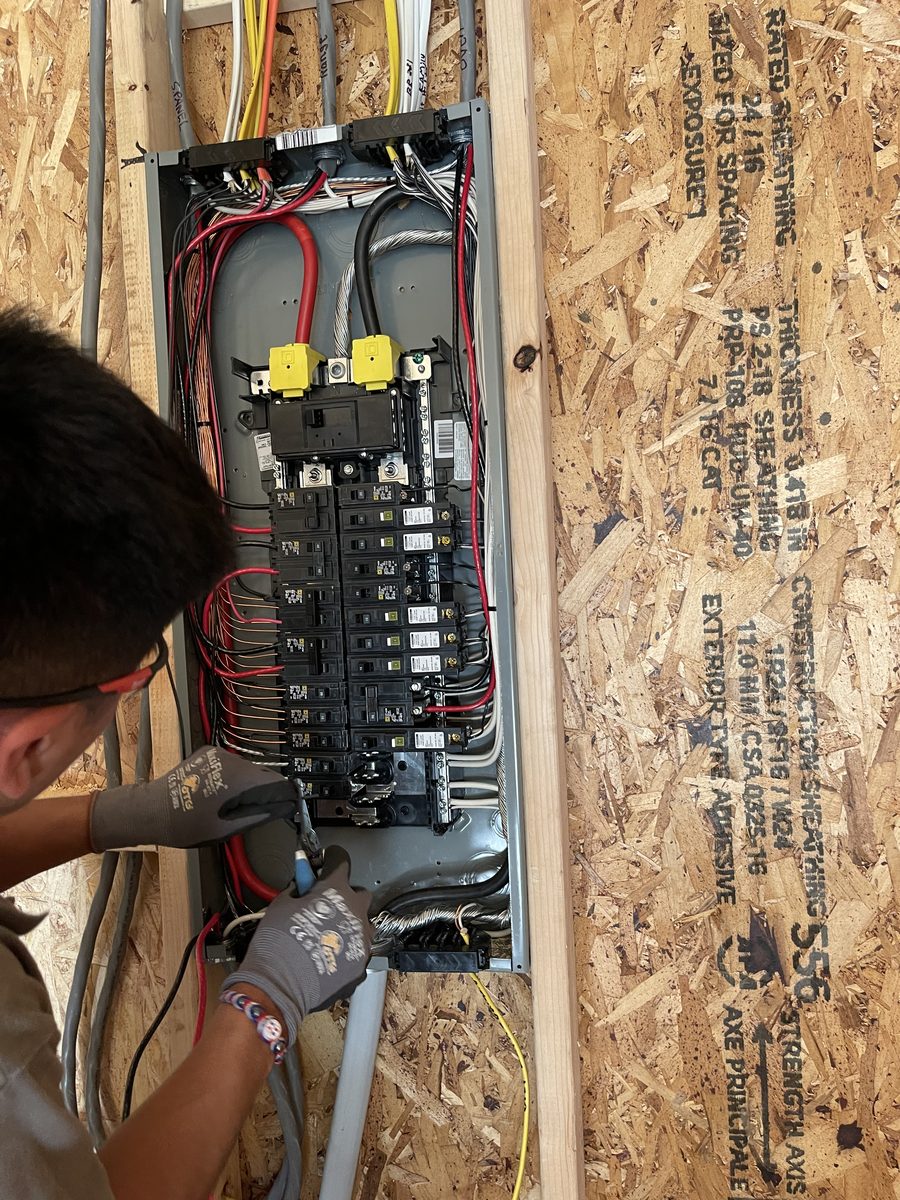
A Falls Church homeowner told us the main panel tripped whenever both heating furnaces ran together, and added a detail that moved the job to the top of our list: the panel board felt warm to the touch. Not scorching. Warm. That is not a normal condition, and it is the kind of symptom we would rather see today than next month.
If your main breaker is the one tripping — not a branch circuit — that is a different and more serious conversation. It points at total demand, at the service size, or at a connection problem inside the panel.
Stop and Call Someone If Any of This Is True
- The panel, a breaker or a cover plate is warm or hot to the touch
- You smell burning, or see scorch marks, melted plastic or discolouration
- The main breaker trips, rather than an individual circuit
- A breaker will not reset, or trips again immediately after resetting
- There is buzzing, crackling or arcing from the panel
- Lights dim noticeably whenever a large appliance starts
Repeatedly resetting a breaker that keeps tripping is the one response guaranteed not to help. The breaker is the part of your electrical system that is working correctly.
What We Do When We Arrive
We measure the actual load on the circuit rather than estimating it, check the breaker’s condition and temperature, look for loose terminations that build heat, and trace the circuit to find what is genuinely on it — which is often not what the panel directory claims. Where the panel or the service looks like the constraint, we run a load calculation before recommending anything.
Sometimes the answer is a single new circuit. Sometimes it is a device replacement. Occasionally it is a panel upgrade — and when it is, we will show you the numbers rather than the scare story.
Get the Real Cause Found
Licensed and insured electricians across Northern Virginia. Call (703) 915-5351 or book online. If it is sparking, smoking or hot, see our emergency electrician page instead.
Related reading: dedicated circuit installation for appliances that need their own supply, and electrical panel upgrades when the service itself is the limit.
Related: DIY vs professional breaker replacement.
If repeat trips trace back to an undersized service rather than one bad circuit, our panel upgrade in Gainesville, VA page covers capacity options and county inspection steps.