
Reston was planned around the idea that daily life should be close at hand — and for a growing number of homeowners here, that now includes charging an electric vehicle overnight in their own garage. SparkWise Electric installs Level 2 EV chargers throughout Reston, from single-family homes in North Point to townhome clusters around South Lakes and Lake Anne, and the condos and townhomes filling in around Reston Town Center. We are licensed Virginia electricians, we pull the Fairfax County permit, and we treat your electrical panel — not just the charger on the wall — as the real starting point of the job.
A Level 2 charger runs on a 240-volt circuit and typically adds 25 to 40 miles of range per hour, enough to fully recharge nearly any EV overnight. Compared with the 120-volt cord that came in the trunk, it is the difference between topping off and actually charging. Here is how we handle installations in Reston, what the county requires, and what to think through before you buy hardware.
What a Level 2 Charger Installation Involves
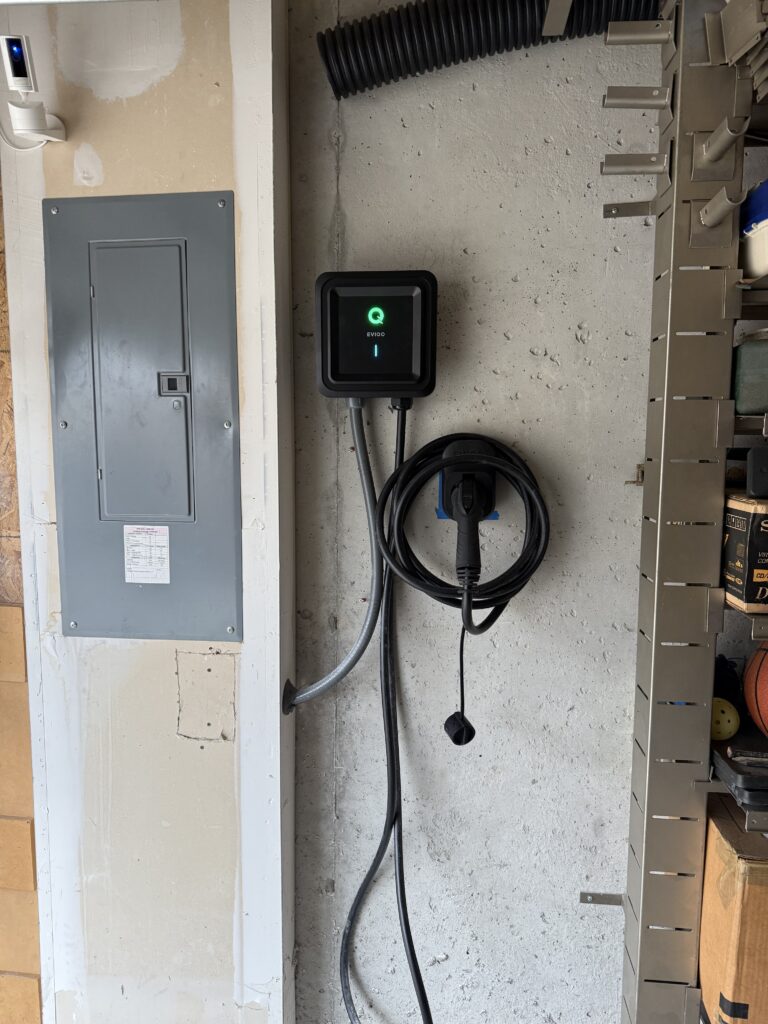
Every installation starts at the electrical panel, not the parking spot. We confirm the panel has capacity for a new 240-volt load, then run a dedicated circuit from the panel to the charging location — an EV charger should never share a circuit with other equipment. (Our dedicated circuit installation page explains why that rule exists and where else it applies.) A typical Reston installation looks like this:
- Site and load assessment. We look at your panel, your existing major loads, and where the car actually parks.
- Circuit sizing. Most Level 2 chargers draw 32 to 48 amps continuously, which calls for a 40- to 60-amp breaker and conductors sized to match.
- The wire run. In many Reston homes the panel is in a finished basement or utility closet, so we plan a routing path that avoids tearing up finished walls wherever possible.
- Mounting and termination. The charger is mounted at a usable height and cable reach, then wired and torqued to the manufacturer’s specifications.
- Testing and inspection. We commission the unit, verify charging at full rate, and schedule the county inspection.
This is the same process we follow across Northern Virginia — the full overview lives on our EV charger installation service page.
Permits and Inspections in Fairfax County
Reston is part of unincorporated Fairfax County, so residential electrical work here is permitted and inspected by Fairfax County Land Development Services — there is no separate town permit office. A new 240-volt EV charging circuit generally requires an electrical permit and a final inspection before the work is considered closed out. Exact requirements depend on the specifics of the job, so we confirm scope with the county rather than assuming.
SparkWise handles the permit application and schedules the inspection as part of the installation — you should never be left chasing paperwork after the electrician leaves. It is worth taking seriously: an unpermitted charger circuit can surface as a problem during a home sale, an insurance claim, or a later renovation. If you want to understand the paperwork side in more depth, we have written a plain-English guide to the EV charger permit process in Virginia.
Will Your Panel Handle It? An Honest Look at Load
Many Reston homes built from the 1970s through the 1990s carry 150-amp or even 100-amp services that are already working hard with heat pumps, electric dryers, and finished-basement additions. Before we sell you anything, we run a load calculation — typically using the method in NEC 220.83, which weighs your home’s existing demand against the new continuous load a charger adds — to see whether the panel can accept the circuit as-is.
If the numbers are tight, you have real options short of a full service upgrade. A load management device can pause or throttle charging when the rest of the house is drawing heavily, which the electrical code recognizes as a legitimate way to add a charger without oversizing the service. And when the panel genuinely is at the end of its life or capacity, we will show you the math and talk through a panel upgrade — but only when the calculation actually calls for it.
Hardwired or Plug-In?
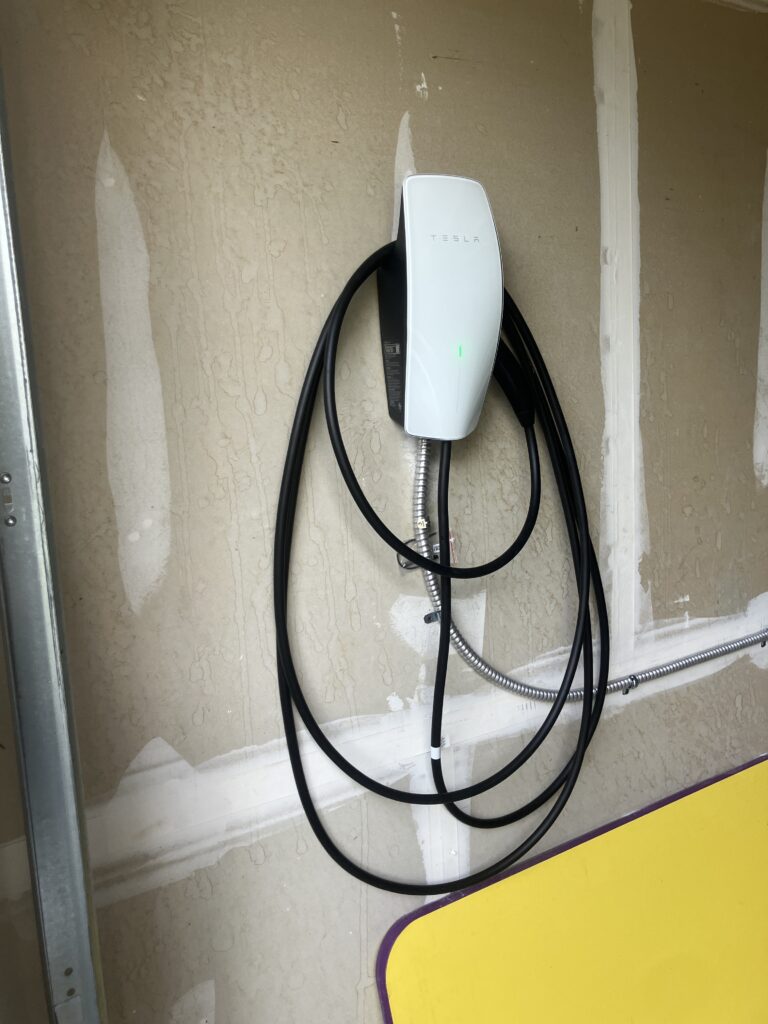
Plug-in chargers connect to a heavy 240-volt receptacle such as a NEMA 14-50 and are easy to take with you when you move. Hardwired units are permanently wired, support the fastest 48-amp home charging, and are the better choice outdoors or anywhere the connection will live for years. Receptacle installations also come with their own code requirements — including GFCI protection on the circuit — that affect breaker selection and cost.
There is no single right answer; it depends on your charger, your parking situation, and how long you plan to stay. Our comparison of hardwired vs. plug-in EV chargers walks through the trade-offs in detail.
Townhomes, Clusters, and the Reston Association
A large share of Reston’s housing is townhomes organized into cluster associations, layered under the Reston Association’s design standards. If your charger, conduit, or receptacle will be visible on the exterior of the home — or if you park in a cluster-owned lot rather than a private garage — you may need cluster or RA approval before work begins. We have been through this with Reston homeowners before: we provide the equipment specifications, mounting details, and a simple scope description you can attach to a design review application, and we plan routing to keep exterior changes as minimal as possible.
Why Use a Licensed Electrician
A Level 2 charger is one of the largest continuous loads in the house — it runs at full draw for hours at a time, night after night. Loose terminations, undersized conductors, or a breaker that is not rated for the load do not fail politely; they fail as heat. Licensed installation means correct conductor sizing, torque-checked connections, a permit on file, and a county inspection as a second set of eyes. SparkWise Electric is a licensed and insured Virginia electrical contractor, and EV charging is one of the things we do most. Our electrician in Reston, VA page covers the full range of electrical work we handle in the area.
Reston EV Charger Questions We Hear Most
Do I need a permit to install an EV charger in Reston?
In most cases, yes. Reston falls under Fairfax County jurisdiction, and a new 240-volt charging circuit generally requires an electrical permit and inspection through Fairfax County Land Development Services. We include the permit in our installation work rather than leaving it to the homeowner.
Can I install a charger at a Reston townhome?
Usually, yes — especially if you have a garage or driveway on your own lot. If equipment will be visible from the exterior or you park in cluster-owned spaces, plan on getting cluster association or Reston Association approval first. We supply the technical documentation those applications ask for.
Will my panel support a Level 2 charger?
Many will, some will not — the only honest answer comes from a load calculation. If capacity is tight, load management hardware or a smaller charging rate often solves it without a service upgrade.
How long does the installation take?
Most single-family installations are done in a half day to a day, depending on the distance and difficulty of the wire run. The county inspection happens afterward on the county’s schedule.
Do you install chargers outdoors or in carports?
Yes. Outdoor installations are typically hardwired with weather-rated equipment, and we plan mounting and cable management so the charger holds up to year-round exposure.
Ready to Charge at Home in Reston?
Call or text SparkWise Electric at (703) 915-5351 and tell us what you drive, where you park, and roughly where your panel is — we can usually scope a Reston installation from a short conversation and a few photos. Or pick a time that suits you online:
Planning a charger install? Our guide to EV charger permits and inspections in Northern Virginia covers what the permit costs, what the inspector checks, and why a panel upgrade is almost never needed.