
If you are shopping for a home EV charger in Northern Virginia, the price you are quoted will mostly come down to three things: how far your panel is from where the car parks, whether the wire can run through unfinished space, and whether your panel has room for a 40–60 amp circuit. This guide walks through what a typical install costs in 2026, what pushes a quote up or down, what the permit process adds, and how to tell whether you actually need a panel upgrade before you spend money on one.
The short answer
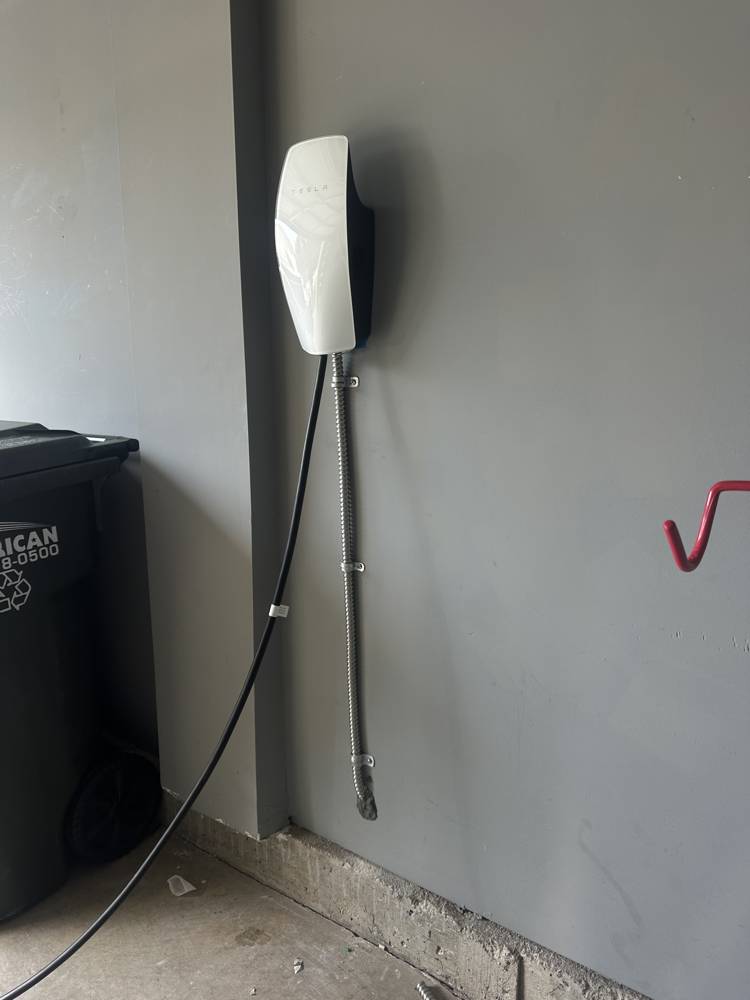
For most single-family homes in Fairfax, Prince William, Loudoun and Arlington, a complete Level 2 charger installation runs $900–$3,000. That figure includes the dedicated 240-volt circuit, the breaker, the wiring run, mounting the charger, and the permit and inspection. It does not include the charger itself unless you ask us to supply it.
If your panel is full or you still have 100-amp service, a panel upgrade or heavy-up may be needed first. That is a separate project — typically several thousand dollars — but it fixes the constraint permanently and benefits everything else in the house. See our panel upgrade cost guide for those numbers.
What drives the price
Distance from panel to charger
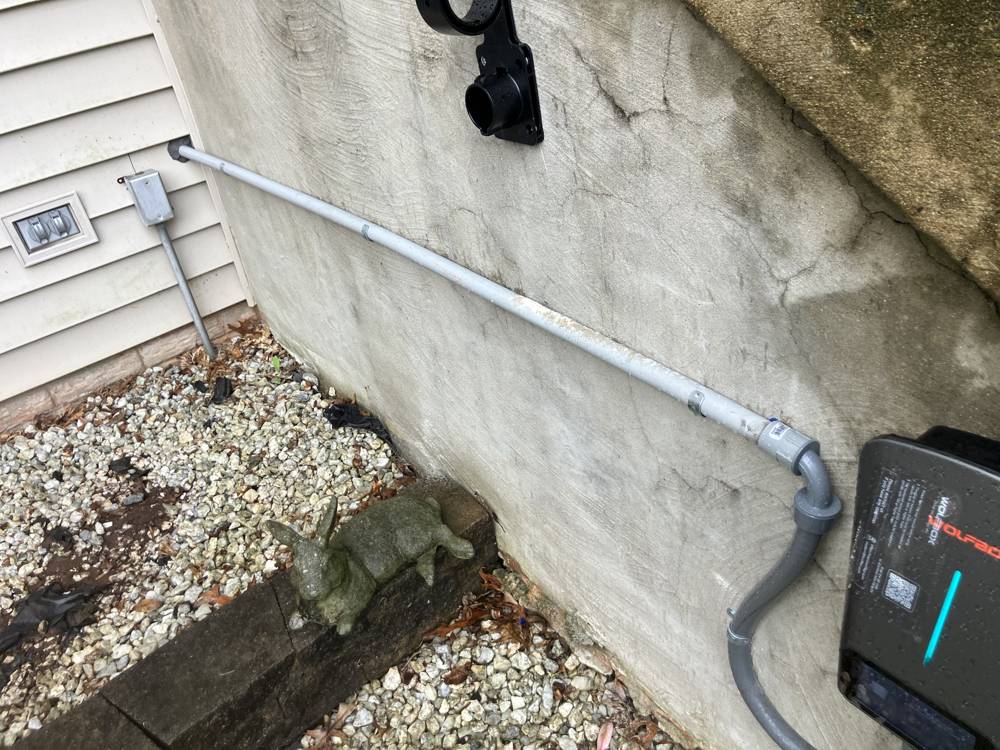
A garage charger with the panel on the same wall is the simplest job: a few feet of cable, one breaker, done in a morning. A detached garage, a driveway pedestal, or a panel in the basement on the far side of the house means more wire, more labor, and sometimes trenching or exterior conduit. Copper prices make the wire itself a real line item on a long 6-gauge run.
Finished vs. unfinished space
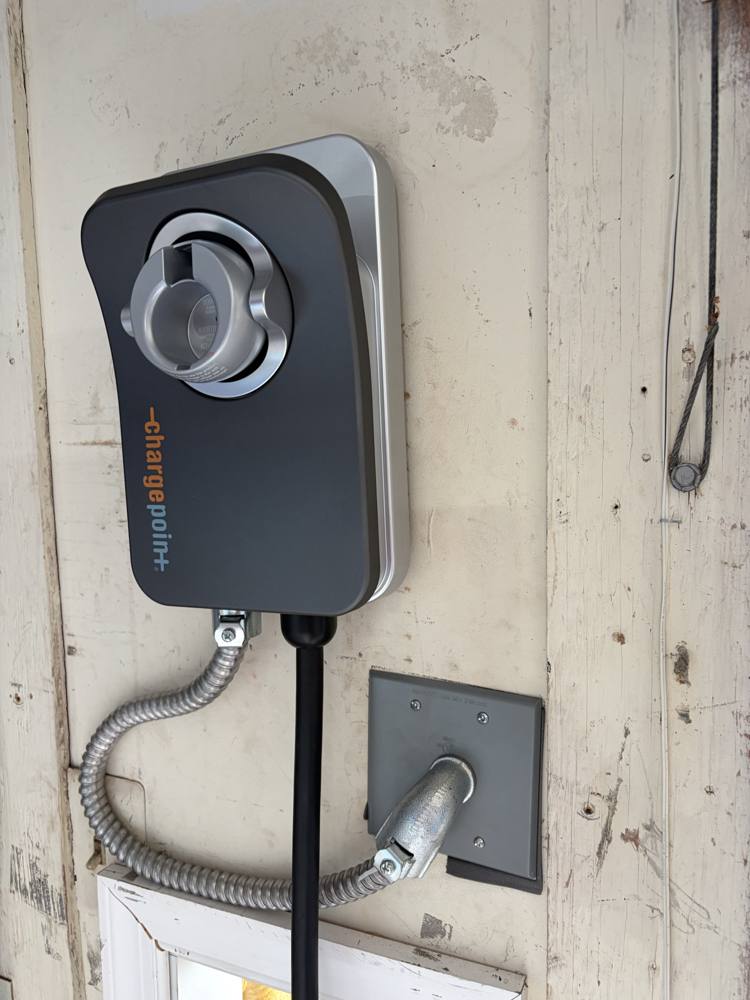
Running cable through an unfinished basement or garage ceiling is quick. Fishing it through finished walls and ceilings, or running surface conduit neatly along a finished garage, takes longer and is the most common reason two similar-looking houses get different quotes.
Circuit size
Most homeowners choose a 48-amp charger on a 60-amp circuit, which adds roughly 35–40 miles of range per hour. A 32-amp charger on a 40-amp circuit uses smaller wire and costs a little less, and still adds 25–30 miles per hour — plenty for overnight charging. We will tell you honestly if the smaller circuit is all you need.
Hardwired vs. plug-in
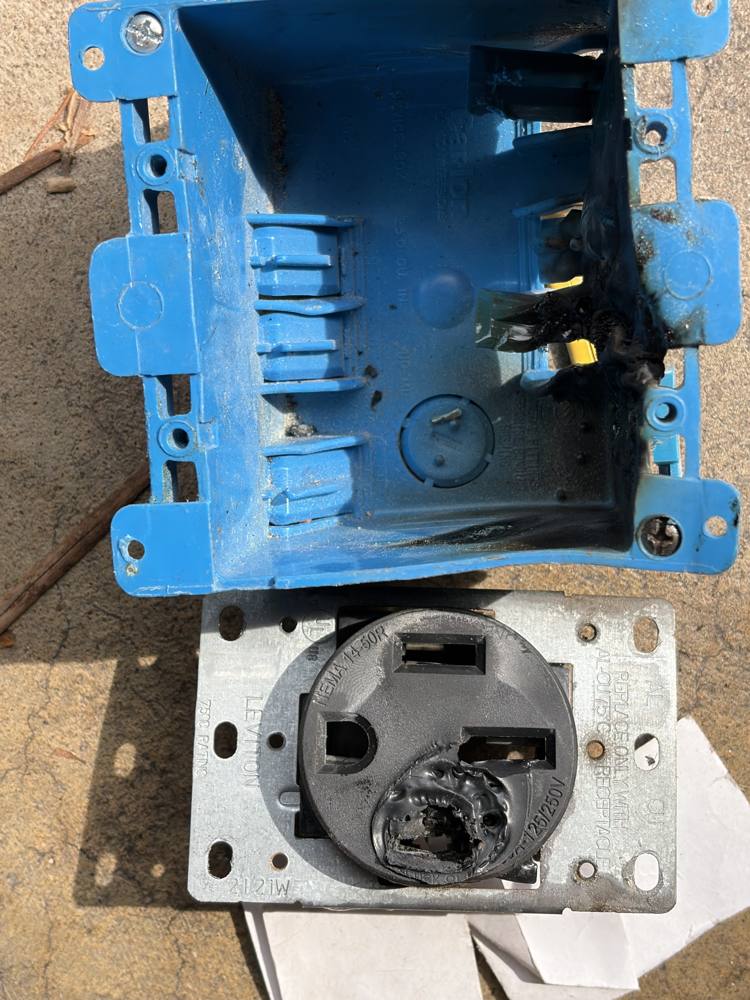
A hardwired charger is the cleaner, code-preferred install for 48-amp units. A NEMA 14-50 outlet is an option for 32–40 amp plug-in chargers, but garage and outdoor receptacles now require GFCI protection, and some chargers trip GFCI breakers. Budget receptacles also do not hold up to daily plugging and the sustained load of EV charging — the photo below is what we found behind one.
Panel capacity
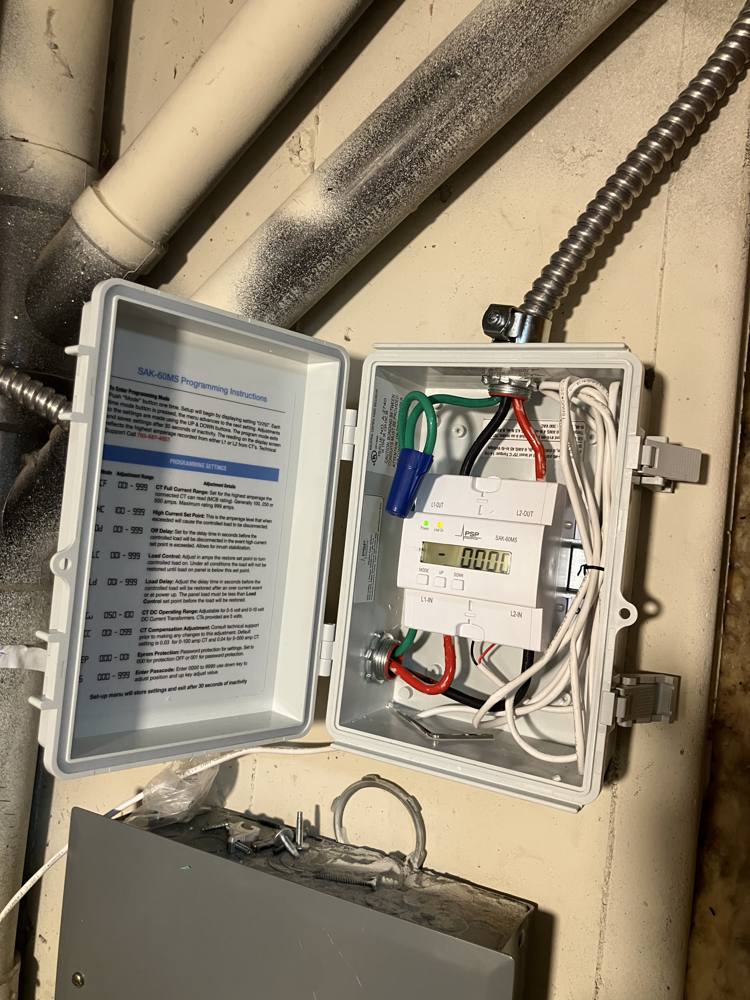
This is the big one. If a load calculation shows your service cannot support the added circuit, you have two options: a service upgrade, or an EV load management controller that watches total household demand and pauses or throttles charging when the house is near capacity. The car still charges overnight; the service never overloads. Load management is often the lower-cost path, and it is the first thing we check before recommending a heavy-up.
Permit and inspection
Every Northern Virginia jurisdiction requires an electrical permit for a new EV circuit, and fees vary by county and city. Our quotes always include the permit and the inspection visit — we do not install without one, and neither should anyone you hire.
Typical scenarios
| Scenario | What is involved | Where it lands |
|---|---|---|
| Garage charger, panel in garage | Short run, unfinished space, 40–60A circuit | Low end of $900–$3,000 |
| Garage charger, panel in basement | Longer run, some fishing through finished space | Middle of the range |
| Detached garage or driveway pedestal | Trenching or conduit, outdoor-rated equipment | Upper end of the range |
| Any of the above with a full 100A panel | Panel upgrade or load management first | Add the panel upgrade cost, or a load-management controller (usually well below a service upgrade) |
These are typical ranges, not quotes — every home is different, and the number we give you after a free estimate is the number you pay.
Do you need a panel upgrade?
Not as often as people are told. A 200-amp panel with a few open slots will handle a 48-amp charger in most homes. Even a tight 150-amp or 100-amp service can sometimes support a charger with load management. The only way to know is a load calculation under the National Electrical Code’s Article 220 method — adding up your heating, cooling, range, dryer, water heater and general loads against your service size. That is why every SparkWise EV estimate starts with one, not a guess. Read more on EV charger load calculations, wire size and breaker sizing.
What about the charger itself?
Charger hardware generally runs a few hundred dollars for a quality Level 2 unit. We install all major brands — Tesla Wall Connector, ChargePoint Home Flex, Emporia, Grizzl-E, Wallbox, EVIQO, Lectron and others — and we will tell you if the unit you bought is a poor match for your circuit. If you are choosing between the two most popular, see our Tesla Wall Connector vs ChargePoint Home Flex comparison.
Condos, townhomes and HOAs
Townhome garages are usually straightforward. Condo and multi-family installs cost more because the circuit often has to come from a house panel or a dedicated meter, and the building’s management will want drawings and proof of insurance. Virginia’s right-to-charge law limits an HOA’s ability to refuse a charger outright, but the association can set reasonable conditions. We handle that paperwork regularly in Arlington and Alexandria buildings.
Rebates and incentives
Utility and manufacturer incentives change often. Ask us what is current for Dominion Energy or NOVEC customers when you book — we will tell you what applies and what paperwork it needs, and we will not quote a rebate that has expired.
Frequently asked questions
How long does installation take?
Most residential Level 2 installs take 2–4 hours. If a panel upgrade is needed first, plan on an additional half day.
Do I need a permit for an EV charger in Virginia?
Yes. Fairfax County, Prince William County, Loudoun County, Arlington County and the independent cities all require an electrical permit and inspection for a new 240V circuit. We handle the application and schedule the inspection. Details here.
Can I install a NEMA 14-50 outlet instead of a hardwired charger?
You can for 32–40 amp plug-in chargers, but it must be GFCI protected and should be an industrial-grade receptacle rather than a big-box residential one. For 48-amp charging, hardwired is the right call.
Will a Level 2 charger raise my electric bill?
You pay for the electricity you use to charge, but Level 2 is no less efficient than Level 1 — it just charges faster. Off-peak rates can lower the cost if you schedule charging overnight.
Can I install the charger myself to save money?
Virginia requires a licensed electrician and a permit for a new 240V circuit, and a DIY install can void the charger warranty and your homeowner’s insurance coverage for a resulting fire. The labor you would save is a small share of the total.
Get a real number
Call (703) 915-5351 or request a free estimate. We can quote most EV installs from a short video call and a photo of your panel, and the quote includes the permit.
Want the labor math behind these numbers? See electrician hourly rates in Northern Virginia.
Related Services from SparkWise Electric
Need help from a licensed electrician in Northern Virginia? Contact SparkWise Electric or call (703) 915-5351.