Ashburn may have more EVs per garage than anywhere else in Northern Virginia. The housing stock is new, the commutes run down the Dulles Greenway, and neighborhoods like Brambleton, One Loudoun, Ashburn Farm, and Broadlands are full of homes whose builders at least gestured at electric-vehicle charging. SparkWise Electric installs Level 2 EV chargers across Ashburn, and much of our work here starts with a simple question: what did the builder actually leave you to work with?
Because the answer varies more than the marketing suggests. Some garages have a live 240-volt receptacle ready to use; some have an empty conduit stub and nothing else; many have nothing but drywall and optimism. This guide covers how to read your own garage, how the installation works, what Loudoun County requires, and how to plan for a two-EV household — a genuinely common Ashburn scenario.
“EV-Ready,” “EV-Capable,” and What Your Garage Actually Has
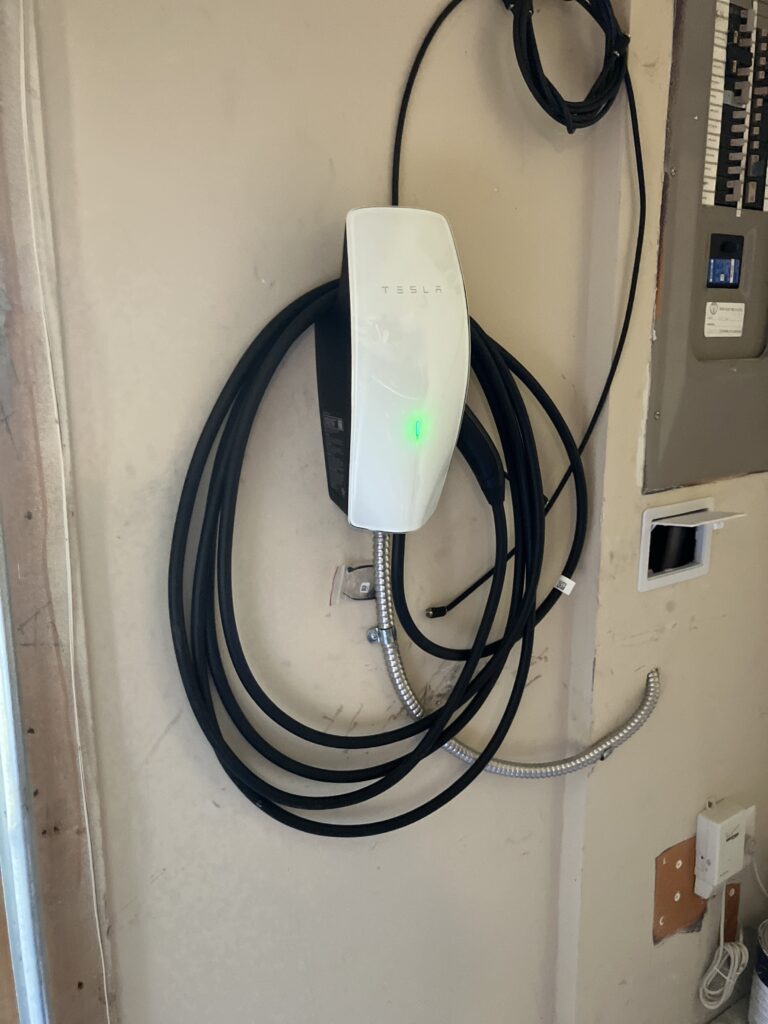
Builders use these terms loosely, but they describe very different starting points:
- A live 240-volt circuit and receptacle. The best case — though we still verify the breaker size, GFCI protection, and receptacle quality before you trust it with a nightly 32-amp load. Builder-grade receptacles are not always rated for continuous charging duty.
- An empty conduit run (“EV-capable”). The raceway exists but there is no wire, no breaker, and sometimes no panel space reserved. The conduit saves labor; the rest of the circuit still has to be built.
- Nothing at all. Still very manageable in Ashburn — newer homes usually put the panel in the garage or just behind it, which keeps wire runs short and installations clean.
We start every Ashburn job by confirming which of these you actually have, because it changes the scope more than the charger brand does.
How We Install a Level 2 Charger
A Level 2 charger needs its own dedicated 240-volt circuit — no sharing with the dryer, the workshop, or anything else. (The reasoning is on our dedicated circuit installation page.) From there the job follows a consistent shape: we size the breaker and conductors to the charger’s continuous draw, typically 40 to 60 amps of breaker for 32- to 48-amp charging; route the run from panel to parking spot; mount and terminate the unit to manufacturer torque specs; then commission it against your vehicle and verify full-rate charging. The region-wide version of this process is on our EV charger installation service page, and conductor selection questions come up often enough that we wrote a separate explainer on wire size for Level 2 chargers.
Loudoun County Permits and the LandMARC Portal
Ashburn is unincorporated Loudoun County, so electrical permits and inspections run through Loudoun County Building and Development, which manages applications online through its LandMARC portal. A new EV charging circuit generally requires an electrical permit and a final inspection; requirements can shift with the specifics of the job, so we verify scope with the county rather than assuming. SparkWise files the LandMARC application and schedules the inspection as part of the installation — the permit is our job, not homework we leave behind.
One Ashburn-specific note: HOAs in communities like Brambleton and Broadlands generally have no say over work inside your garage, but if a charger, conduit, or receptacle will be visible on the home’s exterior — say, for driveway charging — check your association’s guidelines first. We can provide equipment specs and drawings for an architectural review application when one is needed. For the broader paperwork picture across jurisdictions, see our guide to the EV charger permit process in Virginia.
Panel Capacity, Two-EV Households, and Load Management
Most Ashburn homes carry 200-amp services, which sounds like plenty — until you count the heat pump, the double ovens, the finished basement, and, increasingly, a second EV. Before adding any charging circuit we run a load calculation using the NEC 220.83 method, which weighs the home’s existing demand against the new continuous load. Newer homes usually pass comfortably for one charger; the interesting cases are all-electric homes and two-car EV households.
For two EVs, you rarely need two full-power circuits. Power-sharing pairs of chargers can split one circuit intelligently, and load management devices can hold total demand within what the service allows — approaches the code explicitly recognizes. When the math genuinely does not work, we talk about a panel upgrade with the calculation in hand, so the decision is based on numbers rather than a sales pitch.
Hardwired vs. Plug-In in a New Garage
With a new garage and a long ownership horizon, hardwiring is usually the stronger choice: it supports the maximum 48-amp charging rate, eliminates the receptacle as a wear point, and looks cleaner on a finished wall. A plug-in unit on a NEMA 14-50 receptacle wins on portability — a fair priority if you expect to move — and note that receptacle installations require GFCI-protected breakers, which factors into the quote. We compare the two honestly in hardwired vs. plug-in EV chargers.
The Licensed Electrician Difference
Ashburn sees plenty of handyman-priced charger quotes, and the gap in the price usually lives somewhere specific: no load calculation, no permit, no inspection, and terminations that were never checked with a torque wrench. A charging circuit runs at high continuous load for hours every night — it is exactly the kind of work licensing exists for. SparkWise Electric is a licensed and insured Virginia electrical contractor; EV charging, panel work, and whole-home electrical are our daily trade. Our electrician in Ashburn, VA page covers everything else we do in the neighborhood.
Townhomes and Condos Near One Loudoun
Not every Ashburn EV lives in a two-car garage. Townhomes around One Loudoun and parts of Brambleton often park in rear-loading garages with the panel a floor away, and condo owners may charge in shared or deeded spaces where the association controls the infrastructure. Rear-garage townhomes are usually a routine install with a slightly longer run; shared-parking situations take more planning — metering, circuit ownership, and association approval all come into play. We have handled both, and we will tell you up front which category your parking falls into and what the realistic path looks like.
Ashburn EV Charger FAQs
Do I need a permit for an EV charger in Ashburn?
Generally yes. Ashburn falls under Loudoun County, and a new 240-volt charging circuit typically requires an electrical permit filed through the county’s LandMARC portal plus a final inspection. We handle both.
My builder says my garage is EV-ready. Is anything left to do?
Sometimes very little, sometimes a full circuit. We verify what is actually behind the wall — live circuit, empty conduit, or nothing — and confirm the breaker, wiring, and receptacle are rated for continuous charging before you rely on them.
Can we charge two EVs without upgrading the panel?
Often, yes. Power-sharing chargers and load management hardware let two vehicles charge within the capacity of one service. A load calculation tells us which approach fits your home.
How long does an installation take?
Most Ashburn installs are finished in a half day, thanks to short runs from garage-adjacent panels. Longer routes or exterior work can extend that; the county inspection follows on its own schedule.
Should I hardwire the charger or use a plug?
For a long-term home, hardwiring is usually better: faster maximum rate, fewer wear points, cleaner install. If flexibility matters more, a NEMA 14-50 receptacle with a GFCI breaker is a solid choice.
Get Charging in Ashburn
Call or text (703) 915-5351 with your address, what you drive, and a photo of your panel — we will tell you quickly what your garage needs and what it does not. Or grab a time online:
Planning a charger install? Our guide to EV charger permits and inspections in Northern Virginia covers what the permit costs, what the inspector checks, and why a panel upgrade is almost never needed.
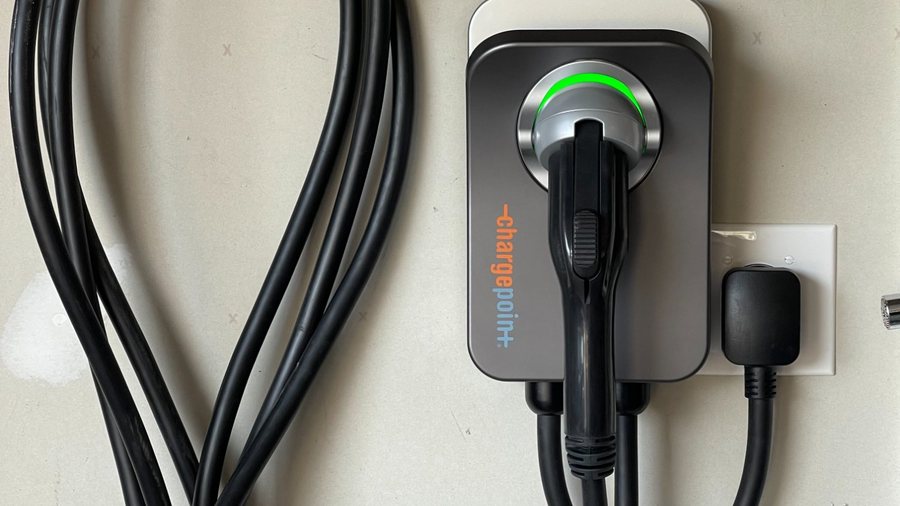
Not sure which charger to buy before we come out? Read Tesla Wall Connector vs ChargePoint Home Flex — we install both around Ashburn and the comparison is based on those jobs.