
We have installed 268 EV charging stations across Northern Virginia. It would be good for business to tell you every electric car needs one. That is not quite true, and the honest answer depends on a number you already know: how far you drive on a normal day.
Level 1 Is Not Nothing
Every electric car comes with a cable that plugs into an ordinary 120-volt outlet. That is Level 1, and it adds roughly 3 to 5 miles of range per hour.
Left plugged in from 7pm to 7am, that is 36 to 60 miles recovered overnight. The average American drives about 37 miles a day. For a meaningful number of households — short commute, second car, mostly local driving — a Level 1 outlet in the garage genuinely keeps up.
If that describes you, the useful upgrade may not be a charging station at all. It may be a dedicated 20-amp circuit to the garage so the car is not sharing a receptacle with a freezer and a workbench. That is a much smaller job.
What Level 2 Actually Buys You
Level 2 runs on 240 volts — the same supply as your dryer or range — and delivers roughly 25 to 40 miles of range per hour depending on the charger and what the car will accept. In practice it means the car is full every morning regardless of what yesterday looked like.
The gap between the two only matters on the days you drive a lot. That is the whole decision.
Who Should Definitely Install One
- You drive more than about 50 miles a day. Level 1 stops keeping up and you start planning around charging.
- The EV is your only car. No backup means no tolerance for a morning when it did not finish.
- Two EVs in the household. One Arlington family had us install two chargers in a detached garage, one inside and one outside. Level 1 does not work when two cars need overnight range.
- You have a long-range battery. Filling 80 or 100 kWh on Level 1 takes days, not hours.
- Cold weather matters to you. Northern Virginia winters cut range, and a Level 2 charger lets you precondition the cabin on grid power instead of battery.
Check the Panel Before You Buy Anything
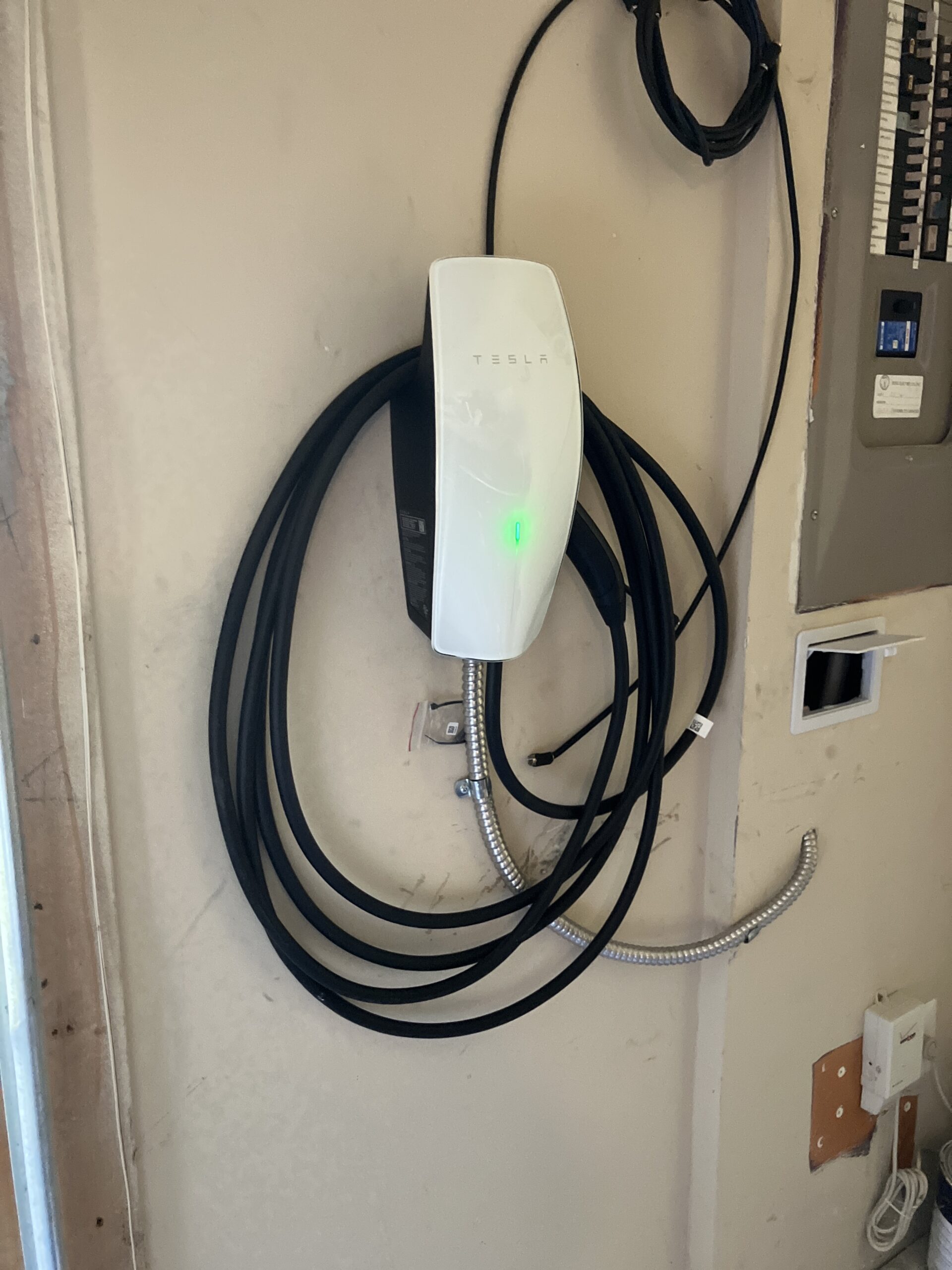
The smartest call we get is the one that comes early. A Broadlands homeowner rang us while shopping for a used Tesla — he wanted to know whether his panel could support charging before he committed to the car. That is twenty minutes of our time and it removes the worst surprise in this whole process.
Two things get checked: whether the panel has physical space for a two-pole breaker, and whether the service has the capacity once everything else in the house is accounted for. They are different questions and only one of them is expensive to solve. Our guide on whether you need a panel upgrade for an EV charger goes through the numbers.
Not every obstacle is the panel, either. A McLean home we worked on had a perfectly healthy panel — the garage simply had no 240-volt supply run to it. That is a cable problem, not a capacity problem, and it costs accordingly.
Hardwired or Plug-In?
You have two ways to connect a Level 2 charger, and installers do not always explain the trade-off.
- NEMA 14-50 receptacle. A 240-volt outlet the charger plugs into. Easy to swap units later, and easy to take with you if you move. Limited to 40 amps of continuous draw.
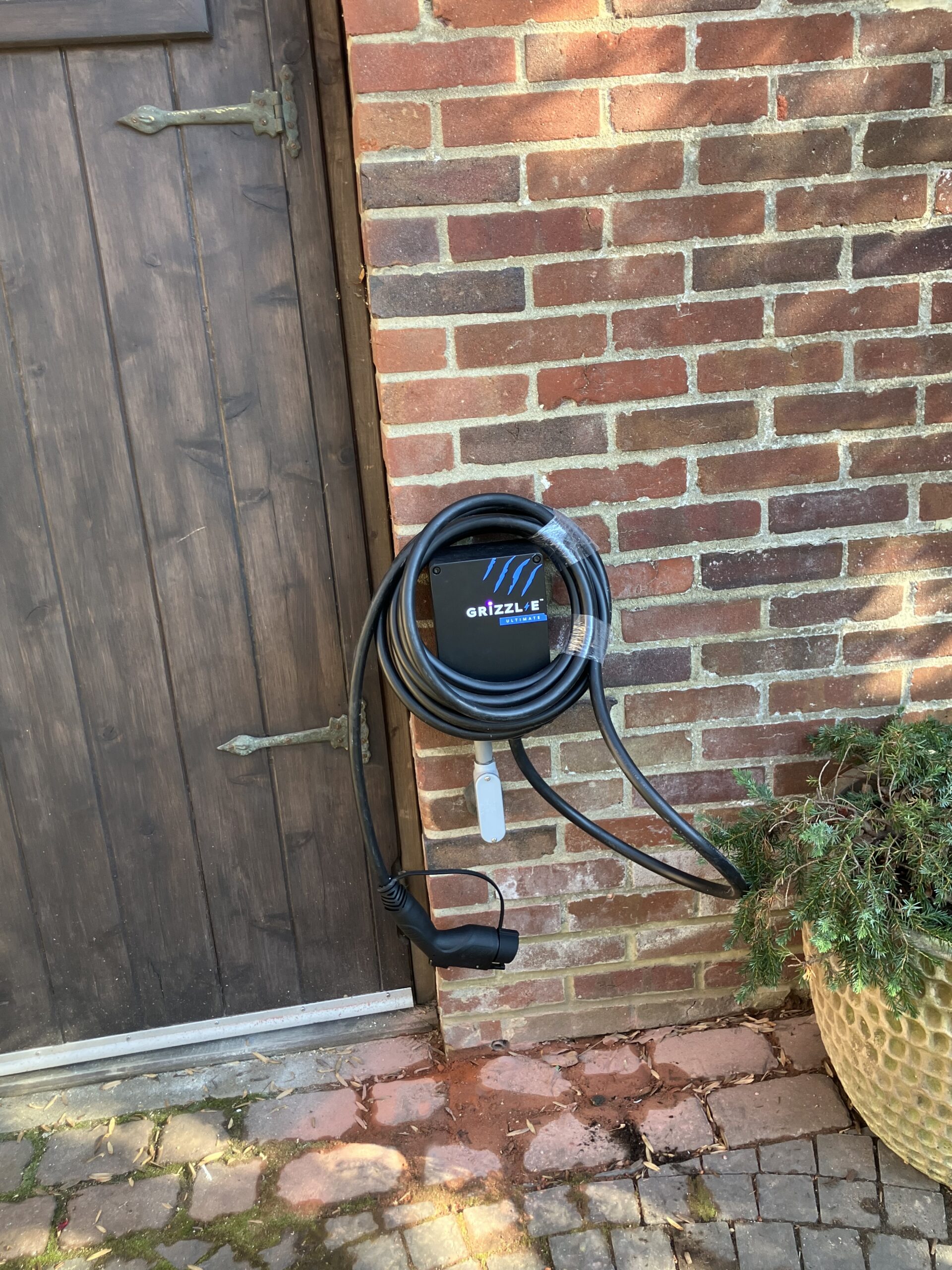
- Hardwired. The charger is wired directly to the circuit. Required above 40 amps, so any 48-amp charger has to be hardwired. Tidier, and the only option outdoors in most cases.
Most of our installs land on 60-amp circuits, which is what a 48-amp charger requires once the 125 percent continuous-load rule is applied. If you are unsure which way to go, the receptacle keeps your options open and the hardwired unit charges faster.
What Drives the Cost
Almost never the charger. Almost always the distance and what is in the way.
- Panel to parking spot. A garage on the same wall as the panel is a short job. A panel in the basement at the opposite end of the house is not.
- Access. An unfinished basement ceiling or an accessible attic keeps it simple. A finished ceiling means fishing cable and sometimes drywall repair.
- Indoors or outdoors. Exterior runs need weatherproof fittings and proper sealing.
- Circuit size. 60-amp cable costs more than 40.
- Whether a sub-panel is needed to gain circuit positions.
Permits Are Not Optional
A Level 2 circuit is permitted and inspected work in every jurisdiction we operate in. We pull the permit under our licence, book the inspection and meet the inspector on site.
Beyond the legal position, an unpermitted 240-volt circuit is the sort of thing that surfaces during a home sale, and rebate programmes generally want evidence of a permitted install. It is a poor corner to cut.
Can You Just Use Public Chargers?
You can, and some people do it happily — particularly apartment dwellers or anyone whose workplace offers free charging.
The honest downsides: public DC fast charging usually costs more per kWh than your home electricity rate, it requires you to be somewhere specific for twenty to forty minutes, and frequent fast charging is harder on the battery than slow overnight charging. If you have a garage and a driveway, home charging wins on cost, convenience and battery life.
Where We Install
Our busiest EV areas are Ashburn, Alexandria, Gainesville, Chantilly and Fairfax, along with Aldie, Haymarket, Centreville, Herndon and Woodbridge.
Get an Honest Assessment
We will look at your panel, your parking and your actual driving, and tell you whether you need Level 2 or whether a dedicated 120-volt circuit would do. Call (703) 915-5351 or book online.
See also EV charger installation, panel upgrades for EV charging, and our full range of electrical services.