Choosing the right wire size for a Level 2 EV charger is not just a matter of saving a few dollars on copper, it is the difference between a safe, code‑compliant installation and a circuit that runs hot every night your car is plugged in. As an electrician, I look first at the charger’s amperage, the length of the run, and the wiring method, then size the conductors so they stay cool and deliver full power without nuisance trips. Getting that calculation right up front keeps your EV charging as reliably as your refrigerator or furnace.
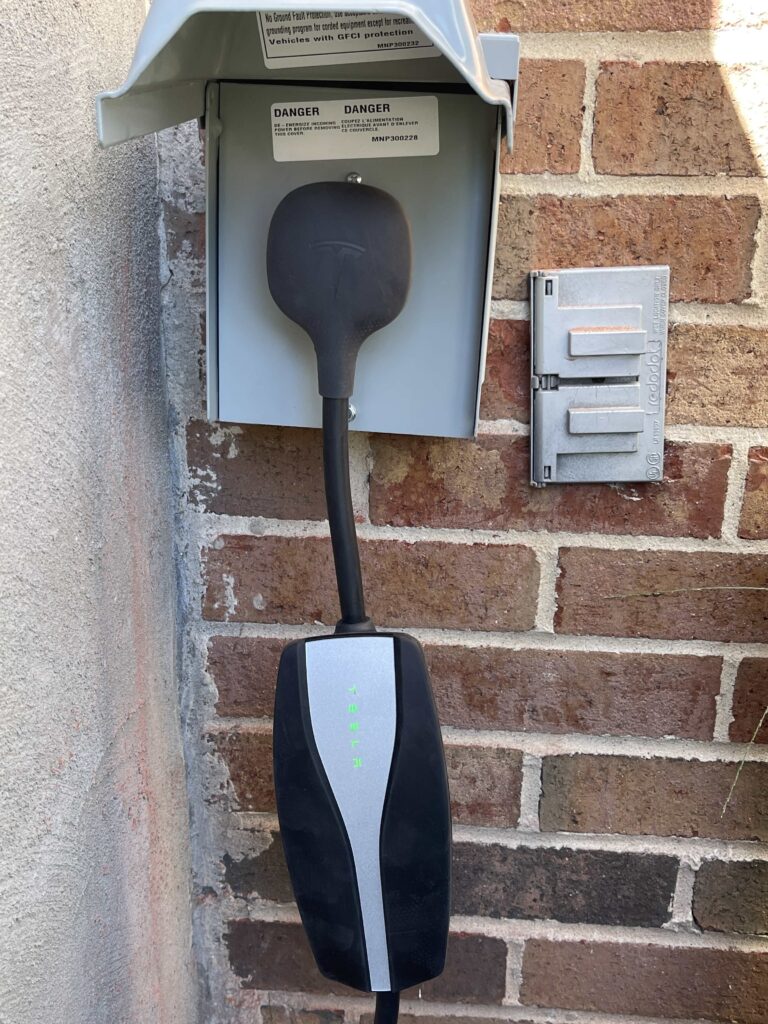
In practical terms, that means matching wire gauge to breaker size, understanding how continuous loads behave, and respecting the limits of the insulation and terminations you are using. Level 2 charging is typically a 240‑volt circuit that runs for hours at a time, so the National Electrical Code’s continuous‑load rules, temperature ratings, and derating factors all come into play. Once you understand those pieces, picking the correct wire size for your charger becomes a straightforward, repeatable process instead of a guessing game.
How Level 2 charging loads drive wire size
Level 2 equipment is built around 240‑volt AC, and that voltage is what lets you move from trickle charging to something that can refill a modern battery pack overnight. A typical 6 kW Level 2 charger configured for a 240-volt circuit will draw a maximum of 40 amps, which you can see by the simple math of 6 kW x 1000 / 240 volts = 40, and that 40 amp continuous draw is exactly what pushes us into heavier copper. When I size conductors for this kind of load, I treat the EVSE as a continuous appliance that can run for three hours or more, so I apply the 125 percent rule to the nameplate current.
That same 40 amp example usually lands on a 50 amp breaker, because continuous EV charging needs headroom above the steady draw, and the wire has to be sized to match the breaker, not just the charger. Guidance on NEC minimums makes it clear that for circuits at or above this range, copper wire should be used and that above 50 amp circuits it is common to increase the conductor size by at least 20 percent of the expected thickness to keep voltage drop and heating in check, which is why I rarely run anything smaller than 6 AWG on a 50 amp EV circuit. Once you understand how a 6 kW Level 2 load behaves on a 240-volt line, the logic behind upsizing the wire becomes obvious in the field.
Reading wire gauge charts like a pro
Before I ever pull cable for a charger, I sit down with a wire gauge chart and confirm that the conductor I am planning can legally and safely carry the load at the temperature rating of the insulation and terminations. Each type of wire is listed by the metal used, its maximum temperature rating and the types of insulation that wrap it, and those three details control how much current that conductor can carry without exceeding its design limits. For residential EV work, that usually means copper THHN or THWN in conduit, or a cable assembly like NM‑B where the ampacity is taken from the 60 °C column even if the insulation is marked higher.
Once you know how to read those ampacity tables, you can line them up with the breaker and charger ratings instead of guessing based on what “looks big enough.” A 40 AMP Wire Size entry, for example, will show you that a given gauge is acceptable for 40 amps under specific conditions, but if that same conductor is bundled with others or run through hot attic space, you may have to derate it and move up a size. The basic math of You can calculate this by dividing Watts by Volts is only the first step, the chart is what tells you whether that calculated current is actually safe for the wire you are planning to install.
Why 6 AWG copper is the workhorse for 50 amp Level 2
In real‑world residential jobs, 6 AWG copper has become the default choice for 50 amp Level 2 charging because it strikes the right balance between ampacity, voltage drop, and future‑proofing. When I run a 50 amp branch circuit for an EVSE, I want a conductor that stays cool at continuous load, leaves room for a slightly larger charger down the line, and fits cleanly in standard lugs and conduit sizes, and 6 AWG checks those boxes. Copper wire is the preferred one because it conducts electricity better and, therefore, loses less power as heat, which is exactly what you want on a circuit that may be feeding a car for eight hours straight.
That is why guidance on EV charger wire gauge often points directly to 6 AWG Copper for a 50-amp Level 2 charging setup, especially when the run is not extremely short. In practice, I will still look at the distance from the panel to the charger and the exact breaker size, but for a typical garage installation with a 40 amp EVSE on a 50 amp breaker, 6 AWG copper gives you a comfortable margin. Using a smaller conductor might technically pass in some scenarios, yet the reduced resistance and better thermal performance of 6 AWG Copper pay off in lower voltage drop and longer equipment life.
Matching breaker size, charger amperage, and wire gauge
The cleanest way to size wire for a Level 2 charger is to start with the charger’s continuous current, pick the correct breaker, and then choose a conductor that is listed for that breaker rating under the actual installation conditions. A 40 amp EVSE, for example, typically calls for a 50 amp breaker, and that pairing then drives you to a wire gauge that can safely handle 50 amps on a continuous basis. Tables that map Charger Amperage in Amperes to a Required breaker and a Common Copper Wire Gauge [AWG] show 6 as the go‑to size for this combination, and that lines up with what I see in the field.
Where homeowners get into trouble is when they try to undersize either the breaker or the wire to save money or reuse an existing circuit. I have seen people attempt to run a 40 amp portable EVSE on a 30 amp breaker, only to discover that the charger will not operate correctly because the manufacturer expects a 40 or 50 amp feed and has internal checks to enforce that. One owner of a Ford EV reported that I tied mine with 30a and it didn’t work. It has to be 40a breaker at minimum, which is a good reminder that the breaker, wire, and charger all have to be aligned with the manufacturer’s specifications and code requirements, not just whatever is already in the panel.
Why copper beats aluminum for EV charging circuits
On paper, aluminum looks cheaper for long runs, but for EV charging it introduces more problems than it solves. Most EV chargers are not rated for aluminum wiring since it’s generally an unsafe choice for any device that conducts continuous high current, and that limitation shows up right on the terminal labeling. When I open an EVSE, I expect to see lugs marked for copper only, and if someone has landed aluminum there with an improvised antioxidant paste, I treat it as a correction item, not a clever workaround.
The safety concerns are not theoretical, they show up as loose terminations, overheating, and in the worst cases, arcing at the outlet level when aluminum expands and contracts more than copper under load. Guidance on how to safely install an EV charging station with the right materials stresses that using proper copper conductors, correct torque on lugs, and listed connectors is what prevents shocks at the outlet level and premature equipment failure. For a high‑duty appliance like a Level 2 charger, the small upfront savings of aluminum are not worth the long‑term risk, which is why I specify copper on every EV circuit I design.
Accounting for distance, conduit fill, and derating
Wire size for a charger is not just about the nameplate current, it is also about how far you are running that current and how the conductors are installed. Copper Wiring for EV Charging Stations (Copper Development Association) length of the run between your breaker box and the outlet, the electrical codes in most jurisdictions allow for thicker wire to reduce voltage drop, and that is a tool I use often when the garage is on the far side of the house. A long 240-volt run feeding a 40 amp EVSE can see noticeable voltage sag if you stick with the bare minimum gauge, so bumping from 8 AWG to 6 AWG or even 4 AWG on very long pulls keeps the charger operating at its intended power level while Saving money on wasted energy over time.
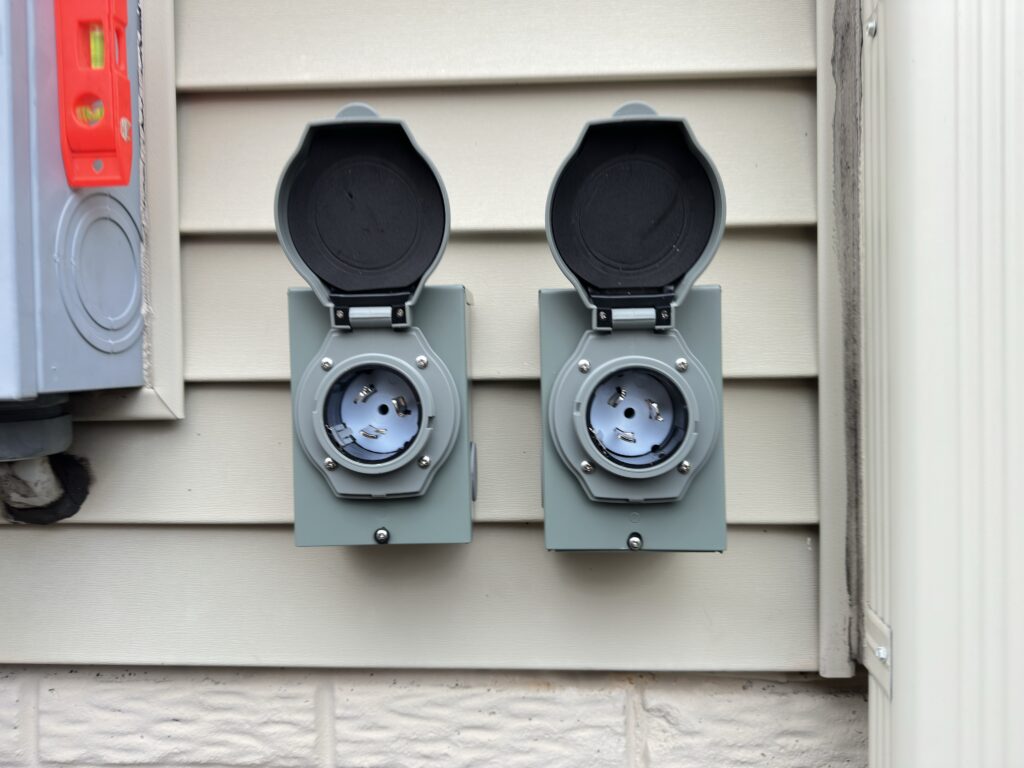
Conduit fill and ambient temperature also change the math, because multiple current‑carrying conductors in the same raceway have to be derated. For THHN, you will use the 90C column, as it’s listed, and then apply the adjustment factor for the number of conductors and the environment, which can drop a nominal 30 amp rating down to something like 0.8x30A=24A in practice. That kind of derating means your conductor shall not carry more than the adjusted value, so if you are bundling EV circuits or running them through hot spaces, you may need to step up a wire size to stay compliant and keep the insulation within its temperature limits.
Choosing the right wire type and insulation
Once the gauge is set, I pay close attention to the wire type and insulation rating, because not every copper conductor is suitable for a garage wall or buried conduit. For Level 2 Charging (240V AC) in homes and small commercial spaces, the standard choices are individual conductors like THHN/THWN or XHHW-2 in conduit, or cable assemblies where the jacket and conductor ratings match the environment. Guidance on Level 2 charging notes that these wire types are appropriate for circuits that are usually 40A or 50A, and that combination of insulation and ampacity is exactly what you want feeding a modern EVSE.
Even on short factory cords, the manufacturer is making the same calculation. A common example is a range or EV‑style cord where the hot conductors are 6 AWG and the neutral and ground are 8 AWG, sized to match the expected load and termination hardware. One product description spells it out clearly, noting that the black and red conductors are 6 AWG while the white and green (ground) are 8 AWG, and then reminding buyers that It’s best to consult a qualified electrician for this type of installation. That mix of conductor sizes inside a single cord is a good reminder that wire type and gauge are always tied to the actual current each conductor is expected to carry, not just the overall device rating.
Learning from real‑world installs and common mistakes
In the field, I see the same wiring mistakes repeat themselves around EV chargers, and most of them trace back to misunderstanding continuous loads or trying to reuse undersized circuits. One discussion about installing a Level 2 EV charger using 6 AWG THHN wire highlights how a 200A service with a lot of unused capacity can still be wired incorrectly at the branch level if someone ignores the breaker and conductor pairing. A commenter summed it up bluntly with Not a good idea to push THHN beyond its listed ampacity just because the main panel looks oversized, and that is exactly the kind of shortcut that leads to overheated conductors and nuisance trips.
Another recurring issue is treating EVSEs like ordinary receptacles instead of dedicated appliances. Advice that says Install 20-amp receptacles where higher demand is anticipated, but ensure the circuit is wired accordingly is sound for general‑purpose outlets, yet a Level 2 charger is a different animal that deserves its own properly sized circuit. The same source reminds homeowners to Always check local electrical codes to confirm compliance, and I extend that to EV work by insisting on dedicated breakers, correctly sized copper conductors, and terminations that match the charger’s installation manual instead of improvising off whatever spare breaker space is available.
Translating general wiring rules to EV charging
Many of the rules I apply to EV circuits are the same ones I use for heavy household loads like water heaters and ranges, just with more emphasis on continuous duty. A Q&A about a 50 g electric hot water heater on a 240 circuit, for example, walks through What grade of wire should I run for 50 gallon electric hot water heater 20 amps from the panel box Minimum requirement for a 240 v circuit and then notes that the breaker should also be a double pole 30 amp. That pattern of matching a 20 amp continuous load to a 30 amp breaker and appropriately sized copper conductors is the same logic I use when I size a 40 amp EVSE to a 50 amp breaker and 6 AWG copper, just scaled up.
General wiring guidance also reinforces the link between circuit rating and conductor size. When a circuit is rated for 20 amps, for instance, advice is to consider using 12-gauge wire and to Always consider using cables with built-in ground wires so the equipment grounding conductor is never an afterthought. Those same principles apply directly to EV charging, where the ground path must be as robust as the hots, and the cable or conduit system has to be chosen for the environment. By treating a Level 2 charger like any other high‑demand appliance, and then layering on the specific continuous‑load and manufacturer requirements, I can confidently pick a wire size that keeps both the car and the house wiring safe for the long haul.
When you’re ready to move forward, EV charger installation in Northern Virginia is a core service at SparkWise Electric. Our licensed electricians handle the full project — from load calculations and permits to the final inspection.
Related Services from SparkWise Electric
Need help from a licensed electrician in Northern Virginia? Contact SparkWise Electric or call (703) 915-5351.